- You are not broken, and your posture can change. There is no single "perfect posture" to chase: reviews find no strong evidence that the shape of your spine predicts back or neck pain [1][2][3], and about nine in ten cases of low back pain have no identifiable structural cause [4].
- The neck is where posture shows most. Adults with neck pain carry the head further forward on average [5]. In the lower back the story is movement, not shape: people with low back pain move less and more slowly [6], and their lower backs are on average flatter, not more arched [7].
- Posture trains like any other skill. Pooled trials show exercise moves the head and shoulders back and the upper back straighter [8][9]. Strength does most of the work (chin tucks, rows, hip extension); stretching frees the muscles that have gone short (chest, hip flexors, hamstrings).
- Train the muscles and the result goes everywhere with you. A brace holds a shape only while you wear it, and a review of posture shirts found no support for them against pain [10]. Strength, length and variety are what last.
- You feel it in days and can measure it in months. The trials that moved posture ran for 16 weeks to six months [11][12].
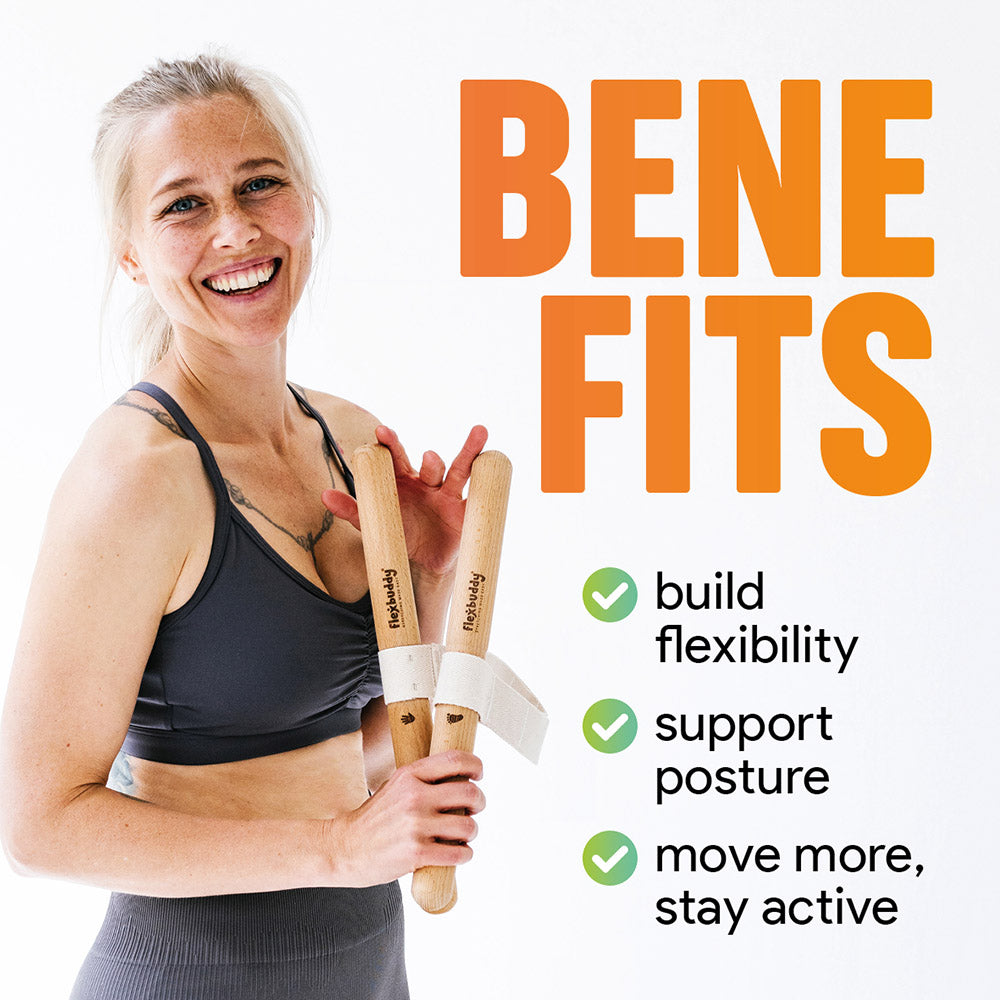
- FlexBuddy® makes sitting tall a daily habit. Its basic posture is the slump in reverse: shoulders down, chest lifted, head up, a long spine over a hamstring stretch, for ten deep breaths.
What posture is, and why yours can change
Posture is simply the position your body is in right now. It is a habit, not a fixed trait, and habits can be trained. Whatever you see in the mirror today is a starting point.
There is also no single correct version to force yourself into. The spine has three natural curves, inwards at the neck, outwards at the upper back and inwards again at the lower back, and their size varies enormously between healthy people. When researchers pooled 54 studies on spinal curves and health, they found no strong evidence linking the size of those curves to any health outcome, spinal pain included [2]. A 2019 viewpoint in the Journal of Orthopaedic and Sports Physical Therapy agrees: the belief that spinal pain is caused by sitting, standing or bending "incorrectly" is not supported by strong evidence [1].
So relax about the textbook picture. Your posture is not a diagnosis. You can change it, and the change is worth making: you stand taller, your shoulders open, and you move with more ease.
Does bad posture cause pain?
Far less than you have been told. Your spine is strong, and a slouch is not damage. Where posture and comfort do meet, the neck comes first, and the neck responds very well to exercise.
Neck and forward head posture
Forward head posture, where the ears sit in front of the shoulders, is the most studied pattern. A 2019 review of 15 studies found that adults with neck pain held the head further forward than adults without it, and that in adults a more forward head went with more pain and disability [5]. So when you bring the head back over the shoulders, you are working on the pattern that travels with a sore neck.
Teenagers are a reassuring story. In 1,108 Australian 17-year-olds photographed while sitting, researchers identified four distinct neck postures, from upright through to slumped with the head forward, and none of them carried higher odds of neck pain or headache [13]. When 686 of the same young people were followed up at 22, sitting upright at 17 had given no extra protection, and the authors concluded that public health messages to sit up straight "need rethinking" [14]. The useful target is not one held position. It is strength and movement, and the rest of this article gives you both.
Lower back and anterior pelvic tilt
For the lower back, the research points to movement, not shape. An umbrella review of 41 systematic reviews on spinal posture, sitting, standing, bending and low back pain found no consensus that any of them causes it [3]. A meta-analysis of 43 studies found that people with low back pain stand with the same pelvic tilt and lumbar curve as everyone else; what set them apart was less range of movement, slower movement and a poorer sense of position [6]. People in pain move less, not more crookedly. And movement is something you can train.
Anterior pelvic tilt gets blamed for a great deal. In 120 healthy, pain-free young adults, 85% of the men and 75% of the women had an anterior pelvic tilt [15]. It is the normal shape of a human pelvis, not a fault. And when a meta-analysis of 13 studies compared the lumbar curve in people with and without low back pain, the back-pain group had on average a smaller curve, a flatter lower back [7]. An arch is not the enemy. The background is in does stretching help back pain; the short version is that about 90% of low back pain is "non-specific", meaning no clear cause can be found [4].
The four common posture patterns, with a quick self-check
None of these is a disease. They are habits of position that tend to appear together in people who sit a lot, and habits respond to training. Do the checks in front of a mirror or with a phone propped sideways.
1. Forward head
The ear sits in front of the shoulder. The muscles at the back of the neck work overtime to hold the skull up, and the small muscles at the front, which should share the job, switch off. Self-check: stand side-on to the camera, relax, and see where your ear canal sits relative to the middle of your shoulder. In front by more than a thumb's width is the pattern. Now slide the head straight back, as if making a double chin: that distance is your working range, and the chin tuck below trains it.
2. Rounded shoulders
The shoulders roll forward and inwards and the shoulder blades drift apart. The muscle most often short here is pectoralis minor, which runs from the third to fifth ribs up to a hook of bone at the front of the shoulder blade and pulls the blade forward and down against the chest wall [16]. Hold the arms over a keyboard for years and it never gets the chance to let go. Self-check: lie on your back on the floor, arms by your sides, and relax. Shoulders that hover above the floor rather than resting on it, or one side higher than the other, point to a short front of the chest.
3. Anterior pelvic tilt
The pelvis tips forward and the lower back arches. The front of the hip is the usual culprit: iliopsoas runs from the lumbar vertebrae and the inside of the pelvis to the top of the thigh bone and flexes the hip [17], and in a chair it spends the day at its shortest length. Some anterior tilt is normal in most healthy people [15], so the question is not whether you have it but whether the hip flexors are short. Self-check: lie on the edge of a bed, hug one knee to your chest and let the other leg hang. If the hanging thigh cannot rest level with the bed, the hip flexors on that side are short. This is the Thomas test; the hip side of the story is in tight hips from sitting.
4. The slump
The whole-body version: head forward, shoulders rounded, upper back curved, pelvis tucked under, the sofa shape. The upper-back curve is called kyphosis; everyone has some, and an exaggerated version (hyperkyphosis) becomes more common with age. Self-check: stand with your back to a wall, heels a hand's width away, bottom and shoulder blades touching. If the back of your head cannot touch the wall without tipping the chin up, your upper back is rounded enough to be worth training. Thoracic spine mobility has six ways to move it. Seated, notice how long you can hold upright before the body slides back into the slump. That tells you what to build: endurance, not willpower.
What actually changes posture
Now the good part. The trials that changed posture share a recipe: strength for the muscles that have gone quiet, length for the muscles that have gone short, and enough weeks for both to take. All three are in your hands.
Movement variety
The cheapest win is to stop holding any position for long. In the review of office neck pain cited in our desk stretches guide, the risk factors for developing neck pain were low variation in work tasks (risk about 27% higher), a keyboard close to the body (46% higher) and low satisfaction with the workplace (28% higher) [18]. "Low task variation" simply means you did not move. The American College of Sports Medicine makes the same point: frequent short bouts of standing and activity between periods of sitting have health benefits even in people who exercise [19]. The best posture is the next one, and it costs nothing.
Strength: chin tucks, rows, hip extension
This is where the results are biggest. A 2018 meta-analysis of seven randomised trials found strong evidence that corrective exercise improves the craniovertebral angle, the standard measure of forward head posture. It reduced neck pain as well [8]. A 2024 meta-analysis of 22 studies found exercise improved forward head, rounded shoulders and upper-back curve together, with strength work, stretching and whole-pattern programmes all contributing [9]. For the upper back, a meta-analysis of ten randomised trials found a large effect on the kyphosis angle, with strengthening as the key ingredient [20]. And it is never too late: in adults over 60 with a pronounced upper-back curve, six months of spine-strengthening and posture training reduced the curve on X-ray by three degrees more than a control group, roughly the change a vertebral fracture causes in the other direction [12].
Three movements cover the strength side:
- Chin tucks. Lying on your back, draw the chin straight back and lift the head one centimetre off the floor; hold, lower. This trains the deep muscles at the front of the neck that a forward head lets go idle.
- Rows and shoulder-blade squeezes. Pull the elbows back and the shoulder blades together and down, with a band, a cable or a towel looped round a door handle. This trains the middle and lower trapezius and the rhomboids, the muscles that hold the shoulder blades back against the pull of the chest.
- Hip extension. Glute bridges and hip thrusts. The glutes are the hip flexors' opponents, and a hip that can reach fully behind you does more for pelvic position than any amount of standing tall.
Stretching the parts that are short
Stretching is what makes the strength work possible: you cannot row the shoulder blades back if the chest will not let them go. It works quickly, too. A single session of soft-tissue work and self-stretching of pectoralis minor reduced rounded-shoulder posture in healthy adults, and the shoulders were still less rounded two weeks later [21]. The hip flexors and hamstrings matter for the pelvis: iliopsoas pulls it forward, the hamstrings, which run from the sitting bone to just below the knee [22], pull it back, and if either is short the pelvis sits where the shorter muscle leaves it. The hold-time numbers are the standard ones: about 60 seconds of total stretch per muscle group, on at least two to three days a week, to mild tension and never pain [19][23].
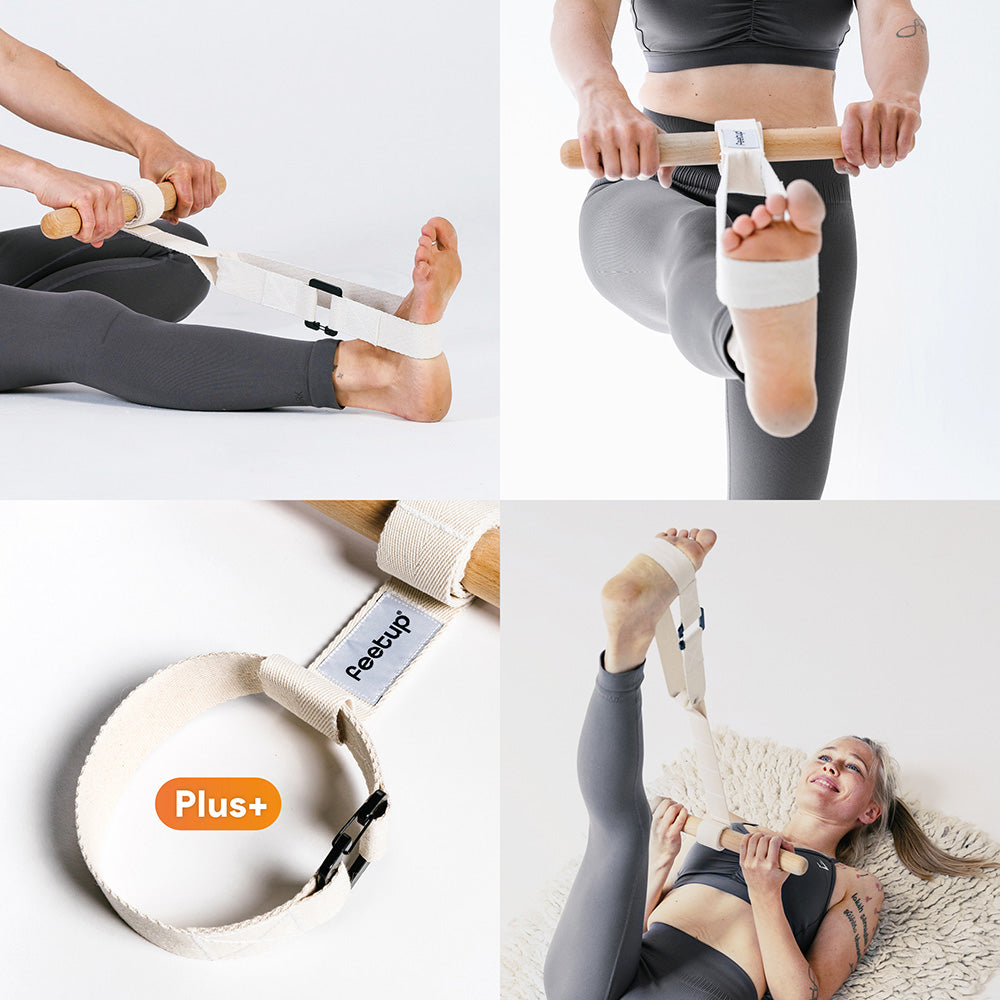
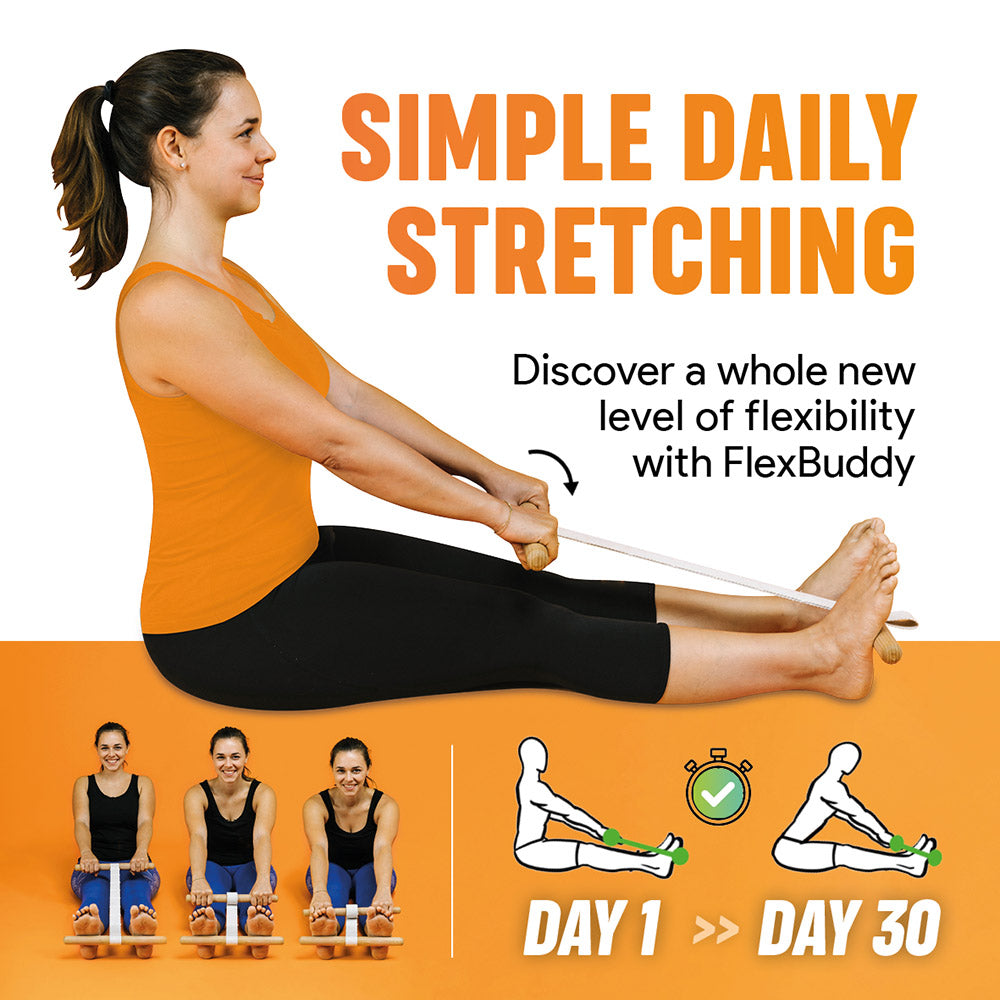
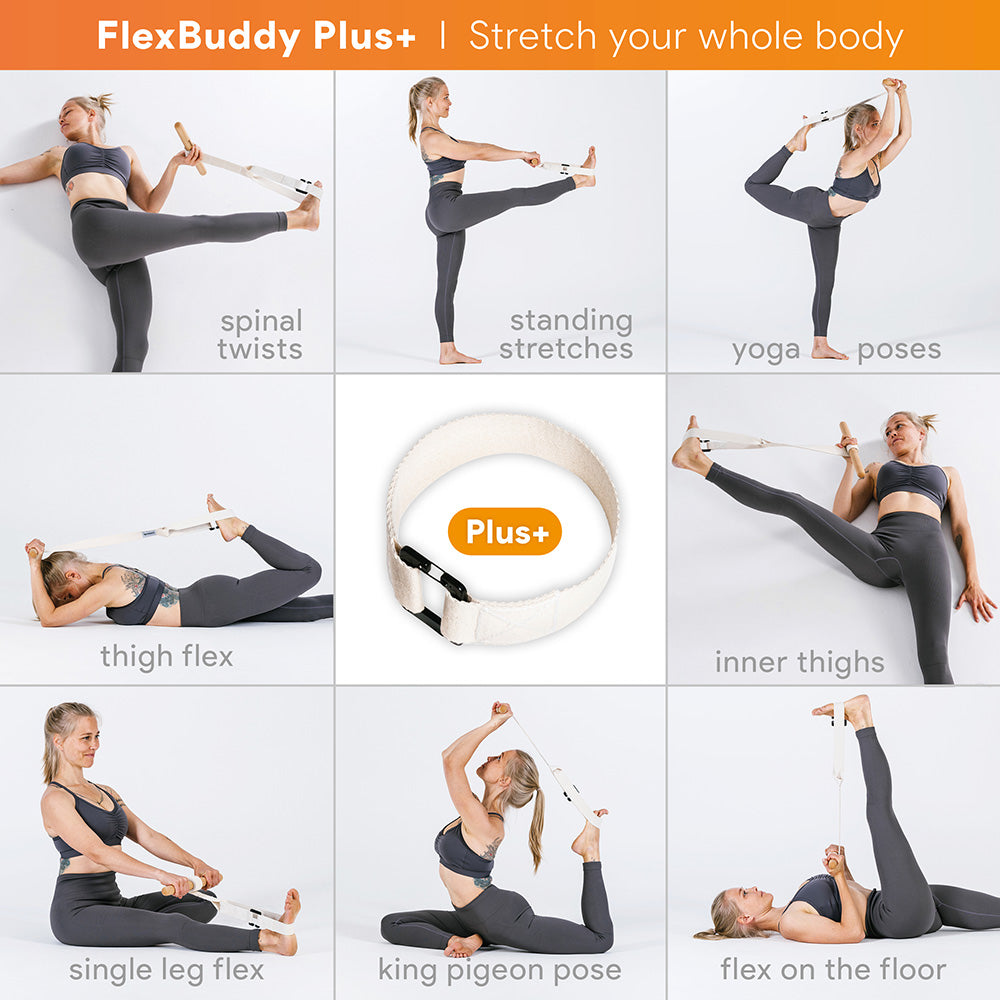
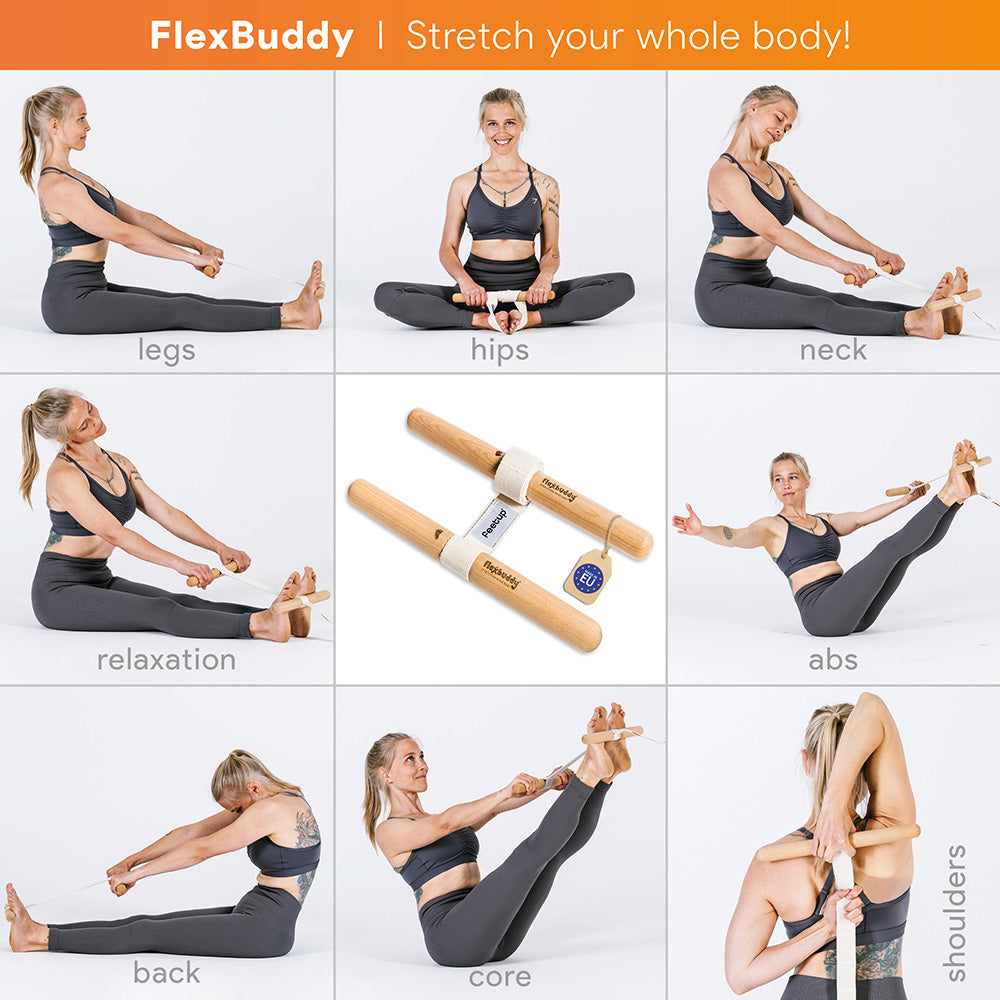
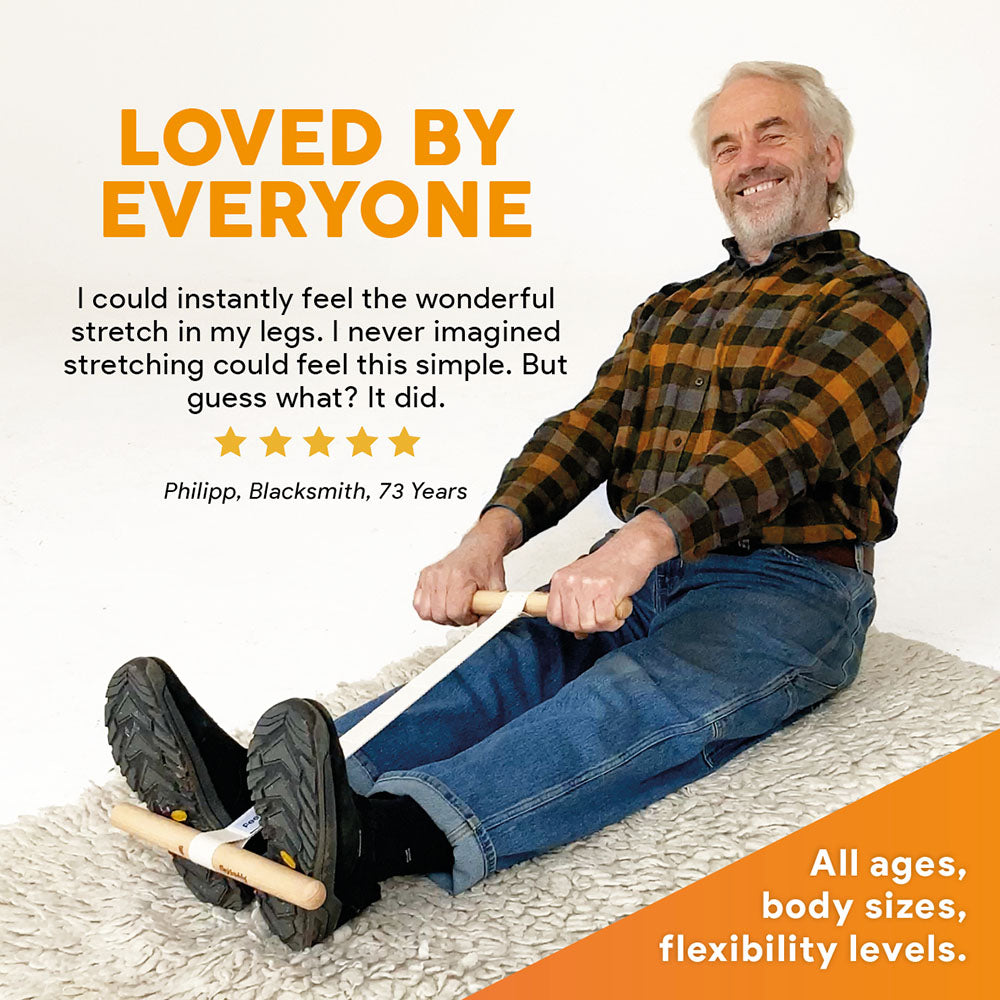
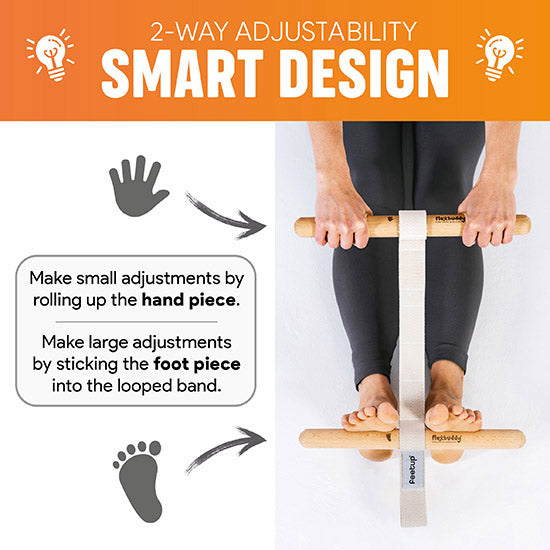
The hamstring stretch doubles as posture practice, if you do it well. Most people fold forward with a rounded back, which rehearses the slump and misses the hamstrings. Fold with a long spine and the pelvis tipping forward instead (the technique is in tight hamstrings and lower back pain). That is what FlexBuddy is designed for: one bar under your feet, one in your hands, and the strap carries the pull so you sit tall, chest lifted and shoulders down, while the hamstrings lengthen. Ten breaths of that are ten breaths of practising the posture you want.
The workstation
Ergonomics is not posture, but it decides which posture you fall into. The one workstation factor that reliably raised neck-pain risk was a keyboard close to the body [18], which pulls the elbows in and the shoulders forward. When people sat for an hour in each of three positions, upright sitting produced less discomfort than leaning forward over the desk, which produced the most low-back discomfort and the most back-muscle activity [24]. So: screen at eye level, keyboard far enough away that the forearms rest, chair back used rather than perched on. Then change position every half hour anyway.
Posture correctors, reminders and quick fixes: what lasts
Braces, posture correctors and posture shirts
They do change your shape while you wear them: in overhead athletes with forward-head, rounded-shoulder posture, a tensioned scapular brace reduced the forward shoulder angle straight away [25]. Pain is a different matter: a 2019 review of posture-correcting shirts concluded that their use for musculoskeletal pain is not supported [10]. And a strap that holds the shoulders back is doing the job of the muscles that should. Train those muscles and the result goes everywhere with you, with nothing to wear.
"Just stand up straight"
It works for as long as you remember to, and then the body returns to the position its muscles can sustain. So build the muscles. The follow-up study of teenagers found that sitting upright gave no extra protection against persistent neck pain [14], so a rigidly held "good" posture is not the goal. A posture you can hold without thinking, and leave whenever you like, is.
One-off fixes
An adjustment, a single massage, a week of chin tucks: these feel good, and some produce a measurable change that is still there two weeks later [21]. Posture is the sum of thousands of hours in a shape, and the trials that changed it lasted 16 weeks or longer [11][12]. A 2001 review found most exercise programmes simply too short and infrequent to change muscle length [26]; longer programmes do work [8][20]. So the secret is turning up: ten minutes, three days a week.
A 10-minute posture routine
Strength first, stretching second, inside the guideline numbers [19][23]. Do it on at least three days a week; the chin tucks and shoulder-blade squeezes can be sprinkled through any working day too. You will stand taller the moment you get up from the floor.
| Exercise | Position | Hold / tempo | Reps | What it targets |
|---|---|---|---|---|
| Chin tuck | On your back; slide the chin back, lift the head 1 cm | Hold 5 s | 10 | Deep neck flexors; forward head |
| Wall angel | Back and arms against a wall; slide the arms from "goalpost" to overhead, hands on the wall | Slow, 3 s each way | 10 | Upper back, shoulder blades |
| Band row | Band round a door handle; pull the elbows back, squeeze the shoulder blades together and down | Pause 2 s at the back | 12–15, 2 sets | Middle and lower trapezius, rhomboids; rounded shoulders |
| Glute bridge | On your back, knees bent; lift the hips until straight from knee to shoulder | Hold 3 s at the top | 12–15 | Glutes, hip extension; pelvic position |
| Doorway chest stretch | Forearm on a door frame, elbow at shoulder height; step through until the chest pulls | 30 s | 2 per side | Pectoralis minor and major; rounded shoulders |
| Half-kneeling hip-flexor stretch | One knee on a cushion; tuck the tailbone, shift forward until the front of the hip pulls | 30 s | 2 per side | Iliopsoas, rectus femoris; anterior tilt |
| Seated hamstring stretch, long spine | Sit tall, legs straight, FlexBuddy or a strap round the feet; tip the pelvis forward with the chest up | 10 breaths (~30 s) | 3 | Hamstrings; the straight-spine habit |
| Thoracic extension over a rolled towel | Towel across the upper back, hands behind the head; gently arch back over it, breathing out | 5 slow breaths | 3 positions | Upper-back mobility; the slump |
The stretches total about 60 seconds per muscle group, the figure the American College of Sports Medicine and Harvard Health both give [19][23]. With two minutes, do the chin tucks and the band rows; with one, stand up and walk to the kitchen.
How to keep it up
Leave FlexBuddy where you sit in the evening, and make the long-spine hamstring stretch your daily minimum: ten deep breaths, sitting tall. On routine days, do the full table. The small daily dose is what turns sitting tall from an effort into the way you sit.
How long does it take to fix posture?
Quicker to feel than you expect, and a few months to measure.
Days. You feel different almost immediately: a chest stretch changes the sense of where your shoulders are, and you catch yourself sitting taller. Repeat it tomorrow: repetition is what makes it stay.
Weeks. A single session of chest stretching held its effect for two weeks in one study [21]. By now the exercises feel natural, and the upright position lasts longer before the slump returns.
Months. In adolescents, 16 weeks of strengthening and stretching reduced forward head and rounded shoulders [11], and a 32-week version held its gains through a further 16 weeks without training [27]. In adults over 60, six months of three one-hour sessions a week changed the upper-back curve on X-ray [12]. For anterior pelvic tilt the research is younger: a systematic review found two randomised trials so far [28]. Some tilt is the normal shape of the pelvis, so aim for comfort: strong glutes and long hip flexors.
And you do not need a textbook posture to have a comfortable back: plenty of people have a rounded upper back and a pain-free spine. Train your posture for how you move, look and feel.
Make sitting tall a daily habit with FlexBuddy
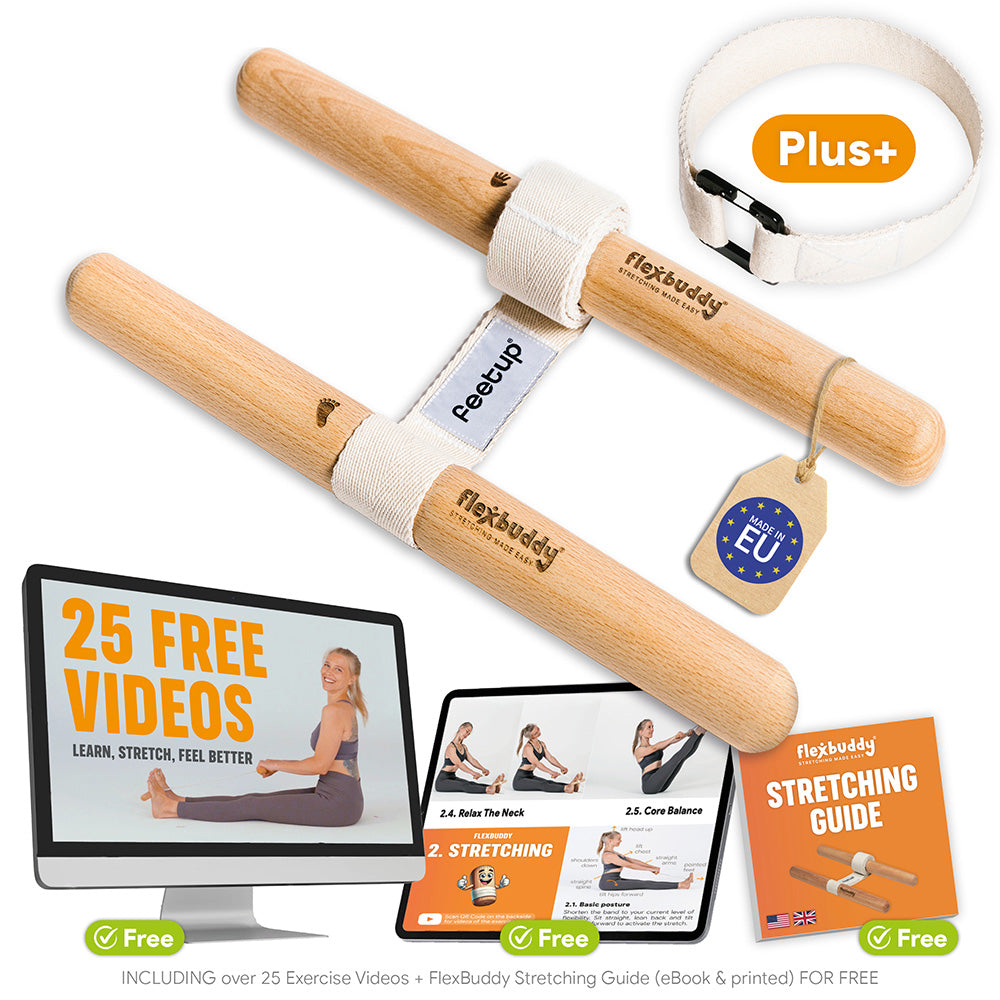
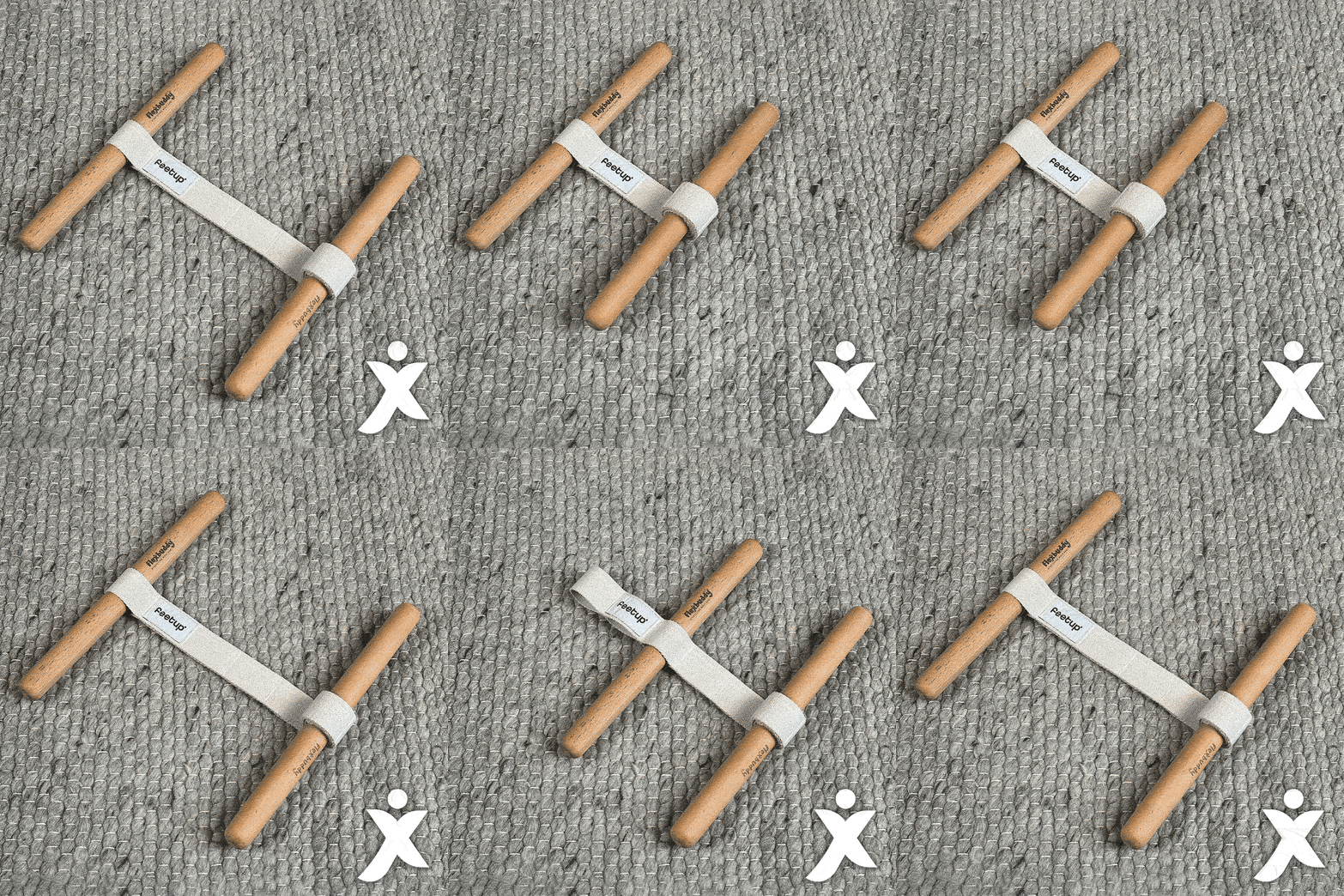
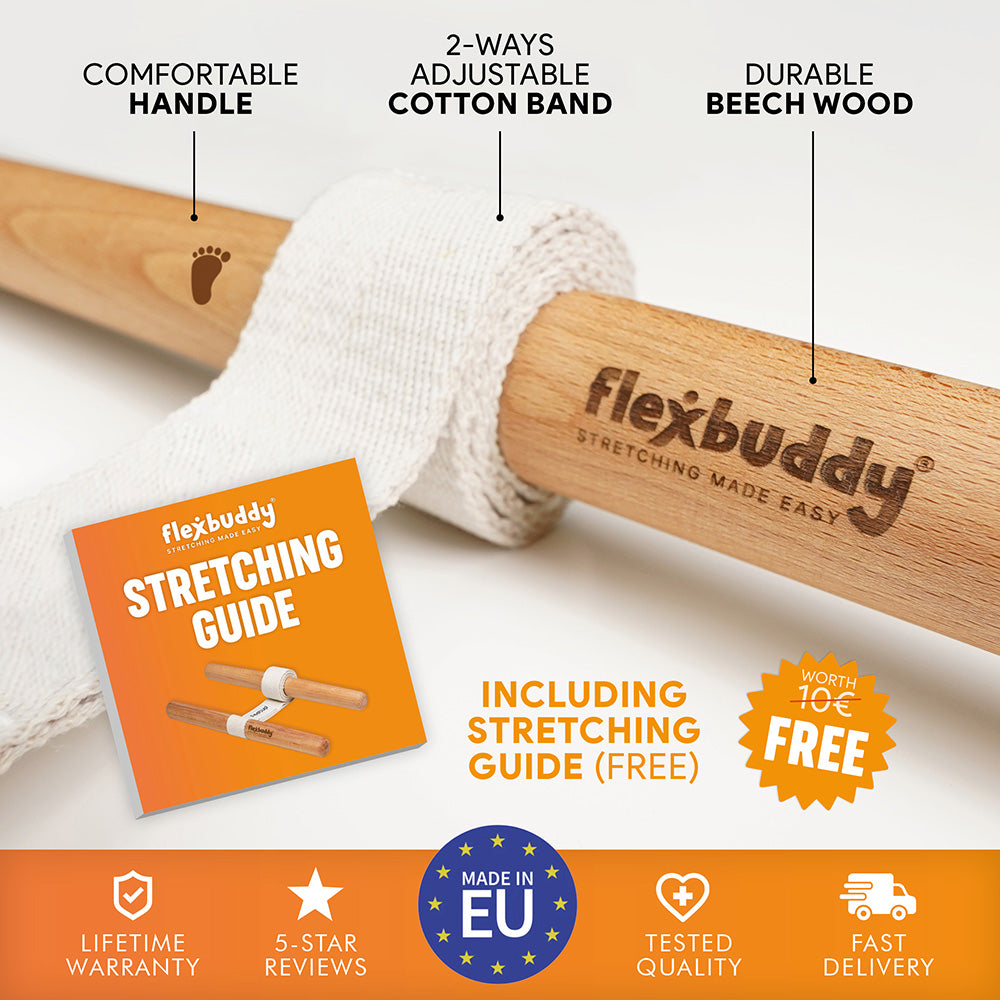
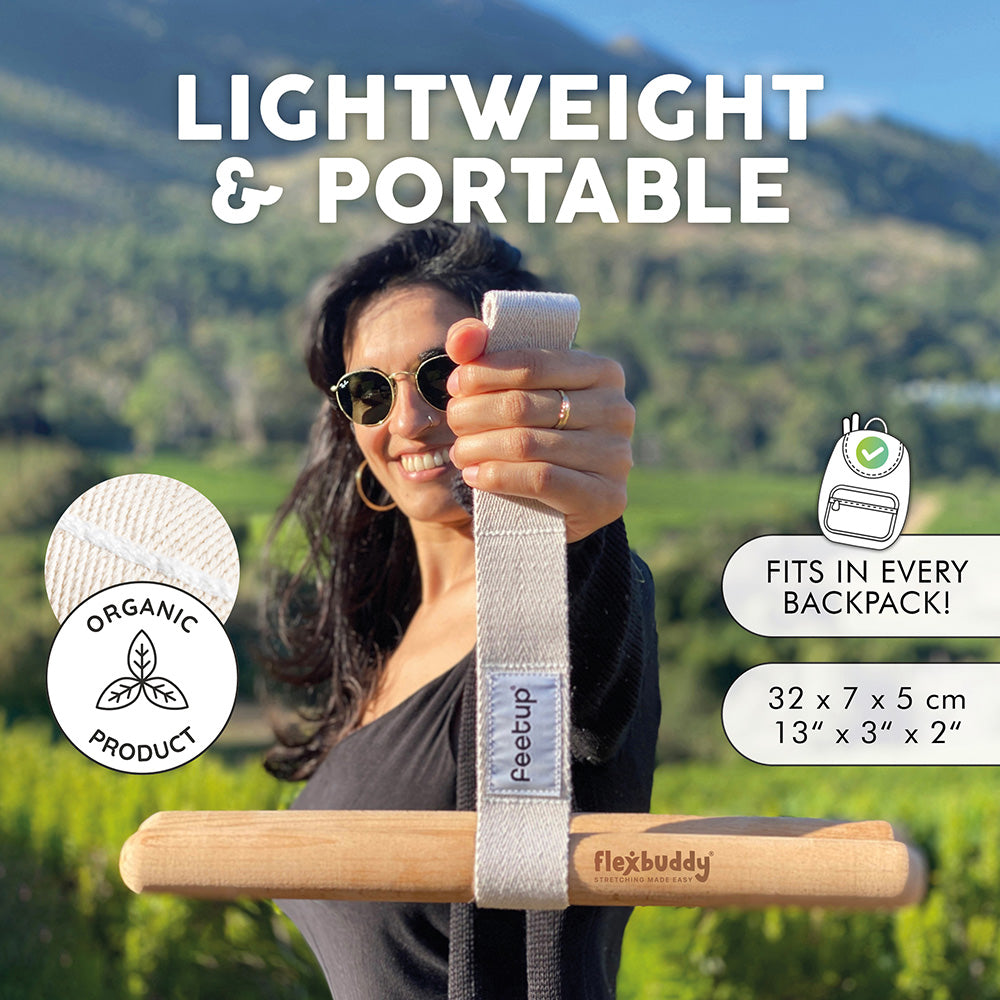
Chin tucks, rows and the chest stretch need a wall, a band and a door frame. The other half of posture work is the long-spine habit, and that is where FlexBuddy® shines. It is a patented stretching device made of two beech-wood bars joined by an adjustable cotton strap: one bar under the soles of your feet, the other in your hands. You sit tall, lean back and tilt the hips forward, shoulders down, chest lifted, head up, and the strap carries the pull while your hamstrings lengthen. It is the slump in reverse, held for ten deep breaths. The strap adjusts in big and small steps, so a stiff beginner starts long and shortens it as the weeks go by. The Shoulder Opener from the free exercise videos, both handles raised overhead with straight arms, pairs with the doorway chest stretch.
Scott K., a trainer, wrote: "A great tool to help your clients maintain a neutral spine while stretching calves, hamstrings and lower back." Two minutes a day can improve your flexibility and posture. FlexBuddy is rated 4.5 by verified buyers and comes with a 30-day money-back guarantee and a lifetime warranty, so you can try it without risk. Get your FlexBuddy, or take the two-minute quiz to find the routine for your pattern.
Frequently asked questions
How do I fix my posture?
Train it, and it changes. Strengthen the muscles that have gone quiet (chin tucks, rows, glute bridges), stretch the ones that have gone short (chest, hip flexors, hamstrings), and change position often. Pooled trials show programmes of this kind move the head, shoulders and upper back measurably over weeks to months [8][9][20].
What are the best forward head posture exercises?
Chin tucks for the deep neck flexors, band rows for the upper back, and a chest stretch so the shoulders can come back. A meta-analysis of seven randomised trials found strong evidence that corrective exercise improves the craniovertebral angle, and it reduced neck pain as well [8].
Do posture correctors work?
They hold your shoulders back while you wear them [25]. For a change that stays when you take them off, train the muscles instead: a brace does the job your muscles should be learning to do, and a 2019 review found no support for posture-correcting shirts as a way to manage pain [10]. Rows, chin tucks and a chest stretch build a shape you keep.
Does stretching improve posture?
Yes, and it works best paired with strength. Stretching a short chest muscle reduced rounded shoulders for at least two weeks after one session [21], and exercise programmes that include stretching improve forward head, rounded shoulders and the upper-back curve [9]. Strengthening is the key ingredient for the upper back [20], so stretch what is short and strengthen the opposite side. FlexBuddy keeps your spine long while the hamstrings get their turn.
How long does it take to fix posture?
You feel different in days, and the clearest measured changes came from four to six months of regular work. The programmes that changed posture in trials ran for 16 weeks in adolescents [11] and six months in older adults [12].
Do rounded shoulders cause pain?
No need to worry: rounded shoulders are a habit, not damage. Large reviews have not found that spinal curves predict pain [2][3]. They are still well worth training for how you move, look and feel, and they respond: a 16-week programme reduced rounded shoulders in adolescents [11].
This article is general information, not medical advice. Tight muscles usually respond well to regular stretching. If your pain is sharp, radiates down a leg, comes with numbness, weakness, fever, bladder or bowel changes, follows an injury, or keeps getting worse, see a doctor or physiotherapist before you stretch [29].
References
- Slater D, Korakakis V, O'Sullivan P, Nolan D, O'Sullivan K. "Sit up straight": time to re-evaluate. J Orthop Sports Phys Ther. 2019;49(8):562–564. doi:10.2519/jospt.2019.0610. PMID 31366294 (abstract accessed 4 Nov 2026).
- Christensen ST, Hartvigsen J. Spinal curves and health: a systematic critical review of the epidemiological literature dealing with associations between sagittal spinal curves and health. J Manipulative Physiol Ther. 2008;31(9):690–714. doi:10.1016/j.jmpt.2008.10.004. PMID 19028253 (abstract accessed 4 Nov 2026).
- Swain CTV, Pan F, Owen PJ, Schmidt H, Belavy DL. No consensus on causality of spine postures or physical exposure and low back pain: a systematic review of systematic reviews. J Biomech. 2020;102:109312. doi:10.1016/j.jbiomech.2019.08.006. PMID 31451200 (abstract accessed 4 Nov 2026).
- Koes BW, van Tulder MW, Thomas S. Diagnosis and treatment of low back pain. BMJ. 2006;332(7555):1430–1434. doi:10.1136/bmj.332.7555.1430. https://pmc.ncbi.nlm.nih.gov/articles/PMC1479671/ (accessed 4 Nov 2026).
- Mahmoud NF, Hassan KA, Abdelmajeed SF, Moustafa IM, Silva AG. The relationship between forward head posture and neck pain: a systematic review and meta-analysis. Curr Rev Musculoskelet Med. 2019;12(4):562–577. doi:10.1007/s12178-019-09594-y. PMID 31773477 / PMC6942109 (abstract accessed 4 Nov 2026).
- Laird RA, Gilbert J, Kent P, Keating JL. Comparing lumbo-pelvic kinematics in people with and without back pain: a systematic review and meta-analysis. BMC Musculoskelet Disord. 2014;15:229. doi:10.1186/1471-2474-15-229. PMID 25012528 / PMC4096432 (abstract accessed 4 Nov 2026).
- Chun SW, Lim CY, Kim K, Hwang J, Chung SG. The relationships between low back pain and lumbar lordosis: a systematic review and meta-analysis. Spine J. 2017;17(8):1180–1191. doi:10.1016/j.spinee.2017.04.034. PMID 28476690 (abstract accessed 4 Nov 2026).
- Sheikhhoseini R, Shahrbanian S, Sayyadi P, O'Sullivan K. Effectiveness of therapeutic exercise on forward head posture: a systematic review and meta-analysis. J Manipulative Physiol Ther. 2018;41(6):530–539. doi:10.1016/j.jmpt.2018.02.002. PMID 30107937 (abstract accessed 4 Nov 2026).
- Sepehri S, Sheikhhoseini R, Piri H, Sayyadi P. The effect of various therapeutic exercises on forward head posture, rounded shoulder, and hyperkyphosis among people with upper crossed syndrome: a systematic review and meta-analysis. BMC Musculoskelet Disord. 2024;25(1):105. doi:10.1186/s12891-024-07224-4. PMID 38302926 / PMC10832142 (abstract accessed 4 Nov 2026).
- Palsson TS, Travers MJ, Rafn T, Ingemann-Molden S, Caneiro JP, Christensen SW. The use of posture-correcting shirts for managing musculoskeletal pain is not supported by current evidence: a scoping review of the literature. Scand J Pain. 2019;19(4):659–670. doi:10.1515/sjpain-2019-0005. PMID 31075089 (abstract accessed 4 Nov 2026).
- Ruivo RM, Pezarat-Correia P, Carita AI. Effects of a resistance and stretching training program on forward head and protracted shoulder posture in adolescents. J Manipulative Physiol Ther. 2017;40(1):1–10. doi:10.1016/j.jmpt.2016.10.005. PMID 27842938 (abstract accessed 4 Nov 2026).
- Katzman WB, Vittinghoff E, Lin F, et al. Targeted spine strengthening exercise and posture training program to reduce hyperkyphosis in older adults: results from the study of hyperkyphosis, exercise, and function (SHEAF) randomized controlled trial. Osteoporos Int. 2017;28(10):2831–2841. doi:10.1007/s00198-017-4109-x. PMID 28689306 / PMC5873977 (abstract accessed 4 Nov 2026).
- Richards KV, Beales DJ, Smith AJ, O'Sullivan PB, Straker LM. Neck posture clusters and their association with biopsychosocial factors and neck pain in Australian adolescents. Phys Ther. 2016;96(10):1576–1587. doi:10.2522/ptj.20150660. PMID 27174256 (abstract accessed 4 Nov 2026).
- Richards KV, Beales DJ, Smith AL, O'Sullivan PB, Straker LM. Is neck posture subgroup in late adolescence a risk factor for persistent neck pain in young adults? A prospective study. Phys Ther. 2021;101(3):pzab007. doi:10.1093/ptj/pzab007. PMID 33444448 (abstract accessed 4 Nov 2026).
- Herrington L. Assessment of the degree of pelvic tilt within a normal asymptomatic population. Man Ther. 2011;16(6):646–648. doi:10.1016/j.math.2011.04.006. PMID 21658988 (abstract accessed 4 Nov 2026).
- Jones O. Muscles of the Pectoral Region. TeachMeAnatomy. https://teachmeanatomy.info/upper-limb/muscles/pectoral-region/ (accessed 4 Nov 2026).
- Jones O. Muscles of the Anterior Thigh. TeachMeAnatomy. https://teachmeanatomy.info/lower-limb/muscles/thigh/anterior-compartment/ (accessed 4 Nov 2026).
- Jun D, Zoe M, Johnston V, O'Leary S. Physical risk factors for developing non-specific neck pain in office workers: a systematic review and meta-analysis. Int Arch Occup Environ Health. 2017;90(5):373–410. doi:10.1007/s00420-017-1205-3. PMID 28224291 (abstract accessed 4 Nov 2026).
- Garber CE, Blissmer B, Deschenes MR, et al.; American College of Sports Medicine. Position stand: quantity and quality of exercise for developing and maintaining cardiorespiratory, musculoskeletal, and neuromotor fitness in apparently healthy adults. Med Sci Sports Exerc. 2011;43(7):1334–1359. doi:10.1249/MSS.0b013e318213fefb. PMID 21694556 (abstract accessed 4 Nov 2026).
- González-Gálvez N, Gea-García GM, Marcos-Pardo PJ. Effects of exercise programs on kyphosis and lordosis angle: a systematic review and meta-analysis. PLoS One. 2019;14(4):e0216180. doi:10.1371/journal.pone.0216180. PMID 31034509 / PMC6488071 (abstract accessed 4 Nov 2026).
- Wong CK, Coleman D, diPersia V, Song J, Wright D. The effects of manual treatment on rounded-shoulder posture, and associated muscle strength. J Bodyw Mov Ther. 2010;14(4):326–333. doi:10.1016/j.jbmt.2009.05.001. PMID 20850039 (abstract accessed 4 Nov 2026).
- Jones O. Muscles of the Posterior Thigh: Hamstrings. TeachMeAnatomy. https://teachmeanatomy.info/lower-limb/muscles/thigh/hamstrings/ (accessed 4 Nov 2026).
- Harvard Health Publishing. The ideal stretching routine. Harvard Medical School, 16 Mar 2026 (reviewed by H. E. LeWine, MD). https://www.health.harvard.edu/staying-healthy/the-ideal-stretching-routine (accessed 4 Nov 2026).
- Waongenngarm P, Rajaratnam BS, Janwantanakul P. Perceived body discomfort and trunk muscle activity in three prolonged sitting postures. J Phys Ther Sci. 2015;27(7):2183–2187. doi:10.1589/jpts.27.2183. PMID 26311951 / PMC4540846 (abstract accessed 4 Nov 2026).
- Cole AK, McGrath ML, Harrington SE, Padua DA, Rucinski TJ, Prentice WE. Scapular bracing and alteration of posture and muscle activity in overhead athletes with poor posture. J Athl Train. 2013;48(1):12–24. doi:10.4085/1062-6050-48.1.13. PMID 23672321 / PMC3554027 (abstract accessed 4 Nov 2026).
- Hrysomallis C, Goodman C. A review of resistance exercise and posture realignment. J Strength Cond Res. 2001;15(3):385–390. PMID 11710670 (abstract accessed 4 Nov 2026).
- Ruivo RM, Carita AI, Pezarat-Correia P. The effects of training and detraining after an 8 month resistance and stretching training program on forward head and protracted shoulder postures in adolescents: randomised controlled study. Man Ther. 2016;21:76–82. doi:10.1016/j.math.2015.05.001. PMID 26028408 (abstract accessed 4 Nov 2026).
- Falk Brekke A, Overgaard S, Hróbjartsson A, Holsgaard-Larsen A. Non-surgical interventions for excessive anterior pelvic tilt in symptomatic and non-symptomatic adults: a systematic review. EFORT Open Rev. 2020;5(1):37–45. doi:10.1302/2058-5241.5.190017. PMID 32071772 / PMC7017593 (abstract accessed 4 Nov 2026).
- NHS. Back pain. Page last reviewed 5 March 2026. https://www.nhs.uk/conditions/back-pain/ (accessed 4 Nov 2026).