- Yes, for most back pain, modestly. About nine in ten cases seen by a GP are "non-specific", with no fracture, tumour, infection or other structural cause [1][2], and that is the kind that responds to staying active, including stretching.
- Exercise as a whole has the strongest evidence: a 2021 Cochrane review of 249 trials found it reduces chronic low back pain by a clinically important amount [3].
- Stretching on its own has weaker, mixed evidence. Across 14 trials, hamstring stretching reduced pain and disability [4]; a network analysis of 89 trials found stretching alone no better than control, with Pilates, resistance and stabilisation training ranked highest [5].
- It is not a cure. Stretching does not shrink a disc problem, fix a nerve or replace strength. It keeps you moving, eases protective tightness and lowers the fear of bending.
- Done gently, it is safe: where trials recorded harms, side effects were mostly minor muscle soreness [3]. A rounded, loaded lower back is the way to make things worse.
- Most episodes improve within a few weeks whatever you do [6]; a daily two-minute habit keeps the improvement and lowers the chance of the next episode.
The short answer
Either your back hurts and you want to know whether the ten minutes on the floor are worth it, or someone told you to stretch and you suspect it is a platitude. Either way: yes, modestly, for the common kind of back pain, as one part of staying active. Not as a treatment that fixes the back, and not for every back.
Three things sit behind that sentence. Most back pain has no structural cause a scan could find, so there is nothing to "fix" in the mechanical sense; what helps is movement, confidence and time [1][2]. The best-studied treatment for persistent back pain is exercise in general, and stretching is one of its weaker forms when tested alone [3][5]. And the stretches that do have trial evidence, mainly for the hamstrings, reduce pain by a moderate amount [4], while a stretching class did as well as yoga head to head [7]. Stretching earns a place. It does not earn the whole stage.
Red flags first: back pain that should not be stretched
A small minority of back pain is not the mechanical kind, and the NHS is specific about what needs a doctor rather than a stretch [6]. Call 999 or go to A&E if back pain comes with pain, tingling, weakness or numbness in both legs, loss of feeling around the genitals or anus, difficulty passing urine or loss of bladder or bowel control, chest pain, or if it started after a serious accident [6]. Ask for an urgent GP appointment if the pain is severe and sudden, getting worse quickly, or you feel hot, shivery or unwell [6]. See a GP if it has not improved after a few weeks of self-care, you have lost weight without trying, it does not ease with rest or is worse at night, or it is worse when you cough, sneeze or strain [6].
Two more situations change the advice. Pain running down one leg below the knee, especially with pins and needles, points to the sciatic nerve; read our guide to stretching with sciatica first. A diagnosed disc herniation needs different movements and limits, covered in stretching with a herniated disc. If none of this applies, you are in the large majority, and the rest of this page is for you.
What "back pain" usually is
Low back pain is the leading cause of disability in the world [1]. Yet for nearly all people who have it, no specific cause in the spine can be identified; only a small proportion have a well-understood pathology such as a vertebral fracture, cancer or infection [1]. In primary care the figures are precise: about 90% of patients have non-specific low back pain, around 4% have a compression fracture, 0.7% a tumour and 0.01% an infection [2].
"Non-specific" does not mean imaginary. It means the pain comes from how the back is used and protected, muscles, joints, discs and nerves responding to load, posture, lack of movement, stress and sleep, rather than from a lesion that explains it. Two features matter here. It usually settles: most pain and related disability resolve within a couple of weeks, and about 90% of patients have stopped consulting their doctor within three months [2]. And it comes back: the estimated risk of at least one recurrence within 12 months is 73% [2]. Only about 5% go on to chronic pain and disability [2].
That shape, quick recovery and frequent return, tells you what to expect from any home remedy. Nothing you do this week will "cure" the episode, because it was going to end anyway. What a habit can do is shorten the bad days, keep you functioning and make the next episode less likely.
The evidence, tiered
Tier 1: exercise in general helps chronic back pain
The most reliable statement in this field comes from the 2021 Cochrane review of exercise therapy for chronic low back pain, which pooled 249 randomised trials. Compared with no treatment, usual care or placebo, exercise reduced pain by 15 points on a 0 to 100 scale, the threshold the authors had set in advance for a clinically important difference, with moderate-certainty evidence; the effect on function was smaller, about 7 points [3]. Participants had a mean age of 44, so this is evidence about ordinary working-age adults [3].
This is why every major guideline says the same thing: education that supports self-management, resumption of normal activities and exercise as first-line treatment, with imaging, rest and opioids used far more than the evidence supports [8]. The NHS version: stay active, try exercises and stretches, use heat or cold, and do not stay in bed for long periods [6].
Tier 2: stretching specifically has mixed results
Most in stretching's favour is a 2024 systematic review that pooled 14 randomised trials of hamstring stretching in people with low back pain, 735 participants in all. Stretching produced lower pain scores, a moderate effect (standardised mean difference −0.72), and lower disability on the Oswestry index, by about 7 points [4]. In the subgroup whose pain radiated down the leg, straight-leg-raise range improved markedly [4]. The caveat is in the small print: the variation between trials was very high (I² of 89% for pain), so they disagreed a lot about how big the benefit is, and the authors could not say which protocol works best [4].
Most against it is a 2020 network meta-analysis that compared types of exercise across 89 trials and 5,578 patients with chronic non-specific low back pain. Pilates ranked highest for pain, resistance and stabilisation training highest for physical function [5]. Stretching and McKenzie exercise did not differ from true control for pain or function [5]. The evidence was rated low quality, which cuts both ways, but the ranking is clear: if you can only do one thing, strengthening beats stretching.
In the middle is a trial that randomised 228 adults with chronic low back pain to 12 weekly yoga classes, 12 weekly stretching classes, or a self-care book. Yoga beat the book for function and symptoms at 12 weeks, with the functional benefit still present at 26 weeks, and was not superior to stretching at any time point [7]. A structured stretching class worked, with benefits lasting several months [7].
The honest reading: regular, structured stretching reduces pain and improves function in persistent back pain by a modest amount. Tested alone against strengthening, it is the weaker option. The trials that found a benefit used weeks of regular sessions, not the occasional toe touch.
Tier 3: the hamstring link is real but unproven as a cause
Much back-pain advice rests on the idea that tight hamstrings pull the pelvis back and make the lumbar spine round to compensate. The mechanism is plausible; the evidence that tightness starts the pain is not there. A systematic review found reduced hamstring flexibility in people with low back pain, but rated the evidence as very low quality and could not say whether people with back pain have impaired hamstrings as a rule [9]. Back pain can make the hamstrings tight just as easily, through protective guarding, so the right word is "linked", never "causes". The anatomy, a self-test and the stretches are in our hamstrings and lower back guide.
Tier 4: stretching helps prevent back pain in people who sit
Prevention is a different question from treatment, and here stretching does better. In a 12-month cluster-randomised trial of 563 healthy office workers with lower-than-normal trunk flexibility or endurance, daily stretching plus twice-weekly trunk endurance training cut new episodes of low back pain from 19.7% to 8.8% [10]. The reviews agree: a 2016 meta-analysis of 21 trials and 30,850 people found moderate-quality evidence that exercise combined with education reduced the risk of an episode by 45%, while education alone, back belts and shoe insoles did nothing [11]; a 2018 meta-analysis found exercise alone reduced the risk by 33% and recommended strengthening combined with stretching or aerobic exercise, two to three times a week [12]. If you sit for a living, see lower back pain from sitting.
What about yoga, Pilates and McKenzie?
Mostly the same answer in different clothes. The 2022 Cochrane review of yoga for chronic back pain (21 trials, 2,223 participants) found small, clinically unimportant improvements compared with no exercise, probably no difference against other back-focused exercise, and more adverse events than no exercise (mostly increased back pain, 43 per 1,000 against 9 per 1,000) but the same rate as other exercise [13]. Pilates beats minimal intervention on low to moderate quality evidence, with nothing conclusive against other exercise [14]. The McKenzie method was no better than other rehabilitation for acute back pain and better than exercise alone for disability in chronic back pain [15]. The NHS lists walking, swimming, yoga and Pilates as activities that may help [6]. Pick the one you will do.
Why stretching helps when it does
If stretching does not lengthen anything permanently or fix a structure, what is it doing? Three things.
It changes what your nervous system will tolerate
A review of the stretching research concluded that muscle lengthens during a stretch but the increase is transient, and that the gains seen after a single session and after three-to-eight-week programmes are best explained by modified sensation: the nervous system allowing more stretch before it signals "stop" [16]. A muscle guarding a painful back has had its resting tension raised by the nervous system, not shortened by anatomy, and a slow, calm stretch is a message that the movement is safe. The "feels better immediately" effect is real, short-lived and useful.
It is movement, and movement is the treatment
Every guideline comes down to two words: stay active [6][8]. Advice to stay active speeds recovery and reduces chronic disability; bed rest does not [2]. A stretching routine is a reason to get on the floor and move the hips, pelvis and spine through their ranges every day. Some of its benefit is simply that.
It lowers the fear of bending
The Lancet series notes that beliefs about pain play an important role in whether it becomes persistent and disabling [1]. People with back pain stop bending, and each avoided movement makes the next feel more dangerous. A stretch done with a long spine, where the hamstrings pull and the back feels nothing, is a daily rehearsal of a bend that does not hurt. For many people that is the main effect.
What to stretch for back pain
The targets follow from the evidence and the anatomy: the hamstrings, because they have the trial support [4]; the hip flexors, because sitting shortens them and they attach to the lumbar spine; the glutes, because a stiff hip makes the lower back do the rotating; and the spine itself, gently, to restore movement rather than force range. The numbers come from the American College of Sports Medicine's expert panel, summarised by Harvard Health: about 60 seconds of total stretch per exercise, for example 15 seconds four times, at least two to three times a week [17][18]. Stretch to mild tightness, never into pain. A sore back responds to calm, not force.
| Stretch | Position | Hold | Reps | Frequency |
|---|---|---|---|---|
| Lying hamstring stretch with a strap | On your back, strap or foot bar under one foot, leg straight, lower back resting on the floor, other knee bent | 10 slow breaths (~30 s) | 2 per leg | Daily; the safest during a flare |
| Seated straight-back hamstring stretch | Sit tall, legs straight, strap under both feet; lean back, then tip the pelvis forward with the chest lifted | 10 slow breaths | 3 | Daily; the one to keep if you only have two minutes |
| Half-kneeling hip-flexor stretch | One knee down, tailbone tucked, shift forward a few centimetres until the front of the hip pulls, trunk tall | 20–30 s | 2 per side | Daily, ideally after sitting |
| Figure-four glute stretch | On your back, ankle across the opposite knee, draw that thigh towards you | 20–30 s | 2 per side | Daily or most days |
| Knee-to-chest | On your back, one knee hugged in with hands behind the thigh, then both knees | 20–30 s | 2 per side + 1 both | Daily; also in bed, morning and night |
| Cat–cow | Hands and knees, slow arch and round with the breath, small range at first | no hold | 10 cycles | Daily; also mid-afternoon |
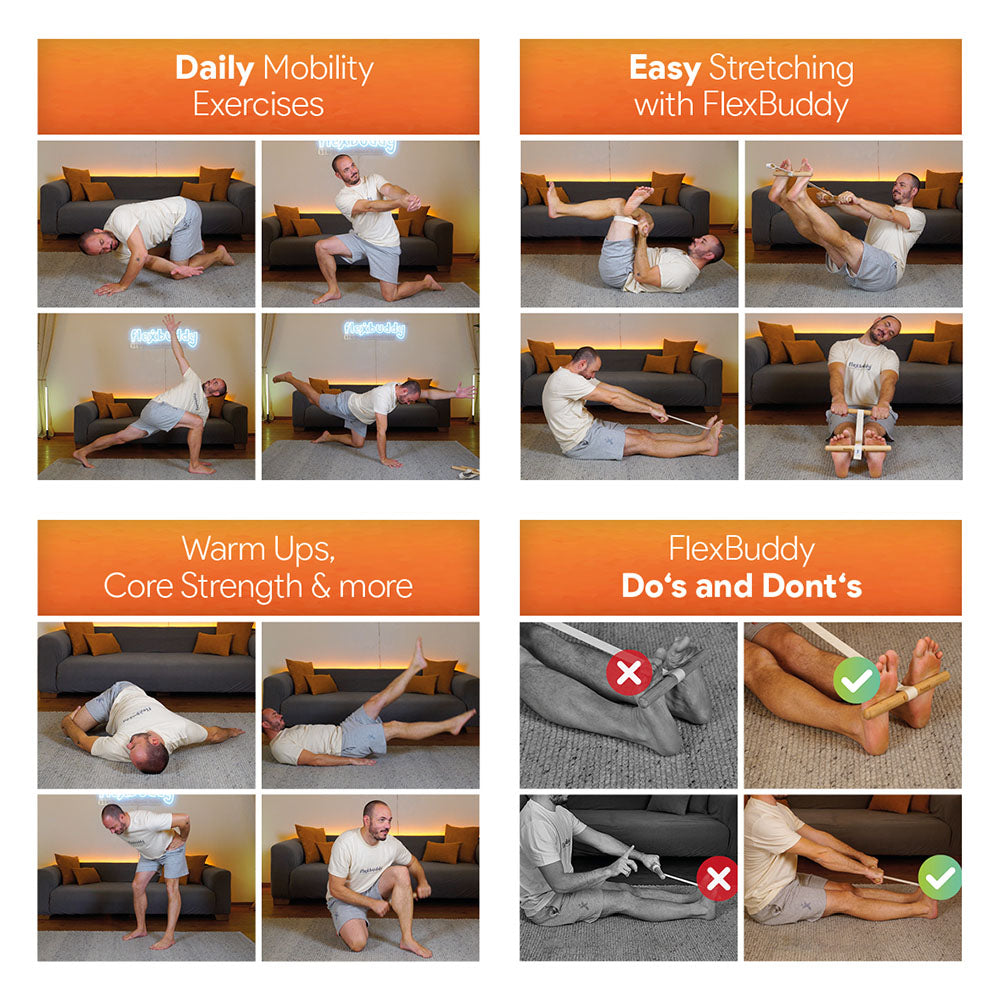
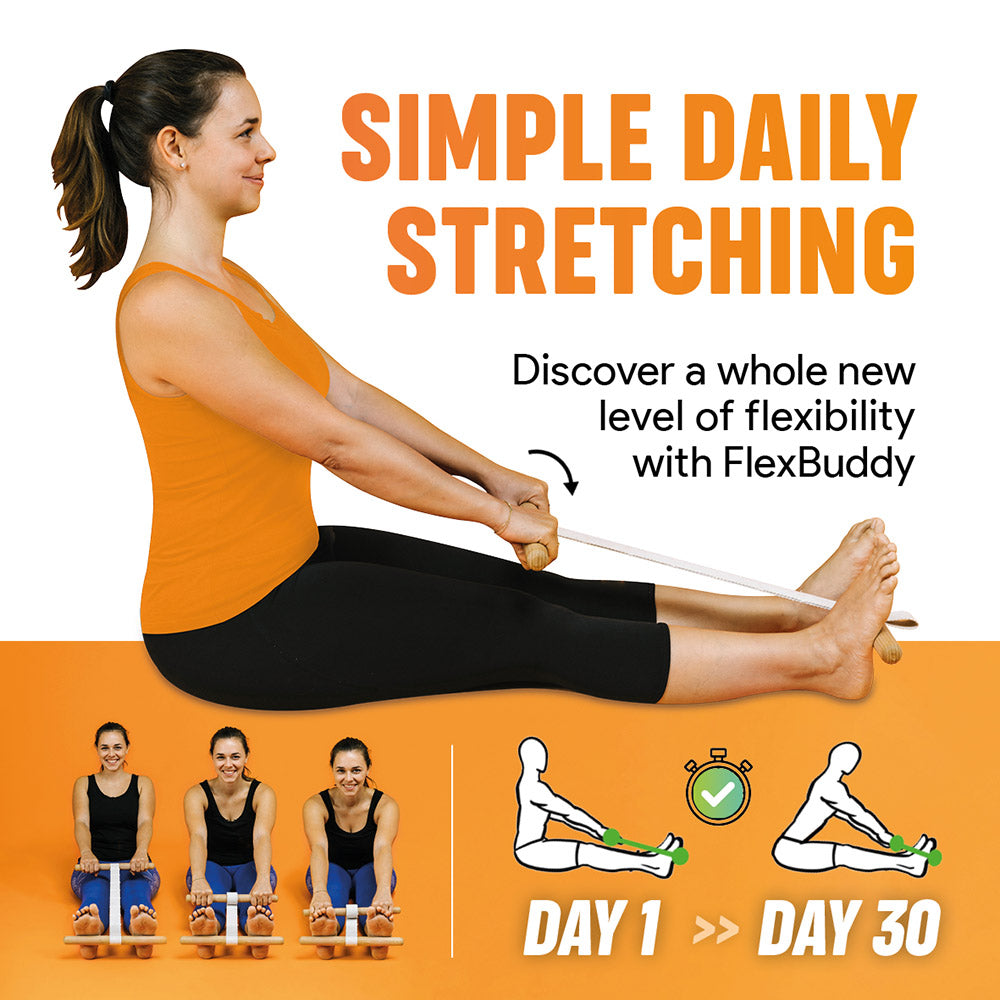
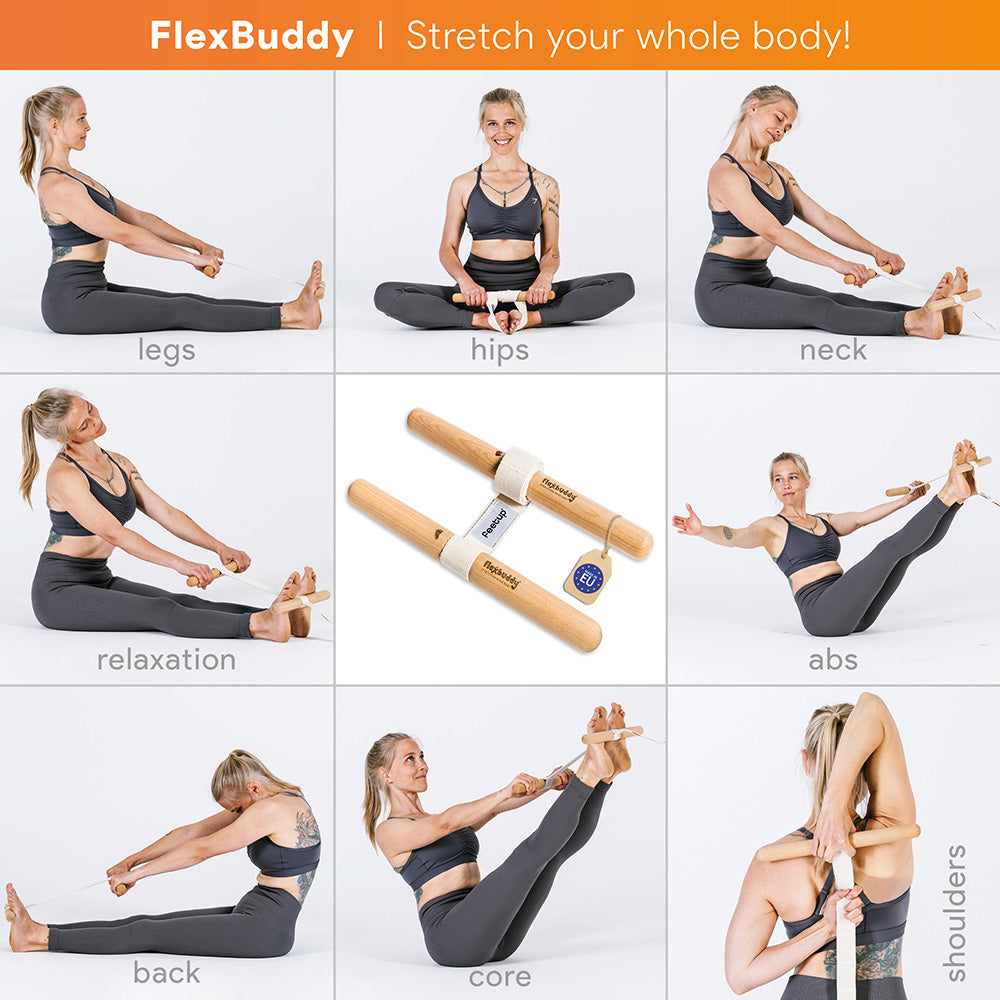
One rule makes or breaks the hamstring stretches: the spine stays long and the fold comes from the pelvis tipping over the thighs. Fold with a rounded lower back and you have loaded the part that hurts to stretch the part that does not. A strap, a towel or a stretching device such as FlexBuddy under the feet lets you sit tall without reaching, which is the whole point. For a fuller floor routine, use lower back pain stretches to do at home; this article deliberately does not duplicate it.
Add strength. Strengthening beats stretching for persistent pain [5] and the prevention trials paired stretching with trunk endurance work [10][12]. Two or three short sessions a week of dead bugs, bird dogs, side planks and glute bridges complete the picture.
What does not help, and when to stop
Bed rest does not help [2][6]. Back belts and shoe insoles do not prevent back pain, and neither does education without movement [11]. Scans rarely change what you should do; the Lancet series singles out imaging as something used far more than the evidence supports [8].
Stretching itself can hurt your back in a handful of predictable ways: loaded forward bends with a rounded lumbar spine, toe touches with straight knees first thing in the morning, bouncing in a cold muscle, pushing into pain, and stretching a nerve as if it were a muscle, with long hard holds that send a burn down the leg. The trials give a reassuring baseline: where harms were recorded, side effects were mostly minor, such as muscle soreness, at a rate close to the comparison groups [3]. The yoga review's higher rate of increased back pain [13] is the reminder that any exercise can flare a back if done too hard, too soon.
Stop and get assessed if a stretch produces sharp pain rather than a pull, pain or tingling below the knee, numbness or weakness, or if your pain is clearly worse the day after each session for more than a week. Next-day soreness in the hamstrings or hips is normal; worsening back pain is not.
An honest timeline
Day one: a gentle session usually makes the back feel freer for an hour or two. That is the sensation change above [16], and it fades if you go straight back to the chair. Weeks one to three: most episodes of non-specific back pain are improving on their own in this window [2][6]; stretching keeps you moving through it rather than taking the credit. Weeks three to eight: the range the hamstring trials and the stretching research used [4][16], when range of motion and the evening ache change noticeably. Beyond: the 73% recurrence risk within a year [2] is the number to design around. The habit has to continue, two to three times a week at a minimum [12], daily if you sit [10].
Doing this with FlexBuddy
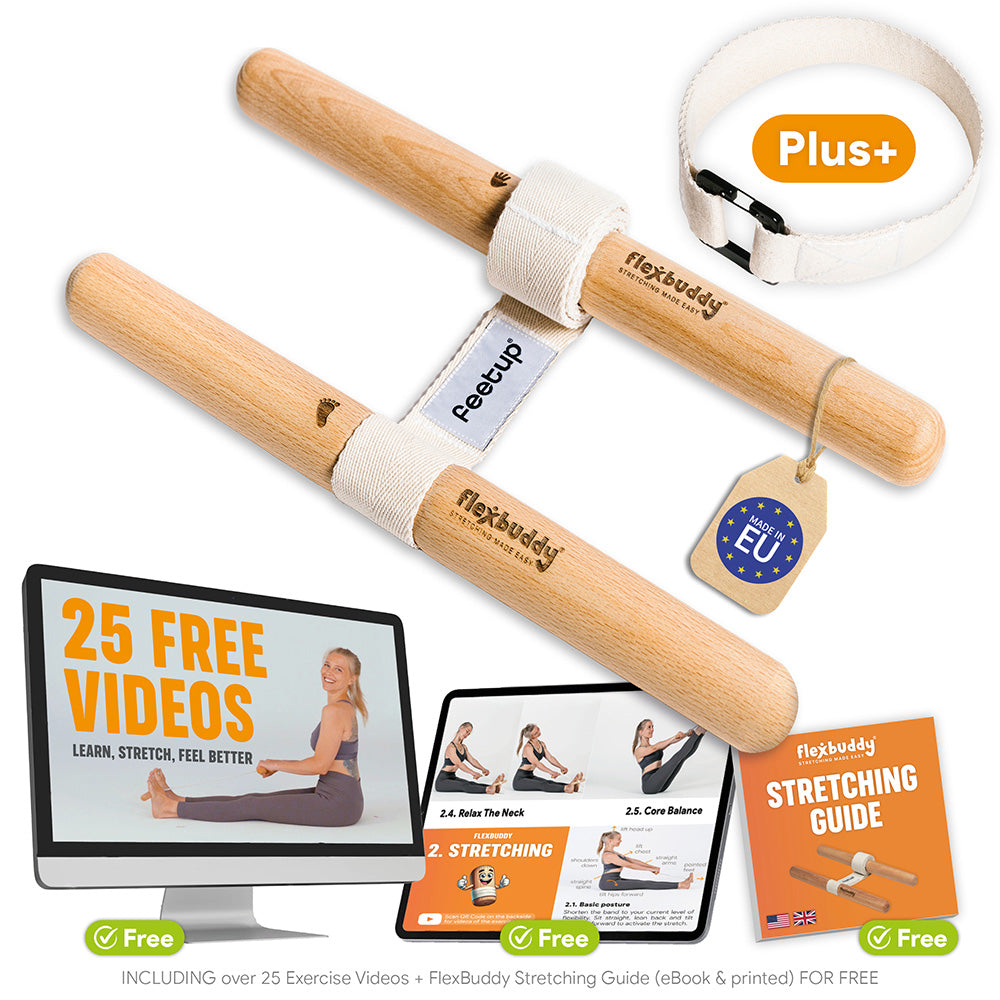
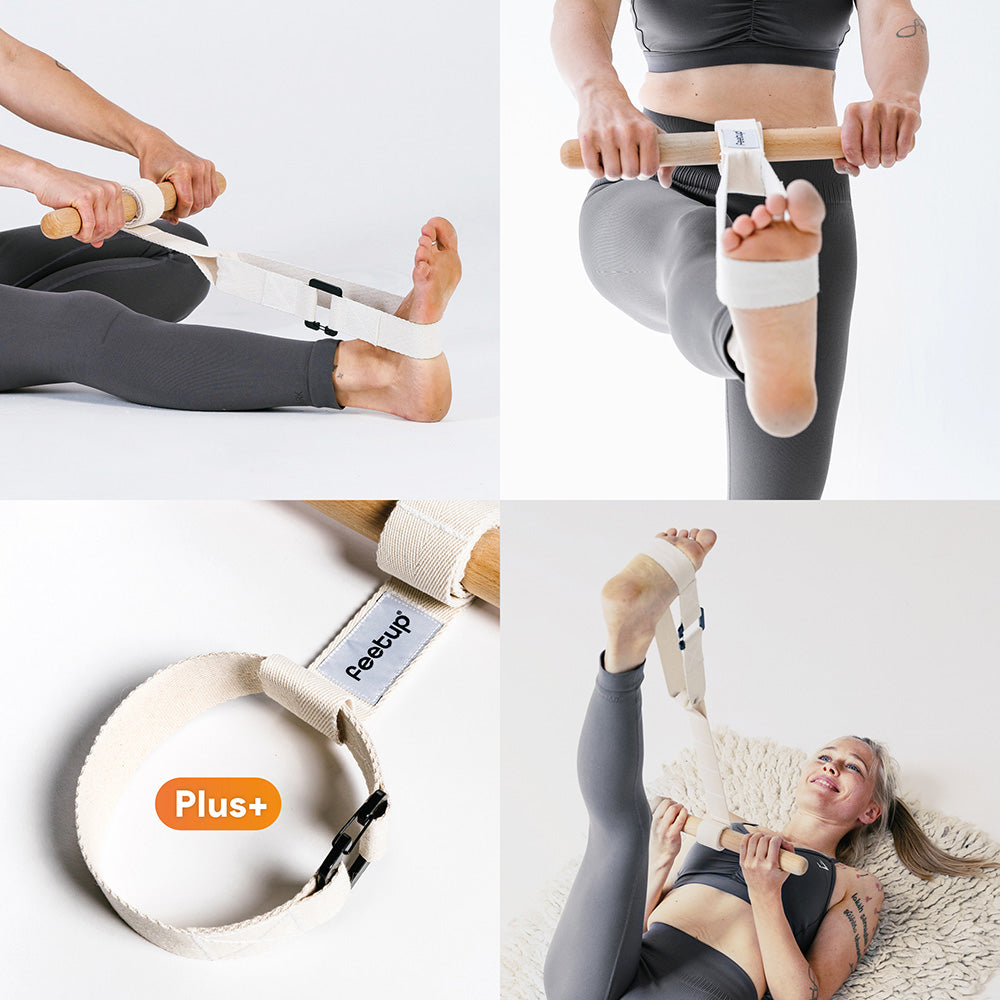
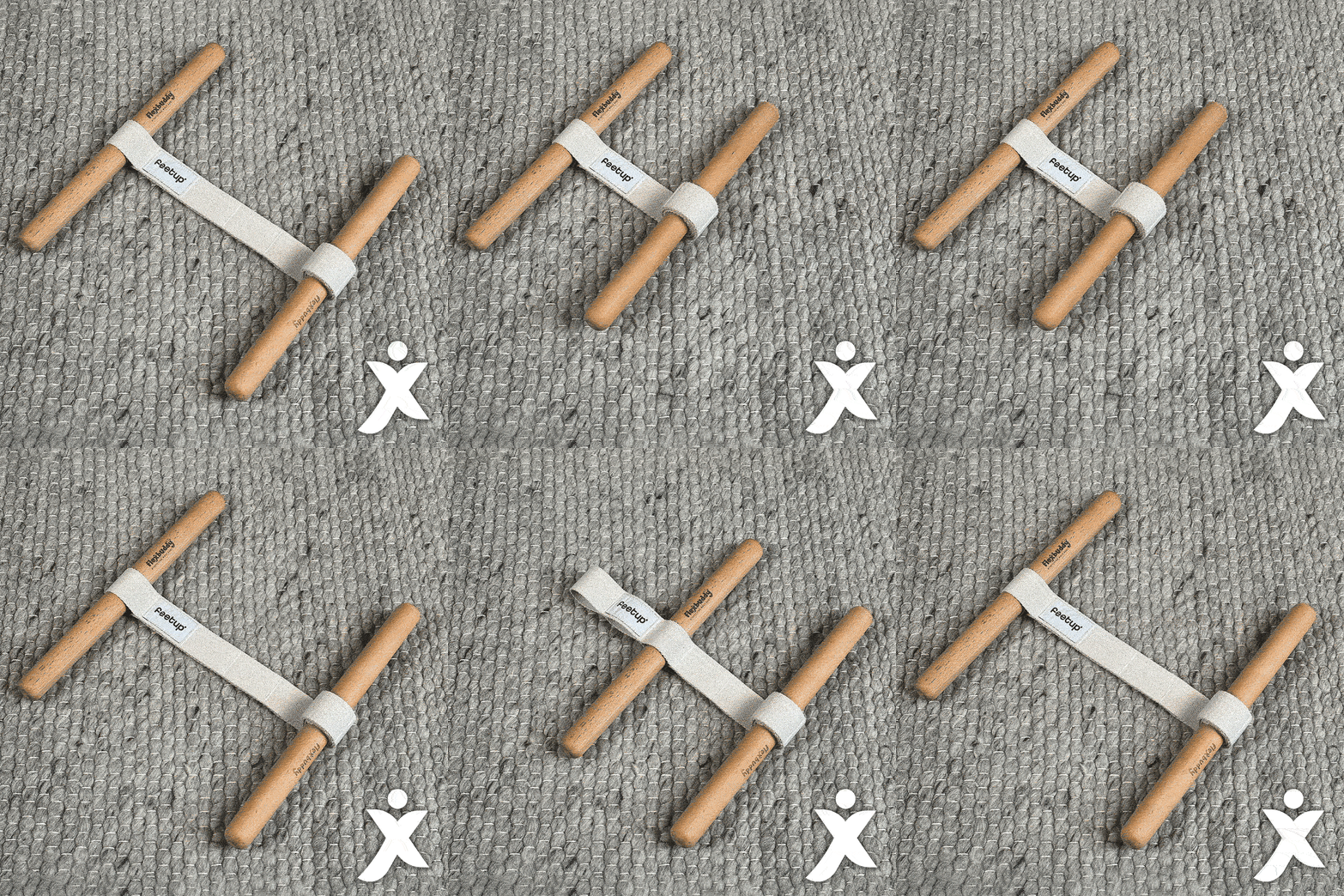
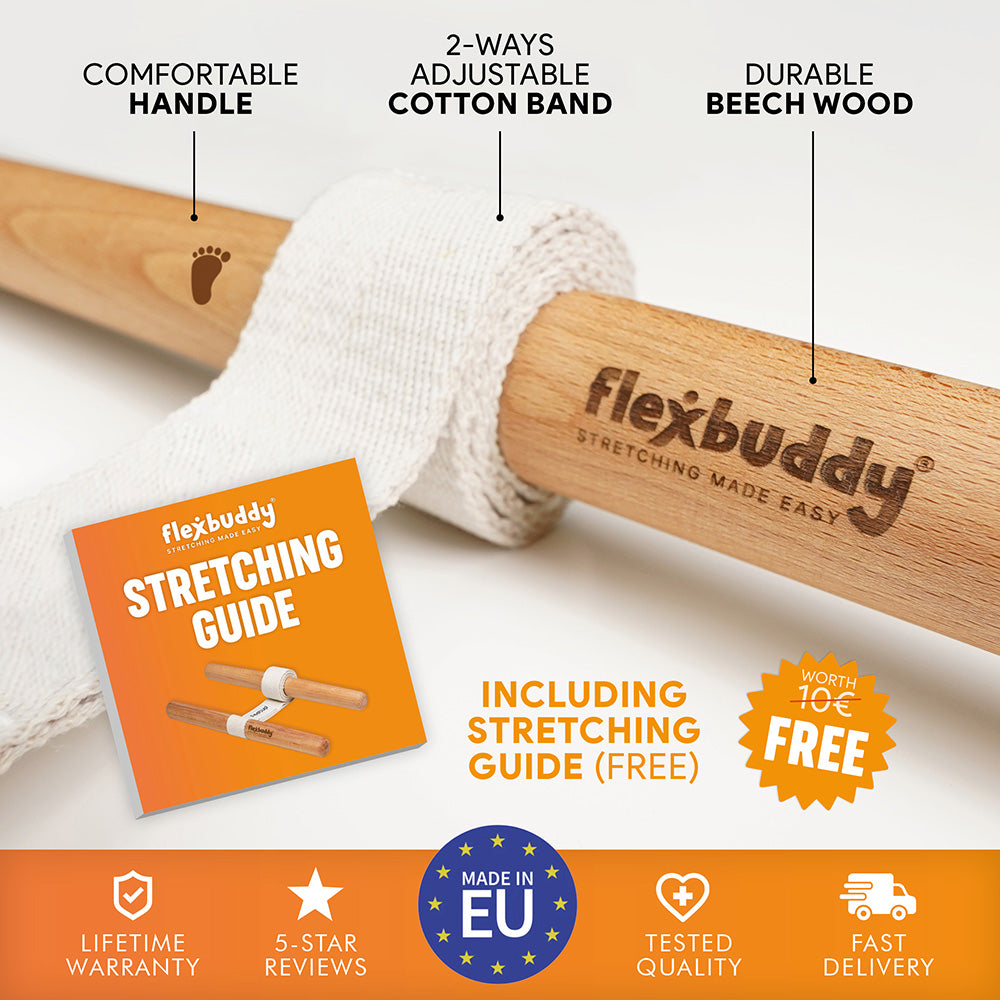
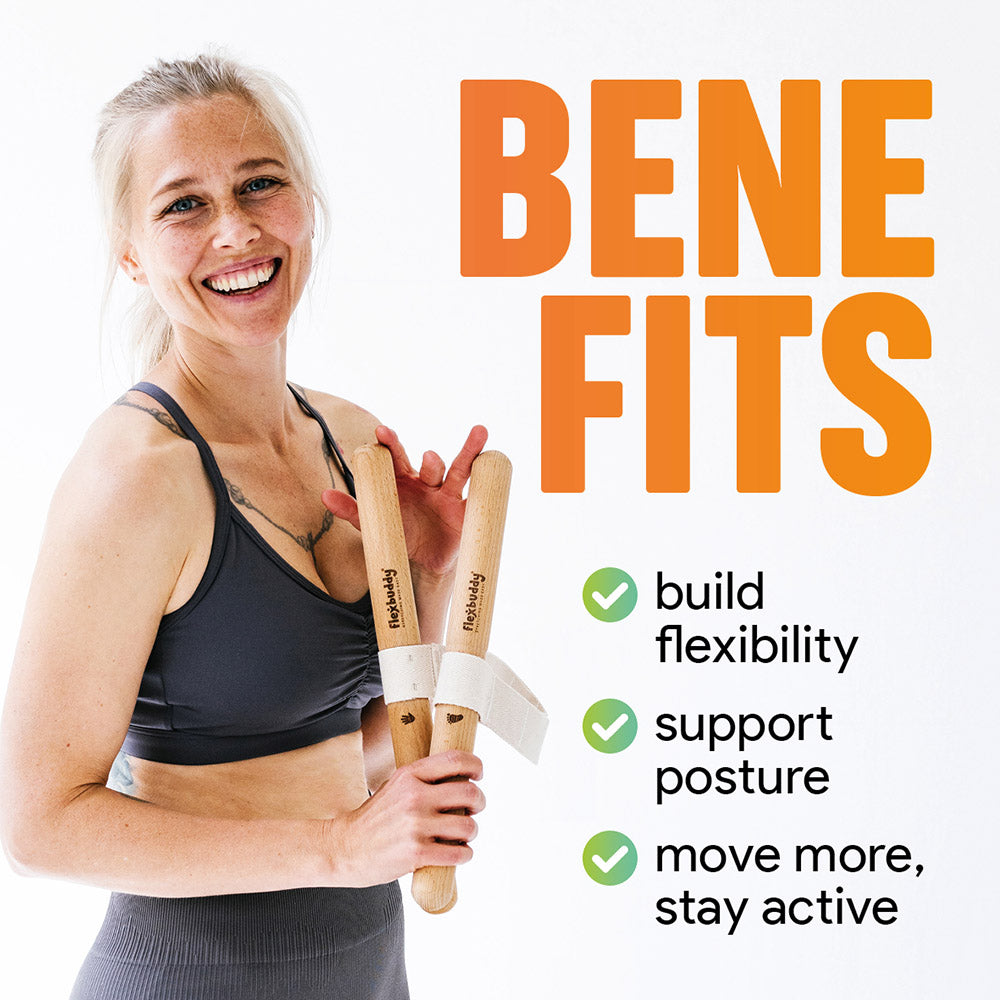
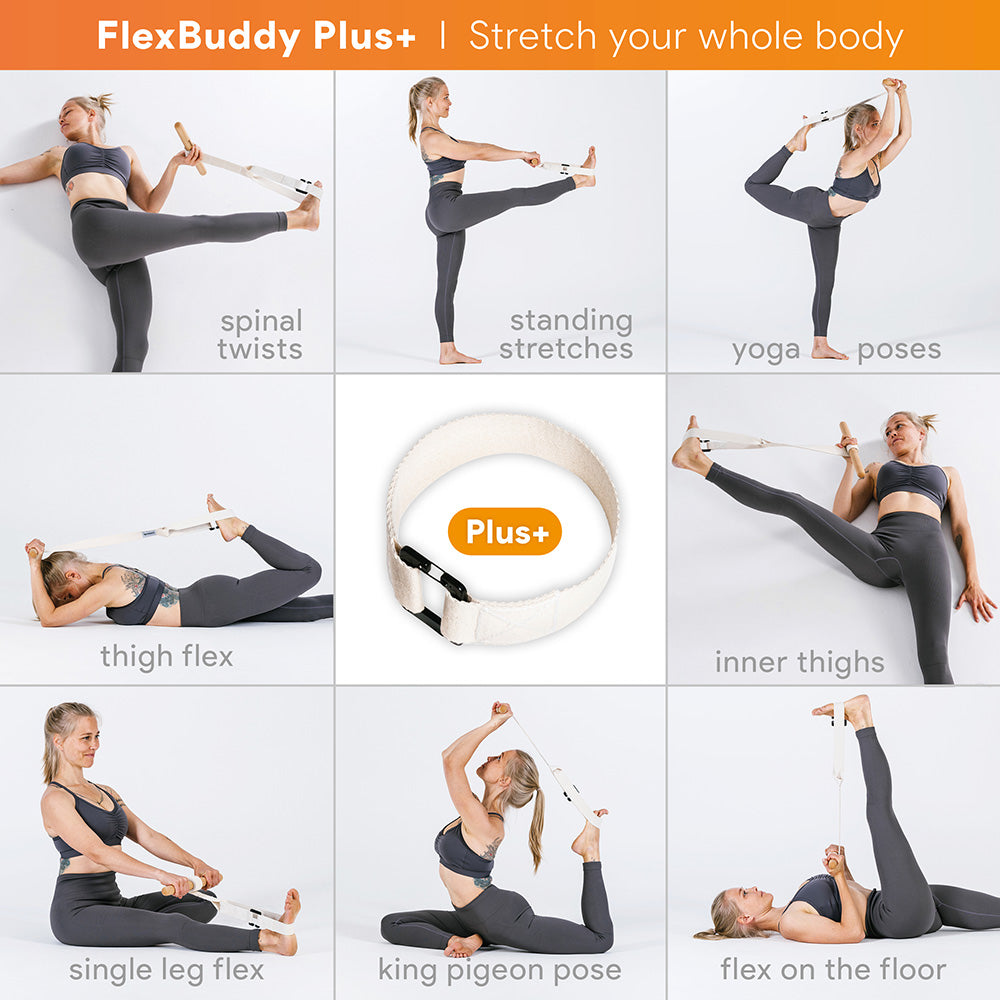
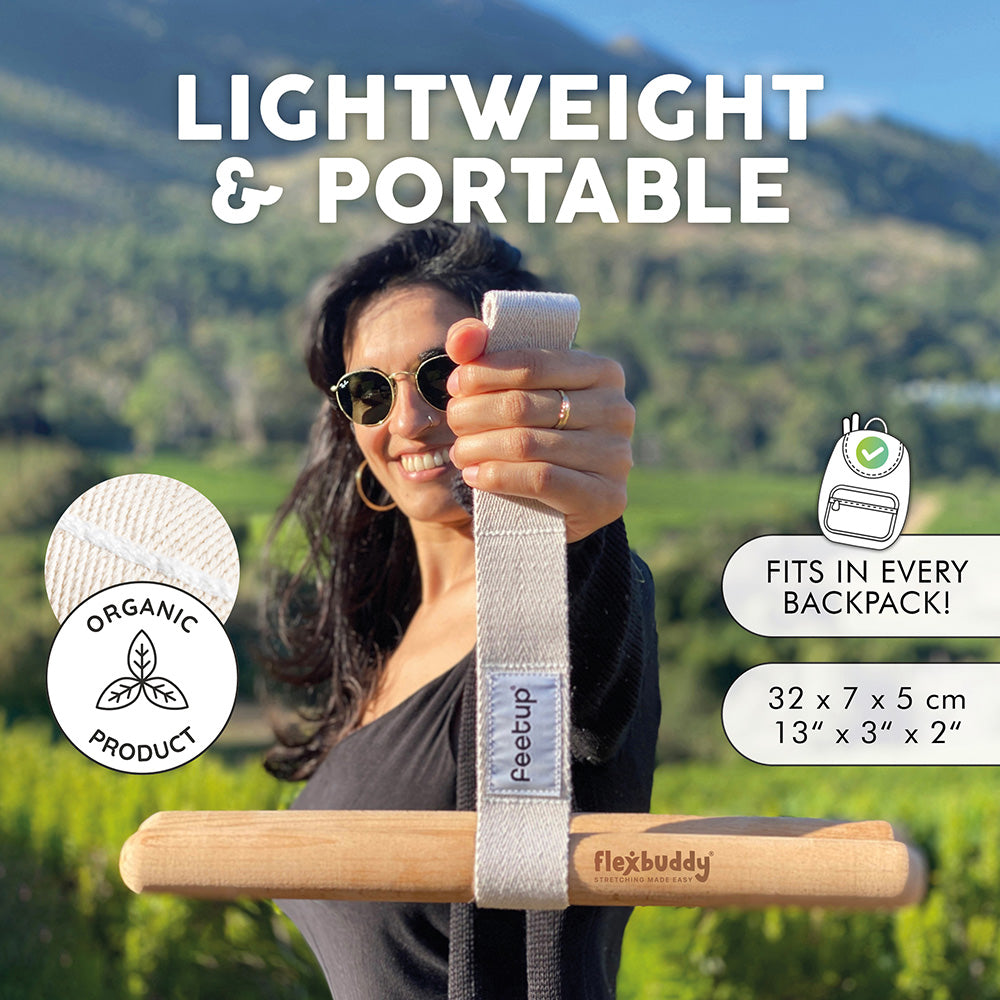
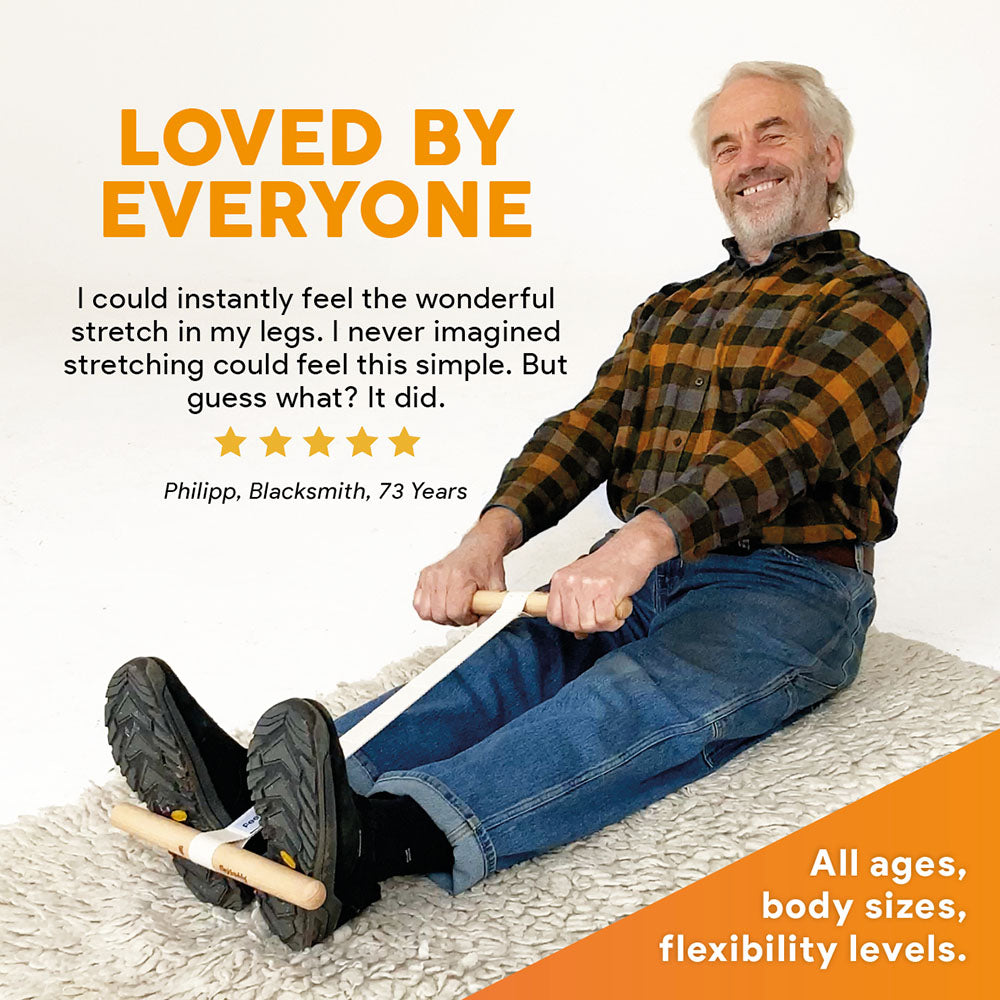
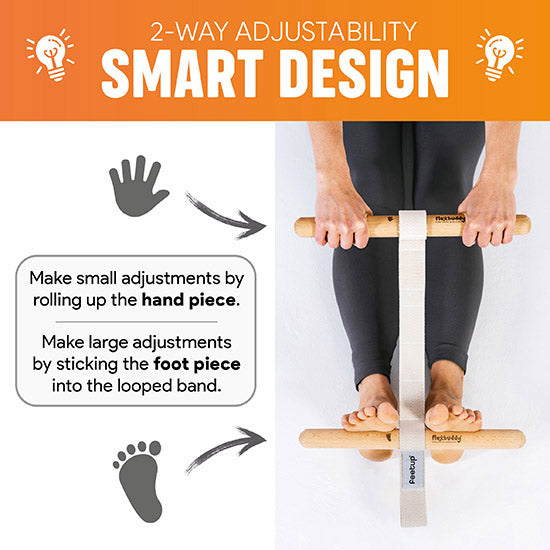
The stretch with the best evidence for back pain is the hamstring stretch, and the way most people do it, rounding the back to reach the toes, irritates a sore back and misses the hamstrings. FlexBuddy® is a stretching device made of two beech-wood bars joined by an adjustable cotton strap. One bar goes under the soles of your feet, the other in your hands; you sit tall, lean back and tilt the hips, and the strap carries the pull, so your spine stays long and the stretch lands in the legs. The foot bar moves between loops for big changes of length and the hand bar rolls the strap for small ones, so a stiff back starts long and shortens a loop a week. The wooden handles do not cut into the hands like a rope. "A great tool to help your clients maintain a neutral spine while stretching calves, hamstrings and lower back," wrote one personal trainer. Ten slow breaths, three times, takes about two minutes. Lifetime warranty, 30-day money-back guarantee. See FlexBuddy, or take the two-minute quiz to find the routine for your kind of stiffness.
Frequently asked questions
Does stretching help lower back pain?
For non-specific lower back pain, about nine in ten cases [2], yes, modestly. A meta-analysis of 14 trials found hamstring stretching reduced pain and improved function [4], and a 228-person trial found a stretching class worked as well as yoga and better than a self-care book [7]. Exercise in general has the strongest evidence [3], so stretching works best as part of staying active.
Can stretching make back pain worse?
It can if you stretch with a rounded, loaded lower back, push into pain, or stretch a disc or nerve problem the wrong way. Done gently with a long spine, the harms recorded in trials are mostly minor muscle soreness [3]. A stretch that sends pain, tingling or numbness down a leg is the sign to stop and get checked.
Should I stretch my back every day?
Daily is fine and is what the prevention trial in office workers used [10]. The guideline minimum is about 60 seconds per muscle group on at least two to three days a week, to mild tightness and never pain [17]. Two minutes a day covers the hamstrings and hip flexors.
How long does it take for stretching to help back pain?
Most episodes improve within a few weeks whatever you do [6]. Expect a single session to feel better for an hour or two [16], a noticeable change in two to four weeks of near-daily practice, and a measurable one in six to eight weeks, the length of the programmes the research used [4][16].
Stretching vs strengthening for back pain: which is better?
Strengthening wins on the evidence. A network meta-analysis of 89 trials ranked Pilates, resistance and stabilisation training highest and found stretching alone no better than control [5]; prevention reviews recommend strengthening combined with stretching or aerobic exercise two to three times a week [12]. Do both.
Does stretching your hamstrings help back pain?
This is the best-supported single stretch. Across 14 randomised trials with 735 participants, hamstring stretching reduced pain and disability scores, with the largest gains in leg-raise range in people whose pain radiated down the leg [4]. Whether tight hamstrings cause back pain in the first place is unproven [9].
This article is general information, not medical advice. Tight muscles usually respond well to regular stretching. If your pain is sharp, radiates down a leg, comes with numbness, weakness, fever, bladder or bowel changes, follows an injury, or keeps getting worse, see a doctor or physiotherapist before you stretch.
References
- Hartvigsen J, Hancock MJ, Kongsted A, et al.; Lancet Low Back Pain Series Working Group. What low back pain is and why we need to pay attention. Lancet. 2018;391(10137):2356–2367. doi:10.1016/S0140-6736(18)30480-X. PMID 29573870 (abstract accessed 4 Nov 2026).
- Koes BW, van Tulder MW, Thomas S. Diagnosis and treatment of low back pain. BMJ. 2006;332(7555):1430–1434. doi:10.1136/bmj.332.7555.1430. https://pmc.ncbi.nlm.nih.gov/articles/PMC1479671/ (accessed 4 Nov 2026).
- Hayden JA, Ellis J, Ogilvie R, Malmivaara A, van Tulder MW. Exercise therapy for chronic low back pain. Cochrane Database Syst Rev. 2021;9(9):CD009790. doi:10.1002/14651858.CD009790.pub2. PMID 34580864 / PMC8477273 (abstract accessed 4 Nov 2026).
- Gou Y, Lei H, Chen X, Wang X. The effects of hamstring stretching exercises on pain intensity and function in low back pain patients: a systematic review with meta-analysis of randomized controlled trials. SAGE Open Med. 2024;12:20503121241252251. doi:10.1177/20503121241252251. PMID 39086556 / PMC11289822 (accessed 4 Nov 2026).
- Owen PJ, Miller CT, Mundell NL, et al. Which specific modes of exercise training are most effective for treating low back pain? Network meta-analysis. Br J Sports Med. 2020;54(21):1279–1287. doi:10.1136/bjsports-2019-100886. PMID 31666220 / PMC7588406 (abstract accessed 4 Nov 2026).
- NHS. Back pain. Page last reviewed 5 March 2026. https://www.nhs.uk/conditions/back-pain/ (accessed 4 Nov 2026).
- Sherman KJ, Cherkin DC, Wellman RD, et al. A randomized trial comparing yoga, stretching, and a self-care book for chronic low back pain. Arch Intern Med. 2011;171(22):2019–2026. doi:10.1001/archinternmed.2011.524. PMID 22025101 / PMC3279296 (abstract accessed 4 Nov 2026).
- Foster NE, Anema JR, Cherkin D, et al.; Lancet Low Back Pain Series Working Group. Prevention and treatment of low back pain: evidence, challenges, and promising directions. Lancet. 2018;391(10137):2368–2383. doi:10.1016/S0140-6736(18)30489-6. PMID 29573872 (abstract accessed 4 Nov 2026).
- Hori M, Hasegawa H, Takasaki H. Comparisons of hamstring flexibility between individuals with and without low back pain: systematic review with meta-analysis. Physiother Theory Pract. 2021;37(5):559–582. doi:10.1080/09593985.2019.1639868. PMID 31317831 (abstract accessed 4 Nov 2026).
- Sihawong R, Janwantanakul P, Jiamjarasrangsi W. A prospective, cluster-randomized controlled trial of exercise program to prevent low back pain in office workers. Eur Spine J. 2014;23(4):786–793. doi:10.1007/s00586-014-3212-3. PMID 24492949 / PMC3960439 (abstract accessed 4 Nov 2026).
- Steffens D, Maher CG, Pereira LS, et al. Prevention of low back pain: a systematic review and meta-analysis. JAMA Intern Med. 2016;176(2):199–208. doi:10.1001/jamainternmed.2015.7431. PMID 26752509 (abstract accessed 4 Nov 2026).
- Shiri R, Coggon D, Falah-Hassani K. Exercise for the prevention of low back pain: systematic review and meta-analysis of controlled trials. Am J Epidemiol. 2018;187(5):1093–1101. doi:10.1093/aje/kwx337. PMID 29053873 (abstract accessed 4 Nov 2026).
- Wieland LS, Skoetz N, Pilkington K, Harbin S, Vempati R, Berman BM. Yoga for chronic non-specific low back pain. Cochrane Database Syst Rev. 2022;11(11):CD010671. doi:10.1002/14651858.CD010671.pub3. PMID 36398843 / PMC9673466 (abstract accessed 4 Nov 2026).
- Yamato TP, Maher CG, Saragiotto BT, et al. Pilates for low back pain. Cochrane Database Syst Rev. 2015;(7):CD010265. doi:10.1002/14651858.CD010265.pub2. PMID 26133923 / PMC8078578 (abstract accessed 4 Nov 2026).
- Lam OT, Strenger DM, Chan-Fee M, Pham PT, Preuss RA, Robbins SM. Effectiveness of the McKenzie Method of Mechanical Diagnosis and Therapy for treating low back pain: literature review with meta-analysis. J Orthop Sports Phys Ther. 2018;48(6):476–490. doi:10.2519/jospt.2018.7562. PMID 29602304 (abstract accessed 4 Nov 2026).
- Weppler CH, Magnusson SP. Increasing muscle extensibility: a matter of increasing length or modifying sensation? Phys Ther. 2010;90(3):438–449. doi:10.2522/ptj.20090012. PMID 20075147 (abstract accessed 4 Nov 2026).
- Harvard Health Publishing. The ideal stretching routine. Harvard Medical School, 16 Mar 2026 (reviewed by H. E. LeWine, MD). https://www.health.harvard.edu/staying-healthy/the-ideal-stretching-routine (accessed 4 Nov 2026).
- Garber CE, Blissmer B, Deschenes MR, et al.; American College of Sports Medicine. Position stand: quantity and quality of exercise for developing and maintaining cardiorespiratory, musculoskeletal, and neuromotor fitness in apparently healthy adults. Med Sci Sports Exerc. 2011;43(7):1334–1359. doi:10.1249/MSS.0b013e318213fefb. PMID 21694556 (record accessed 4 Nov 2026).