- Running takes range, and you can win it back. Calves, hamstrings, hip flexors and glutes work through a short range thousands of times a run: in a ten-week study, beginner runners lost about 3 degrees of calf flexibility [1].
- Strength protects, stretching frees. Injury prevention has been tested in thousands of runners and recruits [2], and strength training is the stand-out: across 25 trials in all sports it cut injuries to less than a third [3].
- Stretching gives you your range back. A 2024 meta-analysis of 77 studies found a lasting gain, with static holds ahead of dynamic [4].
- Before a run, move. Dynamic stretching improves performance by 1.3%. Save the long static holds for afterwards: 60 seconds or more just before exercise costs about 4.6% for a short while [5].
- After a run, hold. Static stretches of 10 to 30 seconds, about 60 seconds per muscle, two to three days a week or more [6][7]. The reward is not about tomorrow's soreness [8]: it is a comfortable stride and lower back.
- Sore knee or IT band? Go to the hip. For runner's knee, hip and thigh strength is the treatment [9]; the IT band itself lengthens less than 0.5% when stretched [10], so the work is in the hip.
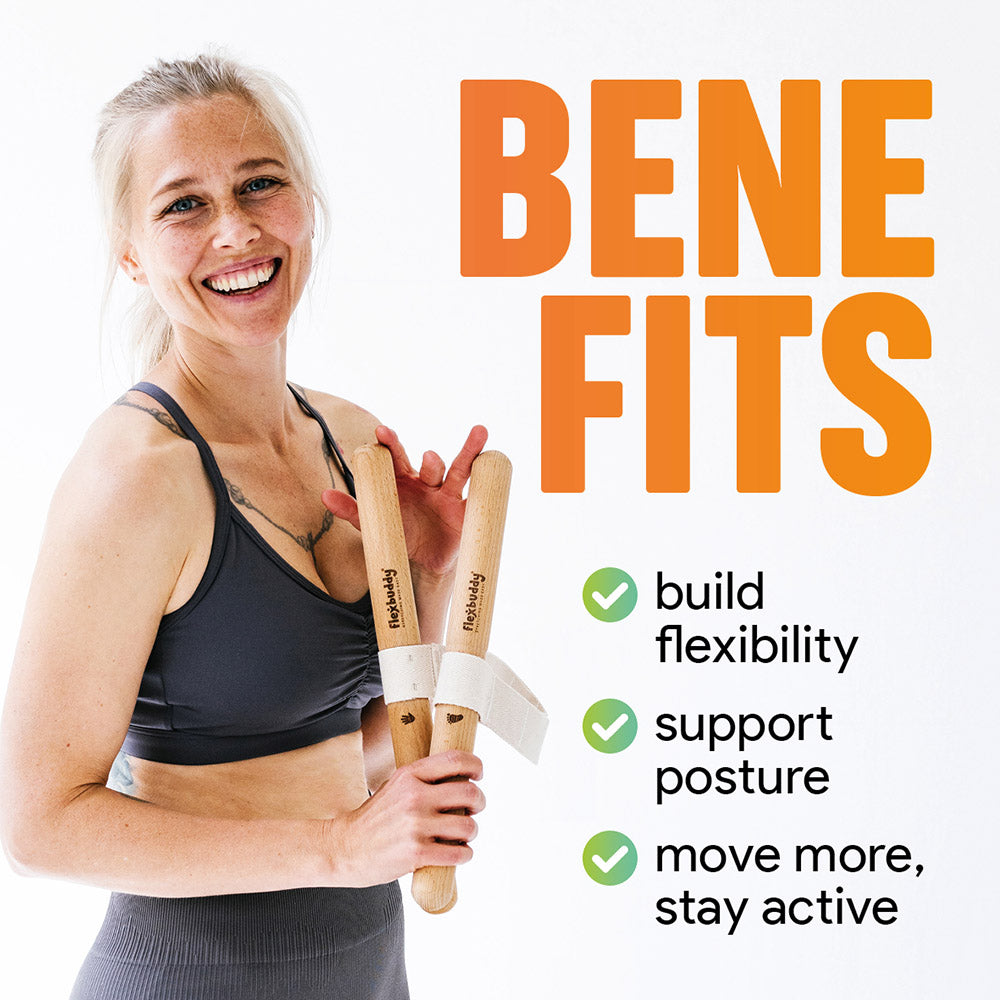
- FlexBuddy® makes the post-run stretch land: spine long, hamstrings and calves stretched in one position, the pull in your legs and not your lower back.
What running does to your legs
Runners rarely have weak legs. They have strong legs that have forgotten how long they can be. All of it can be won back.
Hamstrings
Three muscles on the back of the thigh run from the ischial tuberosity, the bone you sit on, to just below the knee; they extend the hip and bend the knee [11]. When you run they slow the swinging leg just before the foot lands, then help drive you forward, always at half length: your knee never fully straightens while your hip is fully bent, the only position that takes them to their end range. Add a desk day either side and they spend almost all their time short. A straight-spine stretch after your run is the one moment they get their full length. If your lower back aches on long runs, the hamstrings and lower back guide covers that connection.
Calves
"The calf" is two muscles. The gastrocnemius starts on the femur above the knee, the soleus on the tibia and fibula below it, and both run into the Achilles tendon, which attaches to the heel bone; both point the foot down and the gastrocnemius also bends the knee [12]. Every push-off is a calf contraction, and a 10 km run is roughly eight thousand of them. In the beginner-runner study, ten weeks of running took calf flexibility from 27.3 to 23.9 degrees [1]. A springy calf is good for running, right up to the point where the ankle stops bending and the knee and heel start paying for it, the subject of the tight calves pillar.
Hip flexors
The iliopsoas (psoas major from the lumbar spine, iliacus from inside the pelvis) inserts on the femur and flexes the hip; the rectus femoris, one of the four quadriceps, starts on the front of the pelvis and crosses both hip and knee [13]. Running swings the thigh forward with these muscles on every stride and never lengthens them fully, because the trailing hip extends only a little before the leg comes through again; sitting shortens them further. Short hip flexors tip the pelvis forward, pull on the lumbar spine and shorten the stride behind you.
Glutes, piriformis and the IT band
Gluteus maximus is the main extensor of the thigh and inserts partly into the iliotibial tract, the IT band; gluteus medius and minimus abduct the leg and stabilise the pelvis; and the tensor fasciae latae also feeds the IT band, which runs down the outside of the thigh to just below the outside of the knee [14]. Every stance phase of running is spent on one leg, and these muscles hold the pelvis level. When they tire, the knee drifts inwards and the IT band is tensioned over the outside of the knee, exactly where runners feel it.
Why runners stretch: range, comfort and a stride that stays free
A systematic review of long-distance runners found yearly injury rates between 19.4% and 79.3%, with the knee the most common site [15]; a 2021 review put overall incidence at about 40%, led by Achilles tendinopathy, shin splints, runner's knee, plantar fasciitis and ankle sprains [16]. So a runner needs a plan with two parts.
Strength is your injury insurance. Prevention has been tested in thousands of runners and recruits [2], including a classic field trial of a warm-up, cool-down and stretching programme in recreational runners [17]. The stand-out is strength training: across 25 randomised trials in all sports it reduced injuries to less than a third and roughly halved overuse injuries [3].
Stretching is your range. This is where stretching delivers, and the evidence is strong: the 2024 meta-analysis of 77 studies found a lasting increase in joint range, with static and PNF stretching ahead of dynamic [4]. Range is what running takes from you [1], and range is what lets you fold forward without rounding your back and finish a long run without locked hips.
You do not need a gymnast's flexibility: a study of collegiate distance runners links a little stiffness to good running economy [18]. What you need is enough range to move freely, and a few minutes of regular stretching gives you exactly that. You will notice it in the first kilometre.
Before a run: the dynamic warm-up
Warm up by moving and you run better: dynamic stretching improved performance by 1.3% [5]. Keep static holds for afterwards. A meta-analysis of 104 studies found that static stretching immediately before exercise reduced strength by about 5.4%, power by 1.9% and explosive performance by 2.0% [19], and the longer the hold, the bigger the cost: 60 seconds or more per muscle cost about 4.6%, under 60 seconds about 1.1% [5]. The dip lasts minutes and mostly vanishes after some dynamic activity [5]. The warm-up itself is movement: the NHS version is at least six minutes of marching, heel digs, knee lifts and shallow knee bends [20]. For a runner, the equivalent is this.
| Drill | How | How much | Targets |
|---|---|---|---|
| Brisk walk into easy jog | Start slower than feels necessary | 3 to 5 minutes | Muscle temperature |
| Leg swings, front to back | Hold a wall, swing a straight leg forward and back, growing the range | 10 to 15 per leg | Hamstrings, hip flexors |
| Leg swings, side to side | Face the wall, swing one leg across the body and out | 10 to 15 per leg | Glutes, inner thigh |
| Walking lunges | Long step, back knee towards the floor, torso tall | 8 to 10 per leg | Hip flexors, quads, glutes |
| Calf pumps | Hands on a wall, one foot back, rock the heel down and up; repeat with the back knee bent | 10 to 15 per leg, each way | Gastrocnemius, soleus |
| High knees and heel flicks | Light and quick | 20 to 30 seconds each | Hip flexors, hamstrings |
| Strides | Relaxed accelerations to about 80% effort, walk back between | 3 × 60 to 80 m | Race pace |
Eight to ten minutes; halve it before an easy run. If a short static stretch on one tight muscle makes the first kilometre feel better, keep it under 30 seconds and jog afterwards [5]. The static versus dynamic stretching article explains why the two kinds do different jobs.
After a run: the static routine
The muscles are warm and nobody is asking them for power: this is the moment static holds pay off. The American College of Sports Medicine recommends about 60 seconds of flexibility exercise per muscle-tendon group on at least two days a week [6], usually summarised as two to three days a week in holds of 10 to 30 seconds [7]; the NHS post-exercise routine uses 15- to 20-second holds and takes about five minutes [21]. In the one trial that tested hold length directly, 30-second hamstring holds five days a week for six weeks increased range, and 60-second holds or stretching three times a day added nothing [22]. The routine is short because short works.
| Muscle | Stretch | Position | Hold × reps |
|---|---|---|---|
| Hamstrings | Seated or lying straight-leg stretch | Sit tall, legs straight, FlexBuddy or a strap round the feet (or lie on your back and raise one straight leg). Tip the pelvis forward, chest up, back long; stop when the thigh pulls, before the lower back rounds | 20 to 30 s × 2 to 3 per side |
| Gastrocnemius | Wall calf stretch, straight knee | Hands on a wall, back leg straight, heel down, toes pointing at the wall; lean in until the upper calf pulls | 20 to 30 s × 2 per side |
| Soleus | Wall calf stretch, bent knee | Same position, back knee bent, heel down; the pull moves low, near the Achilles | 20 to 30 s × 2 per side |
| Hip flexors | Half-kneeling stretch | Kneel on one knee, other foot forward. Tuck the tailbone, squeeze the glute, shift forward a few centimetres; the pull is at the front of the hip, not the lower back | 20 to 30 s × 2 per side |
| Glutes / piriformis | Figure four | On your back, cross one ankle over the other knee, draw the lower thigh towards your chest | 20 to 30 s × 2 per side |
| Quads | Standing or side-lying thigh stretch | Hold the top of the foot, heel towards the buttock, knees together, pelvis tucked | 20 to 30 s × 2 per side |
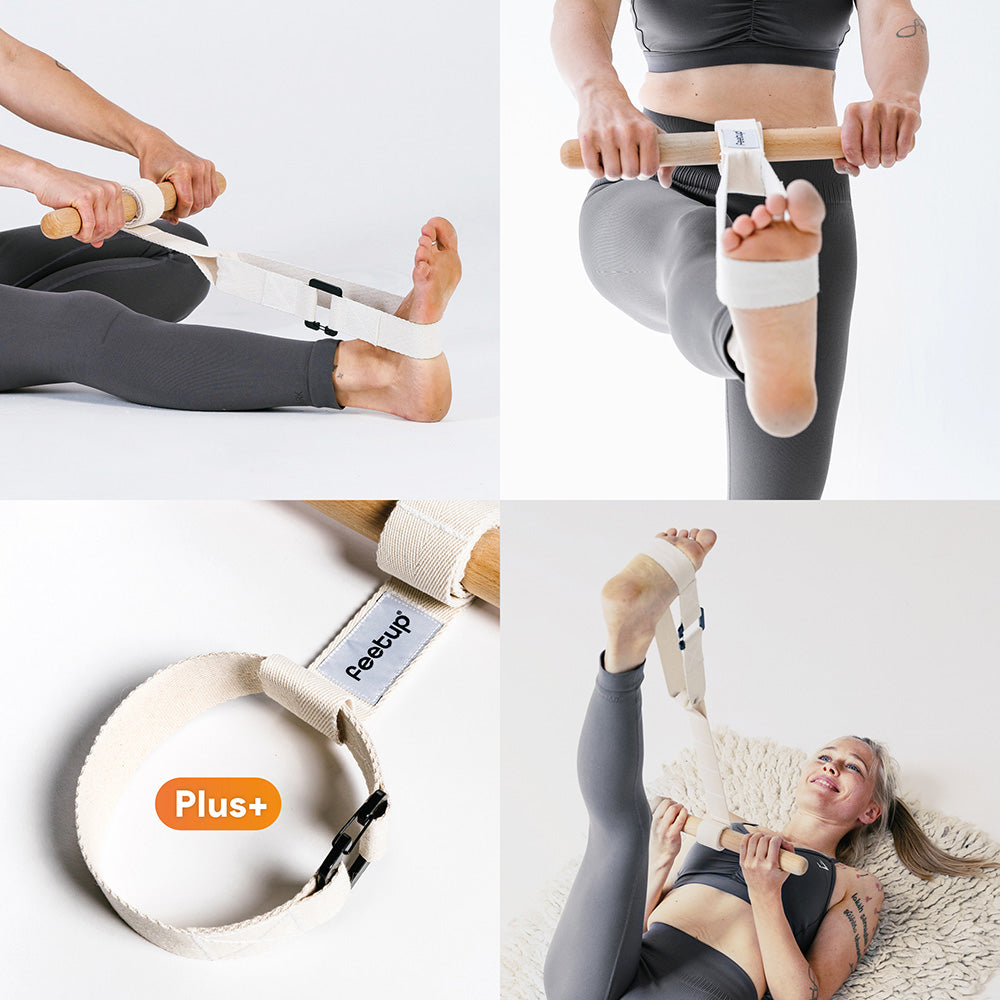
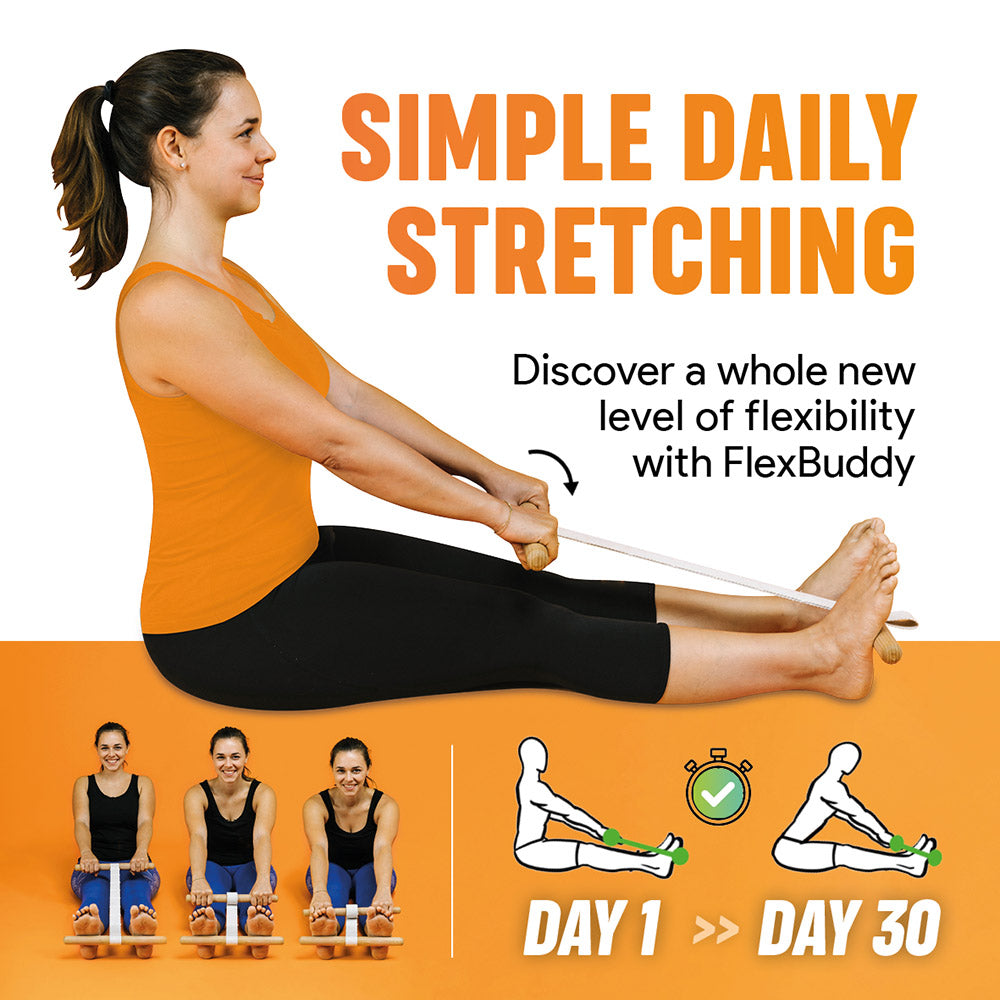
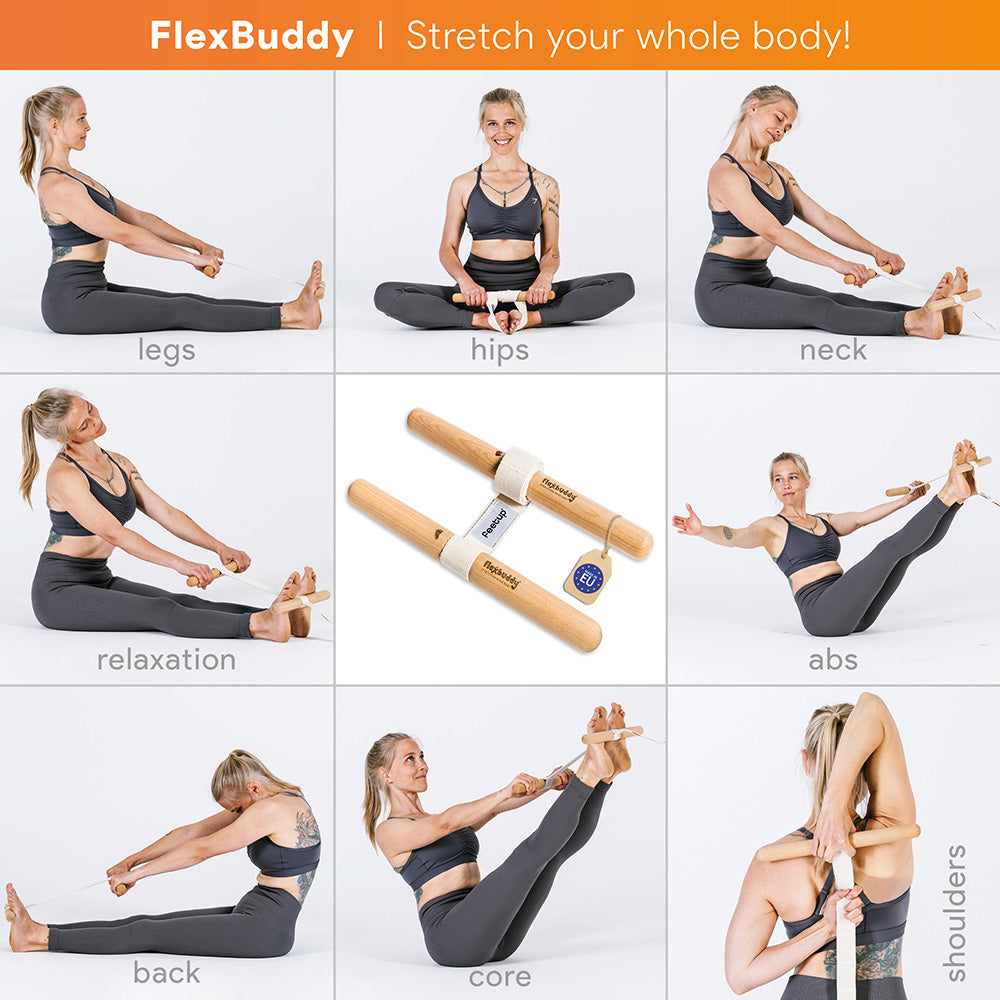
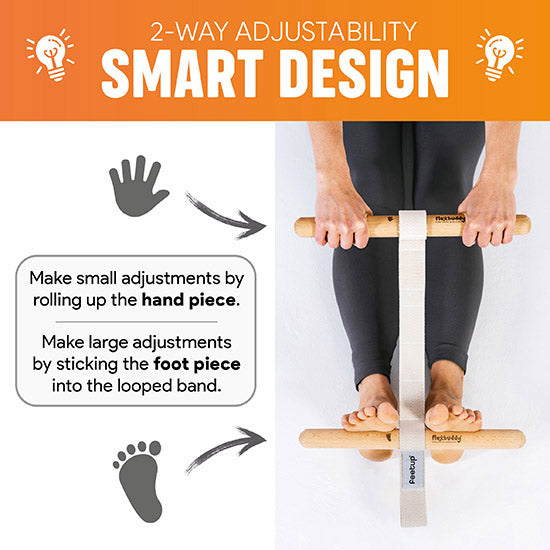
Six to eight minutes, and the first entry is the one that pays most. The hamstring stretch works when the pelvis tips forward over the thighs with the spine long. Reach for the toes with a rounded back and the hamstrings barely lengthen; the distance comes from the lumbar spine, the last thing a tired runner needs. FlexBuddy is made for exactly this: foot bar under your feet, hand bar in both hands, and the strap makes up the distance so your back stays tall. Flex the feet against the bar and the calves join in. Mild tightness, slow breathing, never pain. Too tired for eight minutes? Hamstrings and both calf positions: the three muscles that matter most, in three minutes.
Runner's knee, IT band, Achilles, plantar fascia: what works for each
Four classic runner's complaints, and for each one the research points to a clear answer.
Runner's knee (patellofemoral pain)
Patellofemoral pain is an ache around or behind the kneecap that worsens with squatting, prolonged sitting, stairs, jumping or running [23], and the most prevalent running diagnosis in cross-sectional studies, at about 16.7% of injured runners [16]. The answer is strength. The 2018 international consensus recommends exercise therapy, especially the combination of hip-focused and knee-focused exercises, as the core treatment [9], and quadriceps weakness predicted future patellofemoral pain in military recruits [24]. So squats, step-ups, single-leg bridges and side-lying hip abduction are the treatment. Stretching the quads, hip flexors and calves is the supporting act: it keeps the knee comfortable while the strength work does its job.
IT band syndrome
Iliotibial band syndrome is the most common injury on the outside of the knee in runners, with an incidence estimated at 5 to 14% [25]. Here the hip is where you win. A laboratory study found the band firmly anchored along the femur, lengthening by less than 0.5% under the standard IT band stretches [10], so the thing to train is the muscle that tensions it. The systematic review points to hip and knee coordination, running style and hip strengthening [25]. In the best-known case series, distance runners with ITB syndrome had weaker hip abductors on the painful side, and after a six-week gluteus medius programme, 22 of the 24 were pain-free and running, with no recurrences at six months [26]. Side-lying leg raises and single-leg squats, then; the figure four and foam rolling for comfort.
Achilles tendinopathy
Morning stiffness and pain along the tendon above the heel is a loading problem, and loading is the answer (details in Achilles tendon stretches). In the original study, recreational athletes with chronic Achilles tendinosis who could not run did 12 weeks of heavy eccentric heel drops, and all 15 returned to full running [27]. You may not even have to stop: in a later randomised trial, people who kept running during a loading programme, with a pain-monitoring model, did as well at 12 months as those who rested six weeks [28]. Gentle calf stretching has a place, but where the tendon meets the heel bone, deep stretches can aggravate it; the calves pillar explains which version to use.
Plantar fasciitis
Here a stretch is the star. In patients with chronic heel pain on the first steps of the morning, eight weeks of a plantar fascia-specific stretch (pulling the toes back with the hand) gave better pain and satisfaction scores than a standard Achilles stretch [29]. High-load heel raises work too: in a second trial they were ahead at three months, and by 12 months the two groups were level [30]. The plantar fasciitis stretches article has both routines.
Recovery days, foam rolling, and the week as a whole
Recovery days are when the stretching habit does its best work, because the muscles are not tired and you have time. The weekly shape: dynamic warm-up before every run, the three-minute minimum after every run, the full static routine on two or three days (rest days are ideal), and two short strength sessions, your injury insurance [3]. For other sports, see stretching for athletes.
Foam rolling earns its place too. A meta-analysis of 26 trials found a large immediate improvement in joint range compared with doing nothing, level with stretching [31]. A minute on the calves, quads and outer thigh before the static routine makes the stretch more comfortable. Roll the muscle, not the bone: the outside of the knee and the Achilles itself are not for rolling. The FlexBuddy foot bar is a massage tool as well: roll it under the sole of each foot, or press it into the thigh and calf.
And if you sit for a living, repeat the hamstring and calf stretches in the evening, in bed if you like, with FlexBuddy or a strap round the foot and the lower back flat on the mattress. Keep it by your running shoes and the habit looks after itself.
How long it takes: what you will feel, and when
You feel it on day one. Within one session, range improves immediately; that first gain typically lasts under 30 minutes [5], so the habit is what matters. Lasting change comes from repetition: six weeks of 30-second holds on five days a week produced a measurable gain in the hamstring trial [22]. A review of 23 long-term studies found that total weekly time mattered more than the length of any session, with at least five minutes a week over at least five days the pattern that worked [32]. And the 2024 meta-analysis found that once people were stretching regularly, volume, intensity and frequency did not separate one programme from another [4].
So: feel it on the first day, measure it at four to six weeks, and keep it for as long as you keep doing it. One FlexBuddy owner, Stylianos T., wrote: "It has changed my life! I can now bend 15 cm more than before in the space of 6 months."
When to stop and see someone
Stretching suits tight, tired muscles. It does not suit a hamstring that went with a sudden sharp pain mid-run (a strain), a calf that is swollen, hot or discoloured, a knee that locks or gives way, or shin or foot pain that is sharp at one point and worse with every run (a possible stress reaction). Pain that burns or tingles down the leg is nerve, not muscle, and long hamstring holds can make it worse. In all of those cases, a physiotherapist or doctor first, stretching afterwards.

Your post-run stretch, done properly with FlexBuddy
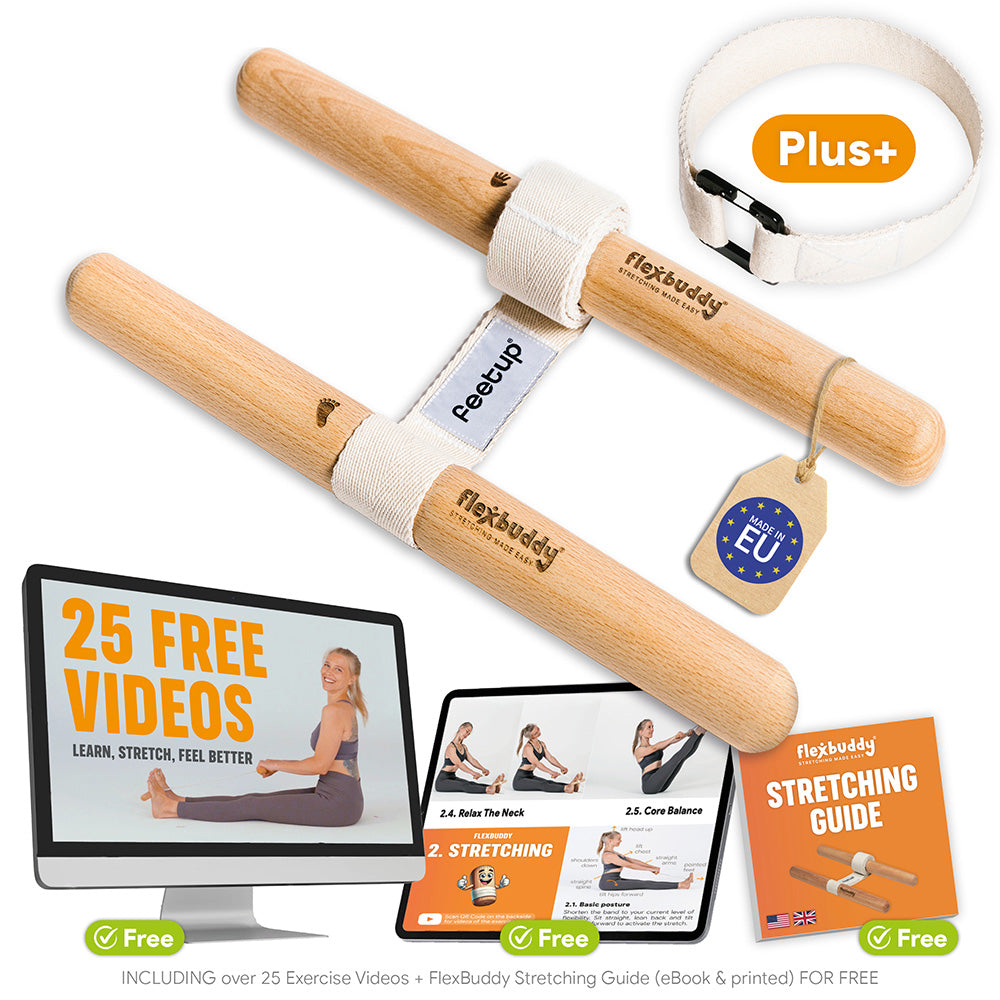
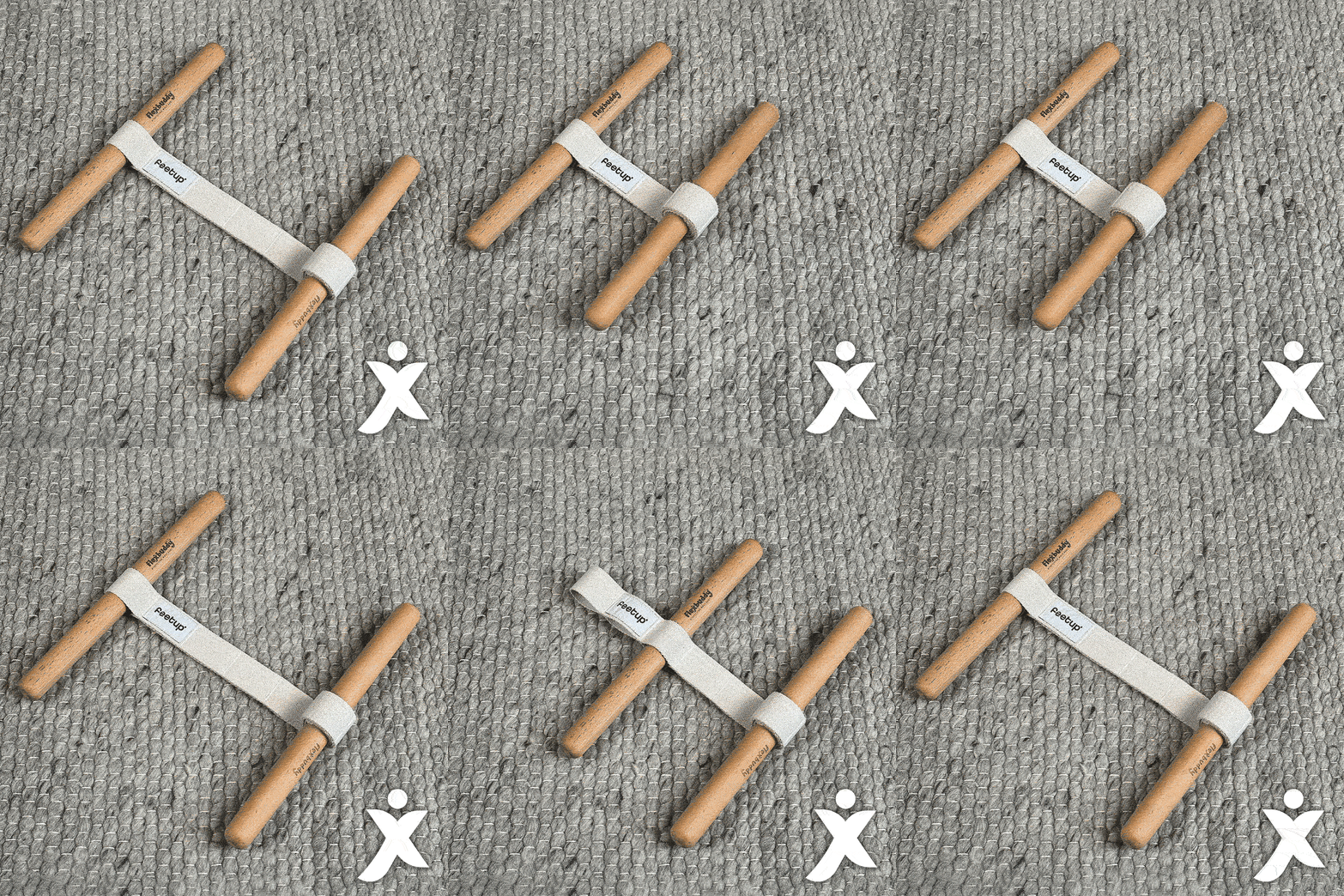
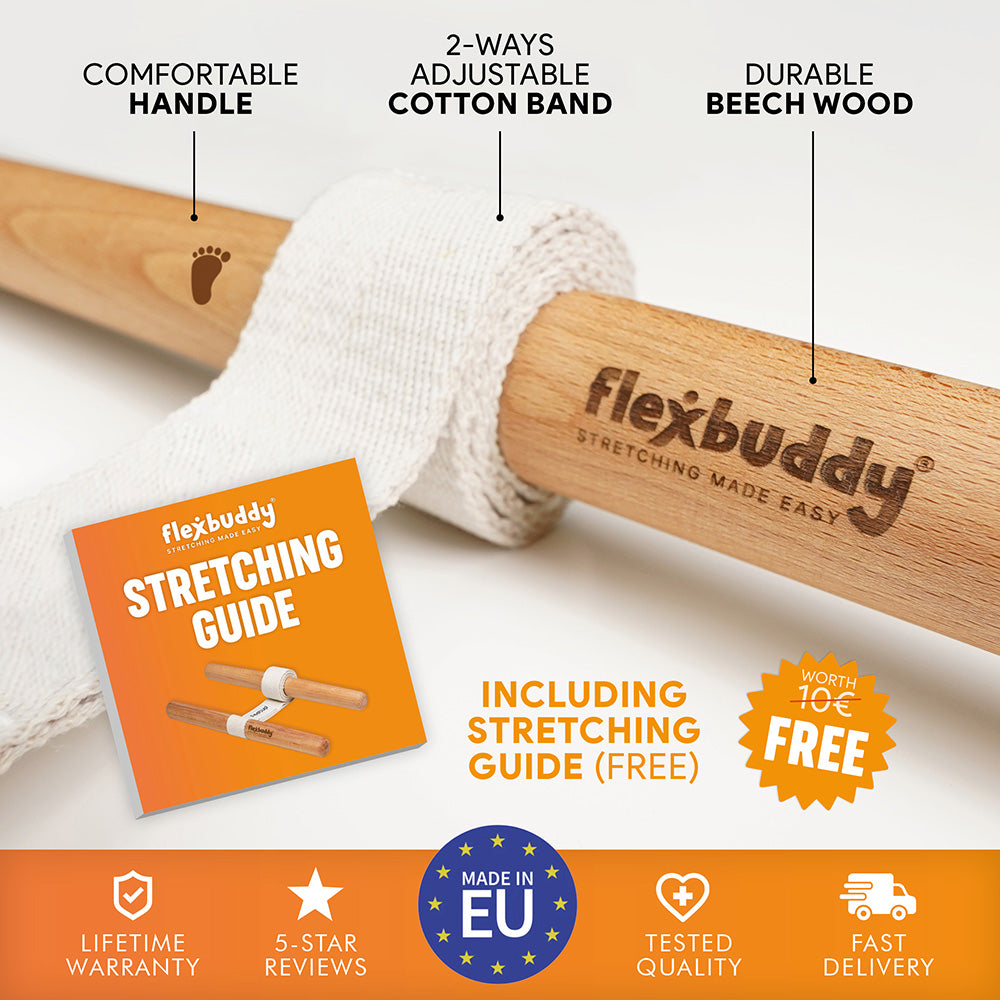
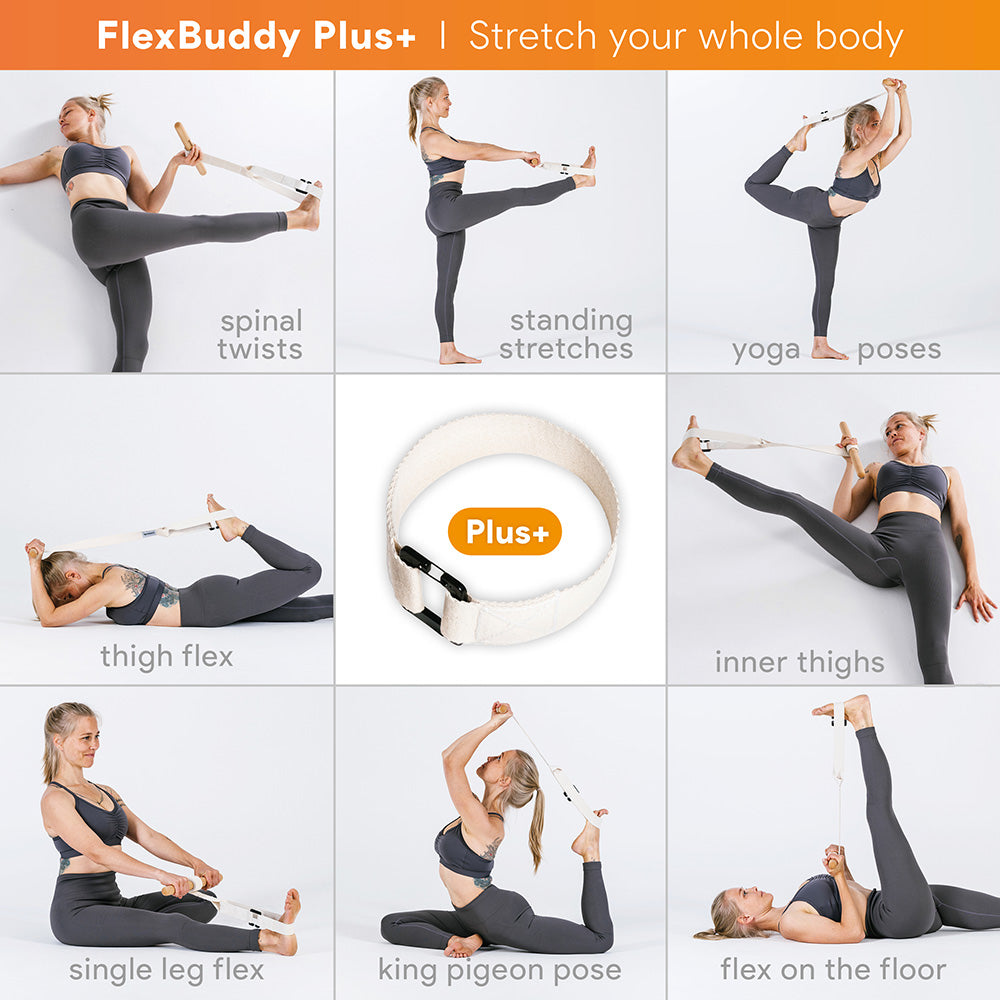
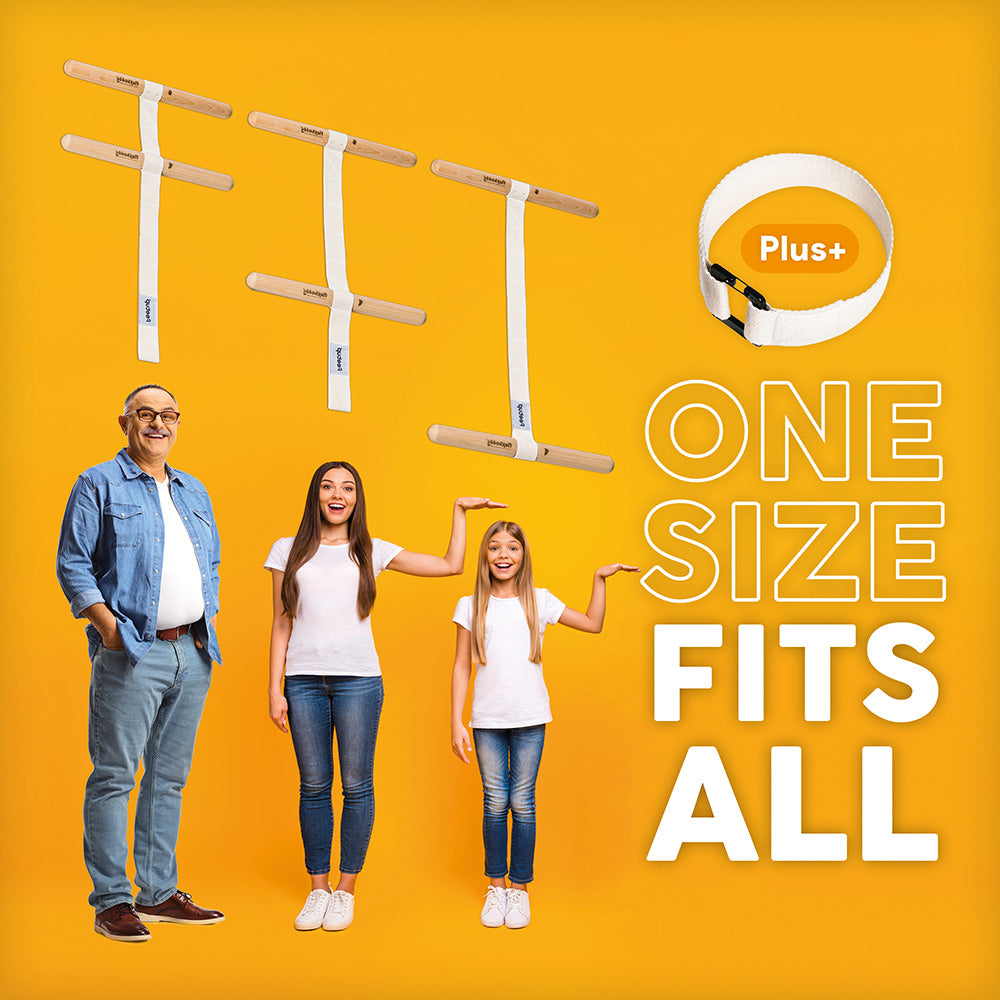
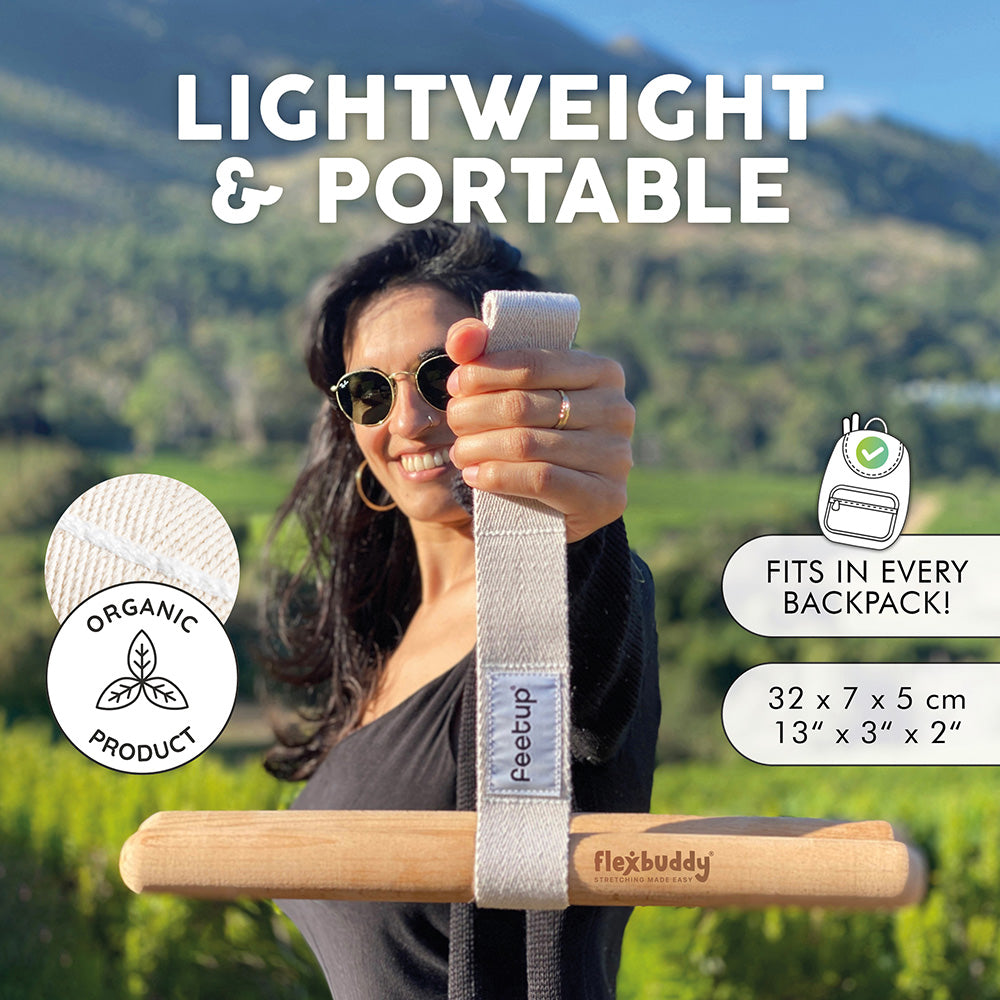
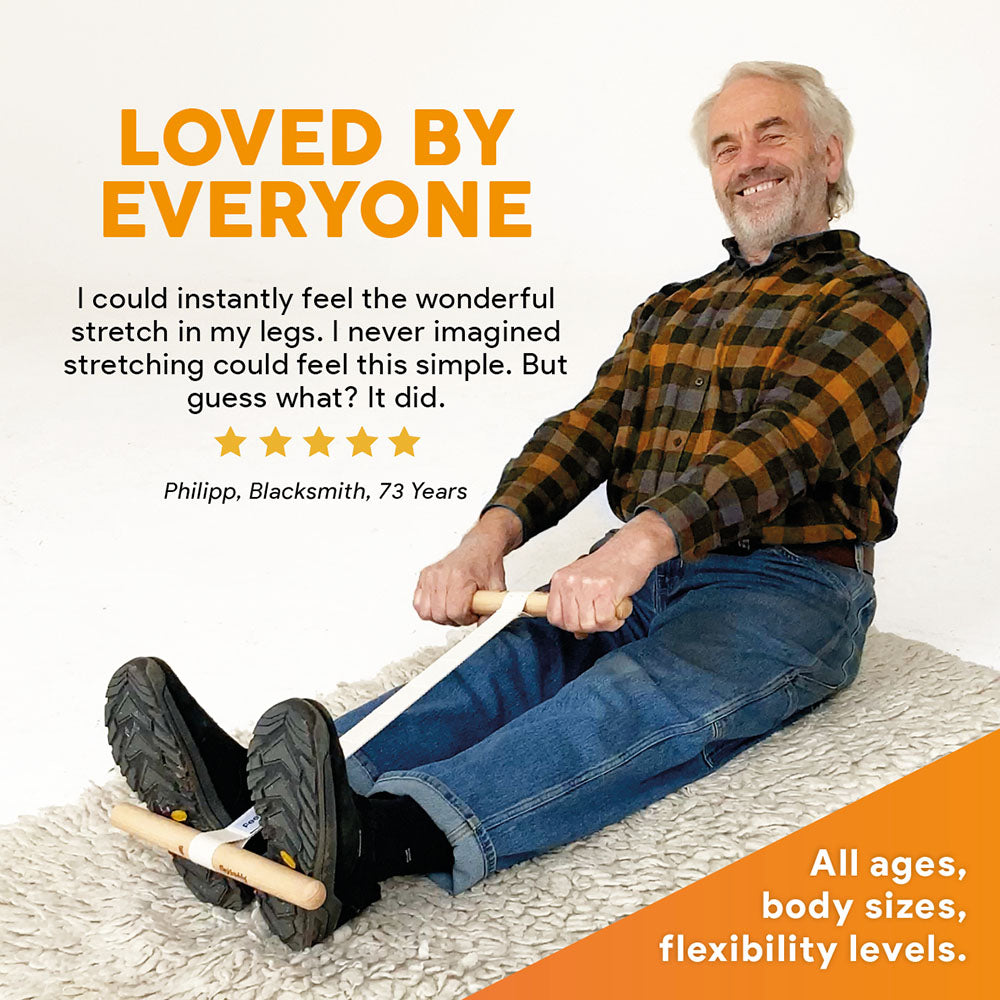
The post-run stretch that matters most, hamstrings and calves with a straight spine, is the hardest to do well when you are tired: hands slip off the feet, the back rounds, and the stretch ends up in the lumbar spine. FlexBuddy® solves that. It is a patented stretching device made of two beech-wood bars joined by an adjustable cotton strap. One bar goes under the soles of your feet, the other in your hands; you sit tall, lean back and tip the hips, and the strap carries the pull so the back stays long and the stretch lands in the legs. Flex the feet up against the bar and the same position stretches the calves. Move the foot bar one loop for a big change of length, roll the strap round the hand bar for a small one, and shorten a notch as the weeks go by.
Ten slow breaths, three times, is about two minutes, and two minutes a day can improve your flexibility and posture. It fits in a backpack. "A great tool to help your clients maintain a neutral spine while stretching calves, hamstrings and lower back," wrote Scott K., a trainer. FlexBuddy is rated 4.5 by verified buyers, with a 30-day money-back guarantee and a lifetime warranty. Get your FlexBuddy, or take the two-minute quiz to see where you start.
Frequently asked questions
Should runners stretch at all?
Yes. Stretching reliably restores the range that running takes away [4], and that keeps your stride free and your lower back comfortable. Pair it with strength training, the stand-out tool for injury prevention [3].
Should I stretch after running or before?
Both, differently. Before a run, warm up dynamically; long static holds just before running cost a few per cent of strength and power for a short while [5][19]. After a run, do static holds of 10 to 30 seconds, about 60 seconds per muscle [6][7].
Does stretching help runner's knee?
It helps as the supporting act. International consensus recommends exercise therapy, especially hip-focused and knee-focused strengthening, as the main treatment [9]. Stretching the quads, hip flexors and calves keeps the knee comfortable while the strength work does its job.
What is a good post-run stretching routine?
Six stretches in six to eight minutes: hamstrings with a straight spine, calves with the knee straight and bent, hip flexors, glutes, quads. Hold each 20 to 30 seconds, two or three times, to mild tightness and never pain [6][7][21]. FlexBuddy makes the first one easy to do well.
Why are my hamstrings tight after running?
Running works the hamstrings hard through a short range, and a day of sitting either side keeps them short. Regular straight-spine stretching after runs brings the length back, and you will feel the difference from the first session. A sudden sharp pain in the back of the thigh mid-run is a strain and needs rest first.
How long should runners hold a stretch?
About 10 to 30 seconds per hold and 60 seconds in total per muscle group, at least two to three days a week [6][7]. Short holds work: in a six-week trial, 30-second hamstring holds on five days a week increased range, and longer holds added nothing [22]. See the hold-time article.
This article is general information, not medical advice. Tight muscles usually respond well to regular stretching. If your pain is sharp, radiates down a leg, comes with numbness, weakness, fever, bladder or bowel changes, follows an injury, or keeps getting worse, see a doctor or physiotherapist before you stretch.
References
- Moore IS, Jones AM, Dixon SJ. Mechanisms for improved running economy in beginner runners. Med Sci Sports Exerc. 2012;44(9):1756–1763. doi:10.1249/MSS.0b013e318255a727. PMID 22525760.
- Yeung SS, Yeung EW, Gillespie LD. Interventions for preventing lower limb soft-tissue running injuries. Cochrane Database Syst Rev. 2011;(7):CD001256. doi:10.1002/14651858.CD001256.pub2. PMID 21735382.
- Lauersen JB, Bertelsen DM, Andersen LB. The effectiveness of exercise interventions to prevent sports injuries: a systematic review and meta-analysis of randomised controlled trials. Br J Sports Med. 2014;48(11):871–877. doi:10.1136/bjsports-2013-092538. PMID 24100287.
- Konrad A, Alizadeh S, Daneshjoo A, et al. Chronic effects of stretching on range of motion with consideration of potential moderating variables: a systematic review with meta-analysis. J Sport Health Sci. 2024;13(2):186–194. doi:10.1016/j.jshs.2023.06.002. PMID 37301370; PMC10980866.
- Behm DG, Blazevich AJ, Kay AD, McHugh M. Acute effects of muscle stretching on physical performance, range of motion, and injury incidence in healthy active individuals: a systematic review. Appl Physiol Nutr Metab. 2016;41(1):1–11. doi:10.1139/apnm-2015-0235. PMID 26642915.
- Garber CE, Blissmer B, Deschenes MR, et al.; American College of Sports Medicine. Position stand: quantity and quality of exercise for developing and maintaining cardiorespiratory, musculoskeletal, and neuromotor fitness in apparently healthy adults. Med Sci Sports Exerc. 2011;43(7):1334–1359. doi:10.1249/MSS.0b013e318213fefb. PMID 21694556.
- Harvard Health Publishing. The ideal stretching routine. Harvard Medical School, 16 Mar 2026 (reviewed by H. E. LeWine, MD). https://www.health.harvard.edu/staying-healthy/the-ideal-stretching-routine (accessed 4 Nov 2026).
- Herbert RD, de Noronha M, Kamper SJ. Stretching to prevent or reduce muscle soreness after exercise. Cochrane Database Syst Rev. 2011;(7):CD004577. doi:10.1002/14651858.CD004577.pub3. PMID 21735398.
- Collins NJ, Barton CJ, van Middelkoop M, et al. 2018 Consensus statement on exercise therapy and physical interventions (orthoses, taping and manual therapy) to treat patellofemoral pain: recommendations from the 5th International Patellofemoral Pain Research Retreat, Gold Coast, Australia, 2017. Br J Sports Med. 2018;52(18):1170–1178. doi:10.1136/bjsports-2018-099397. PMID 29925502.
- Falvey EC, Clark RA, Franklyn-Miller A, Bryant AL, Briggs C, McCrory PR. Iliotibial band syndrome: an examination of the evidence behind a number of treatment options. Scand J Med Sci Sports. 2010;20(4):580–587. doi:10.1111/j.1600-0838.2009.00968.x. PMID 19706004.
- Jones O. Muscles of the Posterior Thigh: Hamstrings. TeachMeAnatomy. https://teachmeanatomy.info/lower-limb/muscles/thigh/hamstrings/ (accessed 4 Nov 2026).
- TeachMeAnatomy. Muscles in the Posterior Compartment of the Leg (gastrocnemius, soleus). https://teachmeanatomy.info/lower-limb/muscles/leg/posterior-compartment/ (accessed 4 Nov 2026).
- TeachMeAnatomy. Muscles in the Anterior Compartment of the Thigh (iliopsoas, quadriceps). https://teachmeanatomy.info/lower-limb/muscles/thigh/anterior-compartment/ (accessed 4 Nov 2026).
- TeachMeAnatomy. Muscles of the Gluteal Region (gluteus maximus, medius, minimus, tensor fasciae latae, piriformis). https://teachmeanatomy.info/lower-limb/muscles/gluteal-region/ (accessed 4 Nov 2026).
- van Gent RN, Siem D, van Middelkoop M, van Os AG, Bierma-Zeinstra SM, Koes BW. Incidence and determinants of lower extremity running injuries in long distance runners: a systematic review. Br J Sports Med. 2007;41(8):469–480. doi:10.1136/bjsm.2006.033548. PMID 17473005; PMC2465455.
- Kakouris N, Yener N, Fong DTP. A systematic review of running-related musculoskeletal injuries in runners. J Sport Health Sci. 2021;10(5):513–522. doi:10.1016/j.jshs.2021.04.001. PMID 33862272; PMC8500811.
- van Mechelen W, Hlobil H, Kemper HC, Voorn WJ, de Jongh HR. Prevention of running injuries by warm-up, cool-down, and stretching exercises. Am J Sports Med. 1993;21(5):711–719. doi:10.1177/036354659302100513. PMID 8238713.
- Trehearn TL, Buresh RJ. Sit-and-reach flexibility and running economy of men and women collegiate distance runners. J Strength Cond Res. 2009;23(1):158–162. doi:10.1519/JSC.0b013e31818eaf49. PMID 19050648.
- Simic L, Sarabon N, Markovic G. Does pre-exercise static stretching inhibit maximal muscular performance? A meta-analytical review. Scand J Med Sci Sports. 2013;23(2):131–148. doi:10.1111/j.1600-0838.2012.01444.x. PMID 22316148.
- NHS. How to warm up before exercising. Last reviewed 24 Jun 2026. https://www.nhs.uk/live-well/exercise/how-to-warm-up-before-exercising/ (accessed 4 Nov 2026).
- NHS. How to stretch after exercising. Last reviewed 16 Mar 2026. https://www.nhs.uk/live-well/exercise/how-to-stretch-after-exercising/ (accessed 4 Nov 2026).
- Bandy WD, Irion JM, Briggler M. The effect of time and frequency of static stretching on flexibility of the hamstring muscles. Phys Ther. 1997;77(10):1090–1096. doi:10.1093/ptj/77.10.1090. PMID 9327823.
- Willy RW, Hoglund LT, Barton CJ, et al. Patellofemoral pain: clinical practice guidelines linked to the International Classification of Functioning, Disability and Health from the Academy of Orthopaedic Physical Therapy of the American Physical Therapy Association. J Orthop Sports Phys Ther. 2019;49(9):CPG1–CPG95. doi:10.2519/jospt.2019.0302. PMID 31475628.
- Neal BS, Lack SD, Lankhorst NE, Raye A, Morrissey D, van Middelkoop M. Risk factors for patellofemoral pain: a systematic review and meta-analysis. Br J Sports Med. 2019;53(5):270–281. doi:10.1136/bjsports-2017-098890. PMID 30242107.
- van der Worp MP, van der Horst N, de Wijer A, Backx FJ, Nijhuis-van der Sanden MW. Iliotibial band syndrome in runners: a systematic review. Sports Med. 2012;42(11):969–992. doi:10.2165/11635400-000000000-00000. PMID 22994651.
- Fredericson M, Cookingham CL, Chaudhari AM, Dowdell BC, Oestreicher N, Sahrmann SA. Hip abductor weakness in distance runners with iliotibial band syndrome. Clin J Sport Med. 2000;10(3):169–175. doi:10.1097/00042752-200007000-00004. PMID 10959926.
- Alfredson H, Pietilä T, Jonsson P, Lorentzon R. Heavy-load eccentric calf muscle training for the treatment of chronic Achilles tendinosis. Am J Sports Med. 1998;26(3):360–366. doi:10.1177/03635465980260030301. PMID 9617396.
- Silbernagel KG, Thomeé R, Eriksson BI, Karlsson J. Continued sports activity, using a pain-monitoring model, during rehabilitation in patients with Achilles tendinopathy: a randomized controlled study. Am J Sports Med. 2007;35(6):897–906. doi:10.1177/0363546506298279. PMID 17307888.
- DiGiovanni BF, Nawoczenski DA, Lintal ME, et al. Tissue-specific plantar fascia-stretching exercise enhances outcomes in patients with chronic heel pain. A prospective, randomized study. J Bone Joint Surg Am. 2003;85(7):1270–1277. doi:10.2106/00004623-200307000-00013. PMID 12851352.
- Rathleff MS, Mølgaard CM, Fredberg U, et al. High-load strength training improves outcome in patients with plantar fasciitis: a randomized controlled trial with 12-month follow-up. Scand J Med Sci Sports. 2015;25(3):e292–e300. doi:10.1111/sms.12313. PMID 25145882.
- Wilke J, Müller AL, Giesche F, Power G, Ahmedi H, Behm DG. Acute effects of foam rolling on range of motion in healthy adults: a systematic review with multilevel meta-analysis. Sports Med. 2020;50(2):387–402. doi:10.1007/s40279-019-01205-7. PMID 31628662.
- Thomas E, Bianco A, Paoli A, Palma A. The relation between stretching typology and stretching duration: the effects on range of motion. Int J Sports Med. 2018;39(4):243–254. doi:10.1055/s-0044-101146. PMID 29506306.