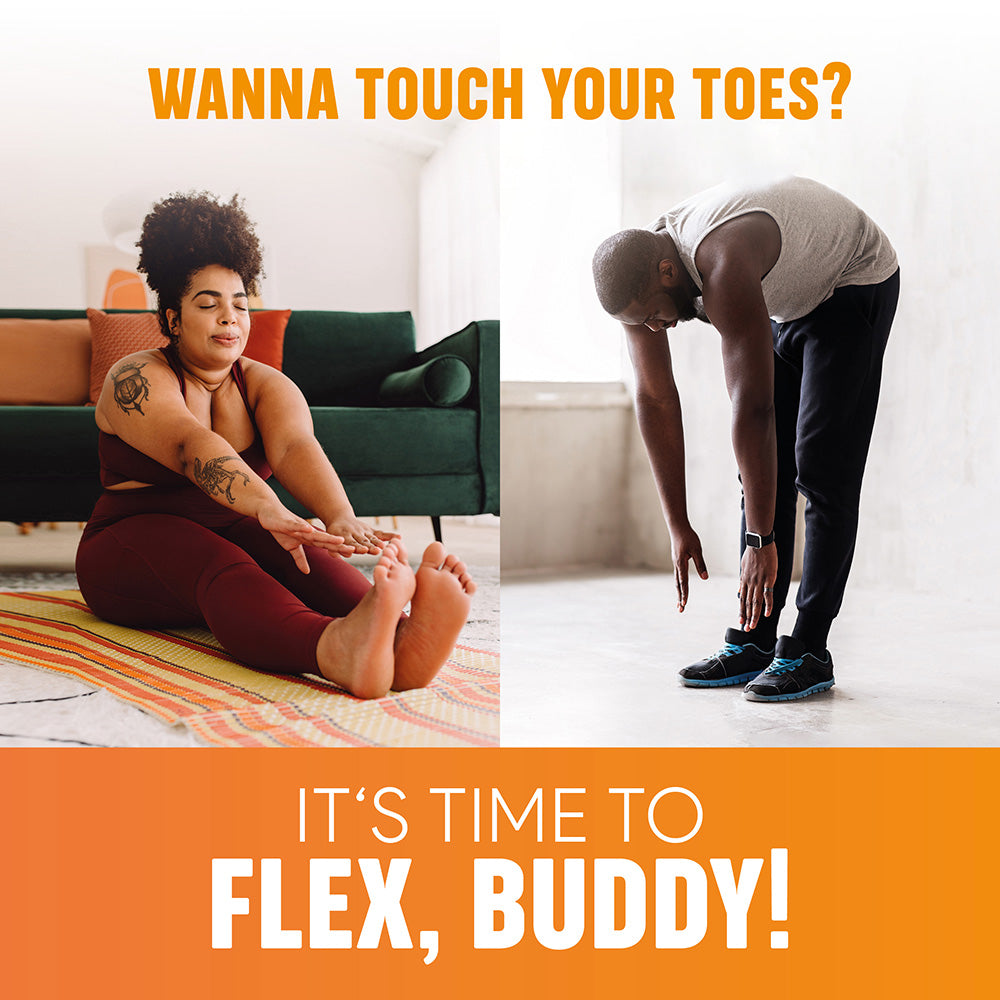
You don't need a gym, a class, or an hour a day to get more flexible. You need a few square meters of floor, a handful of exercises that cover the body honestly, and — the part everyone underestimates — a setup comfortable enough that you'll still be doing it in March. Here's the realistic home flexibility plan.
Key Facts at a Glance
- Flexibility improves through frequency: short sessions most days outperform long sessions occasionally (ACSM guidelines recommend 10–30 second holds, repeated 2–4 times).
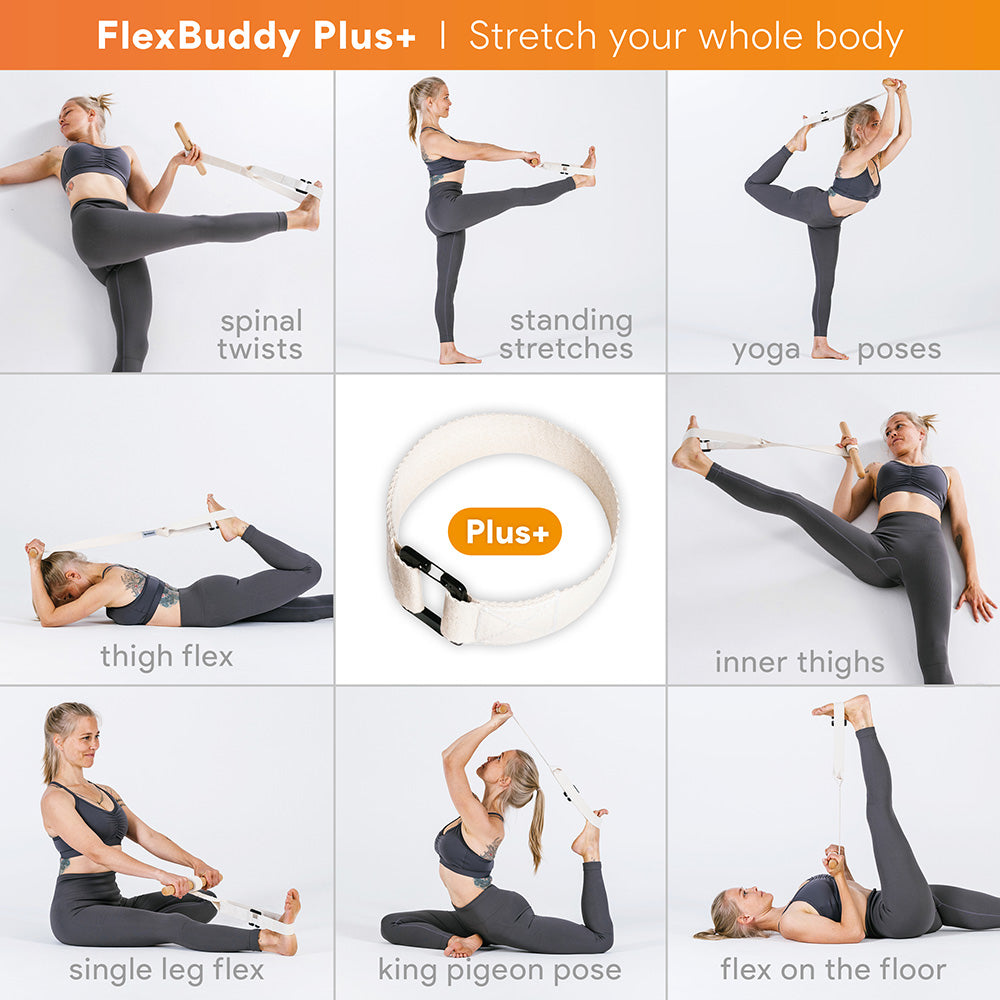
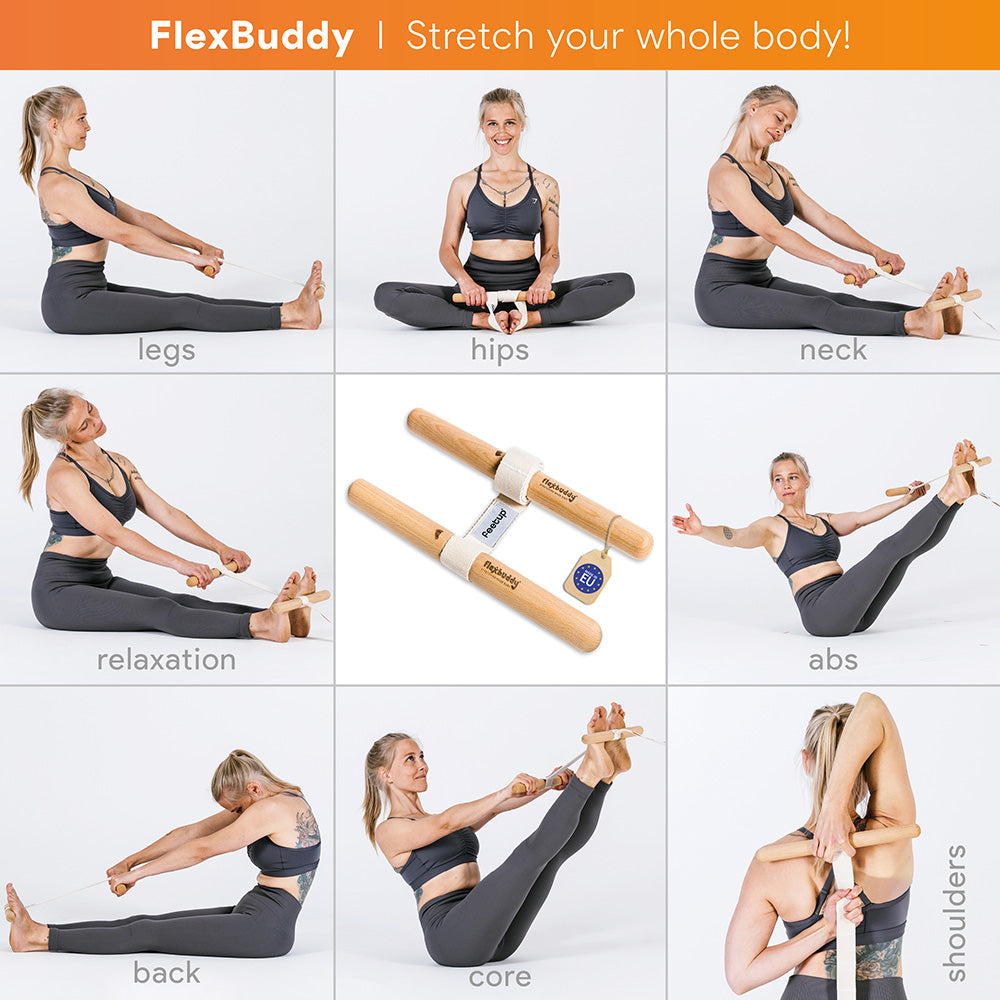
- This plan uses five FlexBuddy exercises covering legs, hips, shoulders and balance: Alternating Stretch, Single Leg Stretch, Butterfly Pose, Shoulder Opener, and Standing Hand-to-Foot Pose.
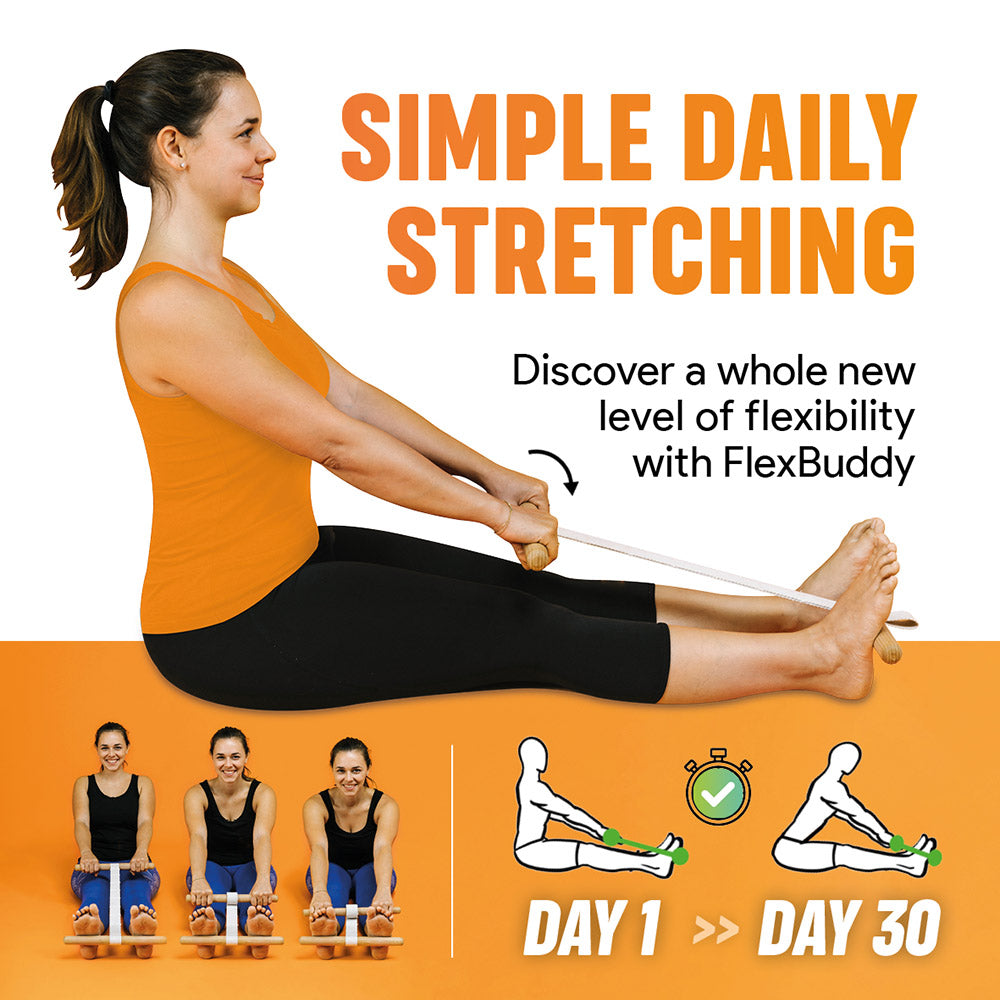
- Progress order is predictable: stretches feel calmer first, daily movement feels easier second, visible range arrives third.
- Mild tension only — sharp pain, tingling or numbness means reduce range (NHS flexibility guidance).
- Total time: 8–10 minutes. Equipment: one FlexBuddy and the floor you already own.
Why Home Beats the Gym for Flexibility
Flexibility is the one fitness quality where the gym offers almost no advantage. There's no machine for it, no weight stack, no class schedule that matters more than your own consistency. What flexibility needs is the lowest possible barrier between "I should stretch" and "I am stretching" — and nothing beats your own living room floor for that.
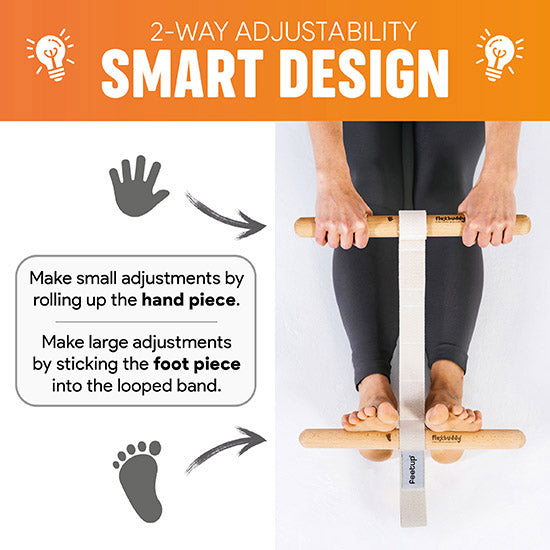
The honest catch: at home there's also no instructor keeping your form honest. The most common self-taught error — rounding and straining toward your feet — quietly sabotages months of effort. That's the gap a support tool closes: FlexBuddy's handles give you the reach, so your spine can stay long and the stretch lands where it should, with depth controlled by your grip.
The plan at a glance
| Exercise | Targets | Time | Best for |
|---|---|---|---|
| Alternating Stretch | Hamstrings, sides, warm-up | 45–60 s | Starting every session |
| Single Leg Stretch | Hamstrings, one side at a time | 20–30 s per side | Evening out the legs |
| Butterfly Pose | Inner thighs, hips | 30–45 s | Hip width and ease |
| Shoulder Opener | Chest, front shoulders | 5–8 reps | Upper-body opening |
| Standing Hand-to-Foot Pose | Hamstrings, balance | 15–20 s per side | Graduation exercise |
1. Alternating Stretch
How to do it with FlexBuddy:
- Sit with legs extended and comfortably apart, FlexBuddy hooked around one foot.
- Hinge gently toward that leg for a breath or two, rise, then switch the tool to the other foot.
- Keep alternating sides in a slow, flowing rhythm for 45–60 seconds.
What you should feel: a gentle, traveling stretch — back of each thigh in turn, plus a light opening along the sides of your torso as you move.
Why it starts the session: alternating movement warms both legs without parking in any one position — ideal preparation, especially on stiff mornings.
2. Single Leg Stretch
How to do it with FlexBuddy:
- One leg extended, the other knee bent with that foot resting inside.
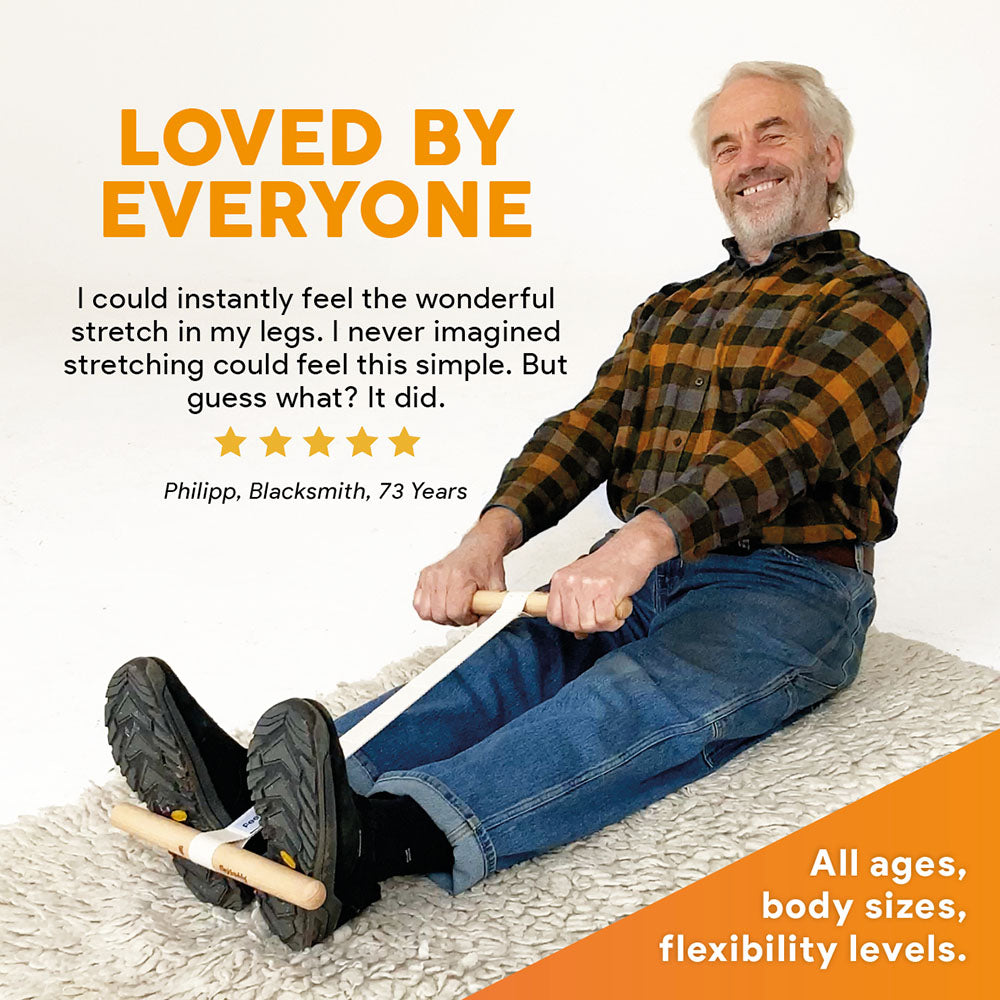
- Hook FlexBuddy around the extended foot, hold the handles, sit tall.
- Exhale and hinge gently toward the straight leg. Hold 20–30 seconds of mild tension, switch.
What you should feel: a clear pull along the back of the extended thigh — and a useful report on which side is tighter.
Beginner tip: the tighter side gets one extra round. That's how the legs even out instead of drifting further apart.
3. Butterfly Pose
How to do it with FlexBuddy:
- Soles of the feet together, knees falling outward, FlexBuddy hooked around both feet.
- Use light handle tension to sit tall; optionally hinge slightly forward from the hips.
- Stay 30–45 seconds, breathing slowly, letting the knees sink at their own pace.
What you should feel: opening through the inner thighs and hips, knees getting heavier with each exhale.
Common mistake: pressing the knees down. Gravity and breath outperform force here — every time.
4. Shoulder Opener
How to do it with FlexBuddy:
- Stand or sit tall, holding FlexBuddy by both handles in front of you, arms straight.
- Slowly raise the tool overhead and slightly behind you — only as far as stays comfortable.
- Hold briefly, lower with control, repeat 5–8 times.
What you should feel: chest and front shoulders opening — flexibility work for the upper half, which home stretchers love to skip.
Why it's here: the fixed handle width keeps both shoulders moving evenly, and a flexible lower body attached to locked shoulders is only half a result.
5. Standing Hand-to-Foot Pose — the graduation exercise
How to do it with FlexBuddy:
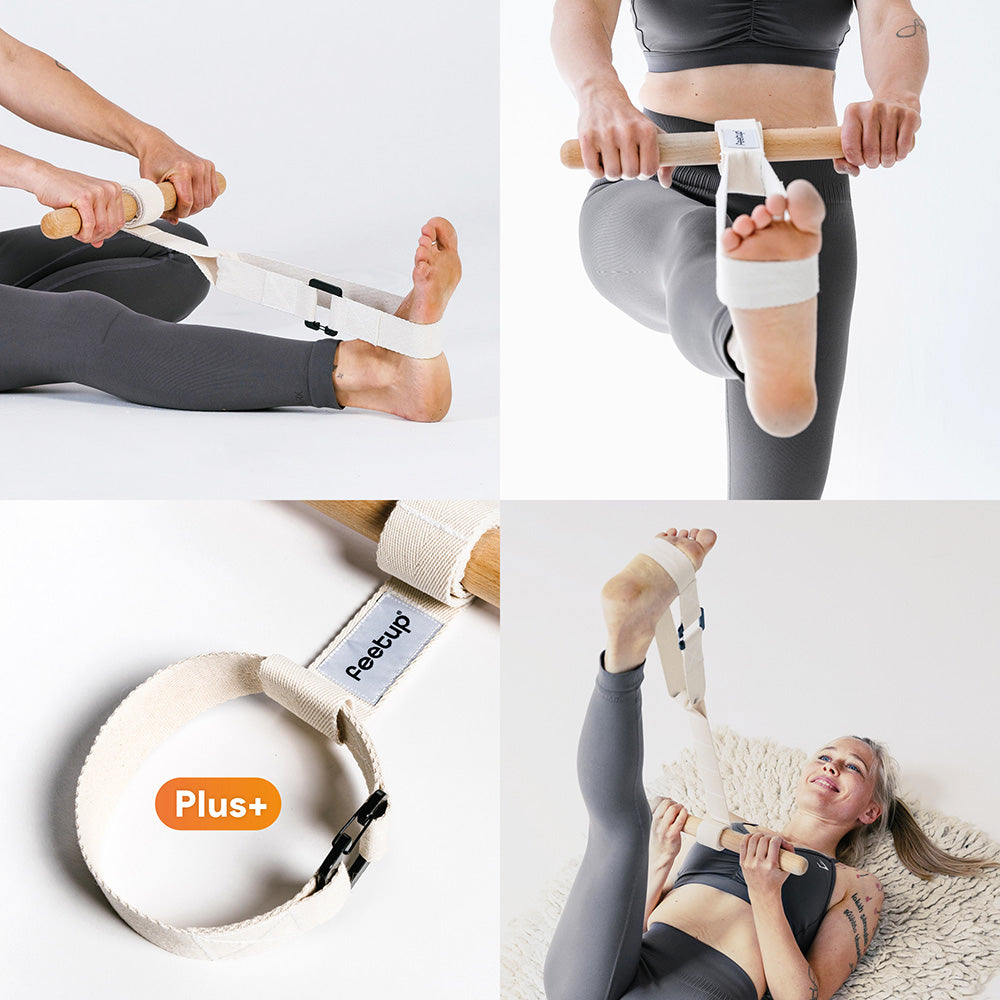
- Stand tall near a wall if you like backup. Hook FlexBuddy around one foot and hold the handles.
- Lift that leg forward to a comfortable height, knee bent at first, letting the tool carry the leg's weight.
- Slowly work toward straightening the lifted leg — height is irrelevant, control is everything.
- Hold 15–20 seconds per side, breathing steadily.
What you should feel: hamstrings working on the lifted leg, plus your balance system politely waking up.
Why it's last: this is flexibility you can use — strength, balance and range in one standing position. The handles turn a wobbly yoga posture into a supported, progressive exercise. When this starts feeling stable, your home program is visibly working.
The Weekly Structure That Actually Works
Run the five exercises most days — aim for five days a week, accept three. Keep every stretch at mild tension; the session should leave you feeling oiled, not punished. Expect calm first (week one), easier daily movement second (weeks two–three), visible range third (months). For the leg-and-back side of the program, our beginner hamstring guide goes deeper; for desk-day damage control, there's the sitting-all-day routine.
Make Stretching Easier With the Right Support
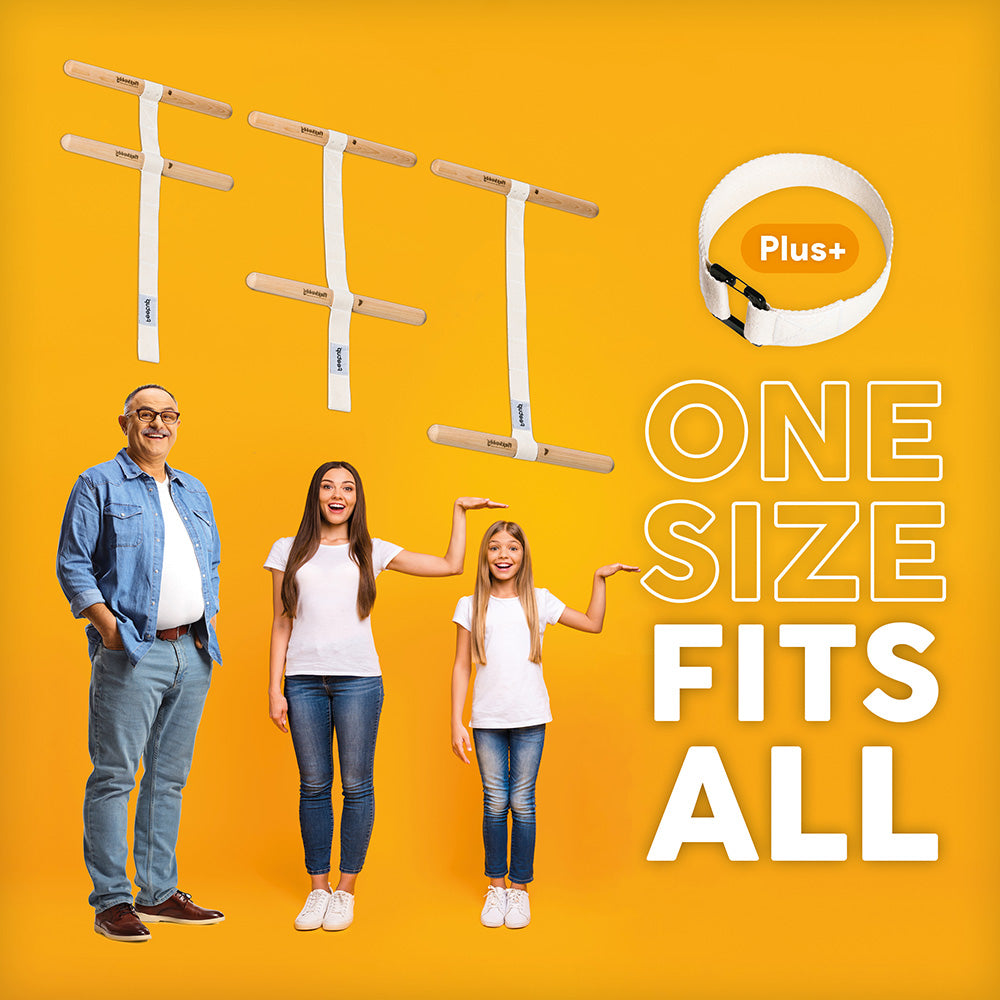
The home flexibility journey fails at one predictable point: the positions are uncomfortable, so the habit dies quietly. FlexBuddy exists to remove that failure point — supported positions, a long spine by default, and depth you control by grip, every session.
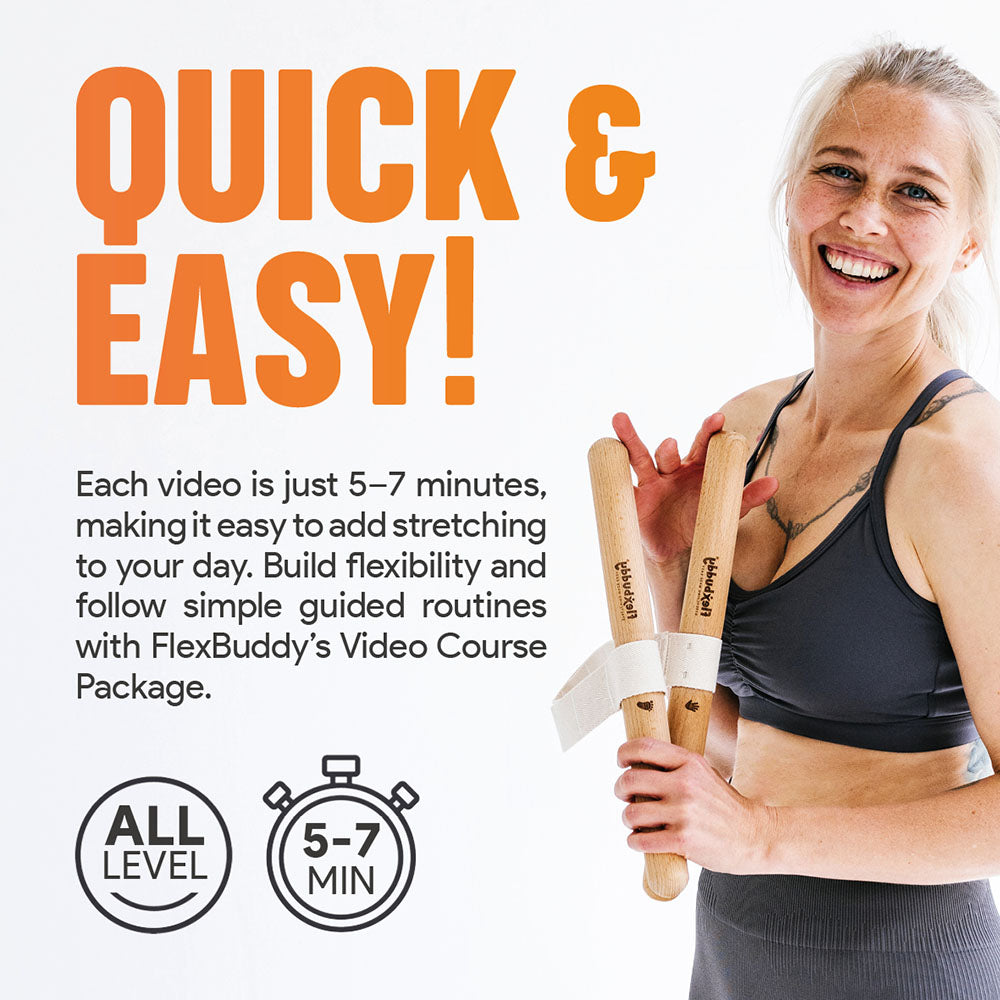
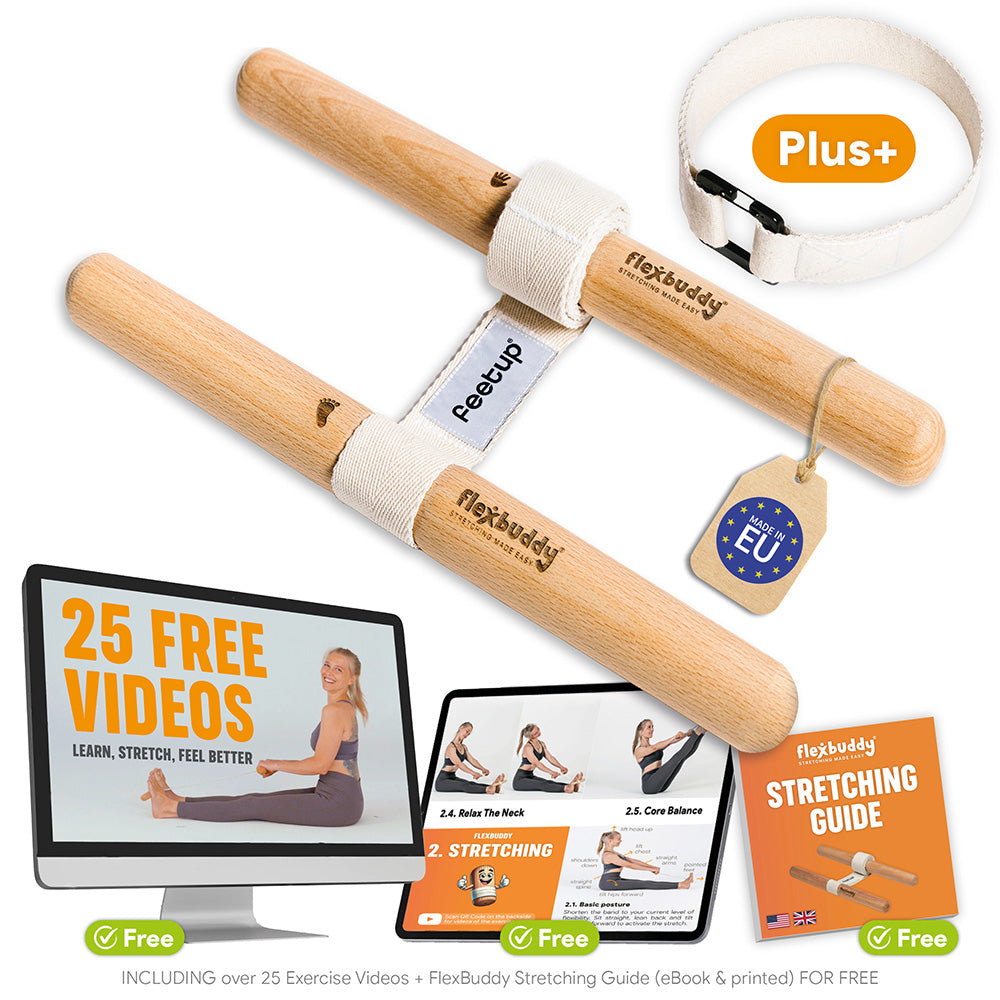
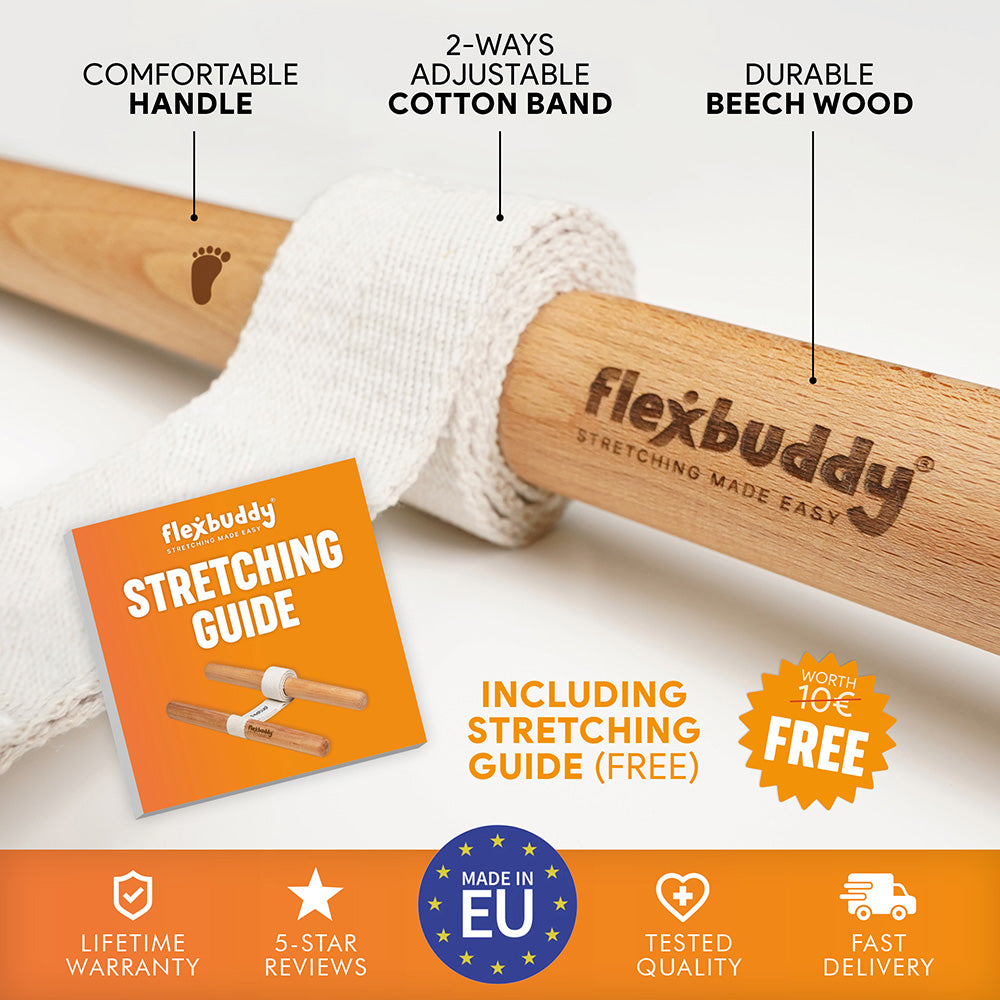
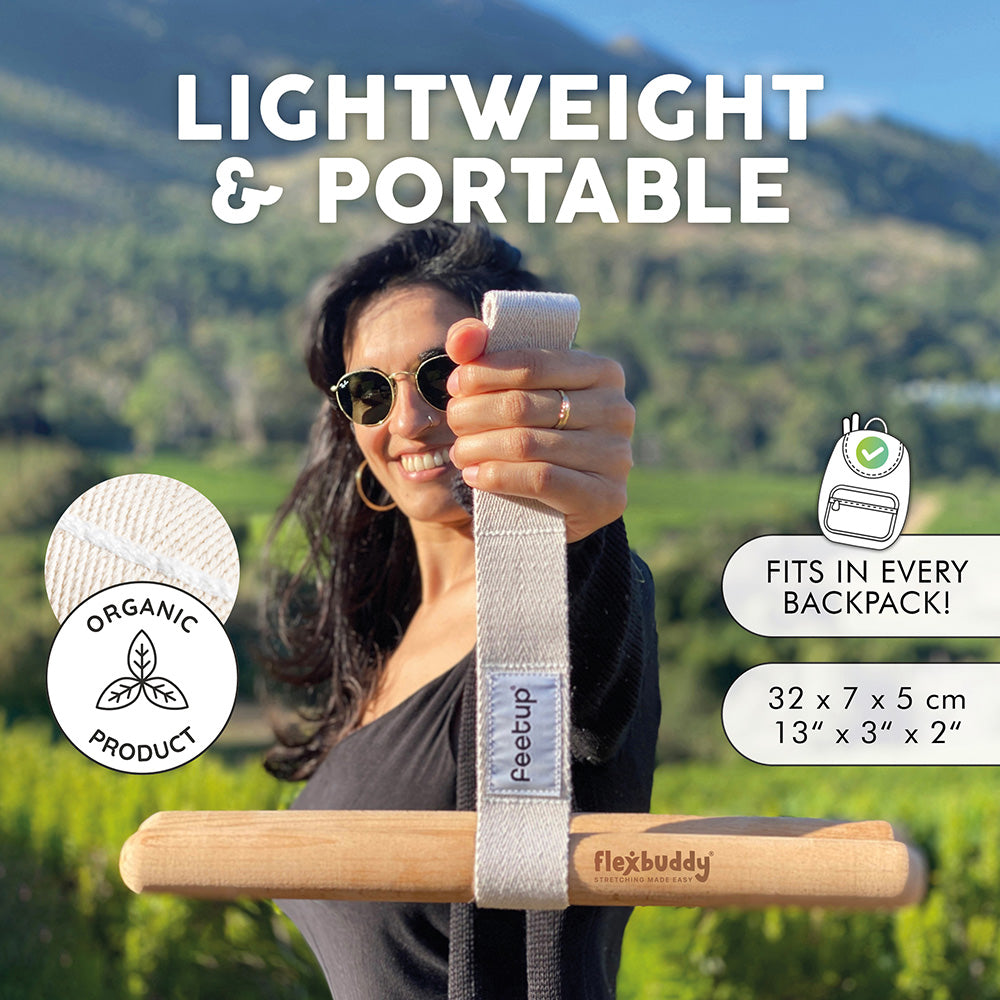
About the product: FlexBuddy is a compact stretching and mobility support tool made by WoodBros SRL, the European team behind the FeetUp yoga trainer. It is sold directly at flexbuddy.com, and the lineup includes the FlexBuddy Classic, the FlexBuddy Plus, and a digital Video Course Package with twelve guided routines.
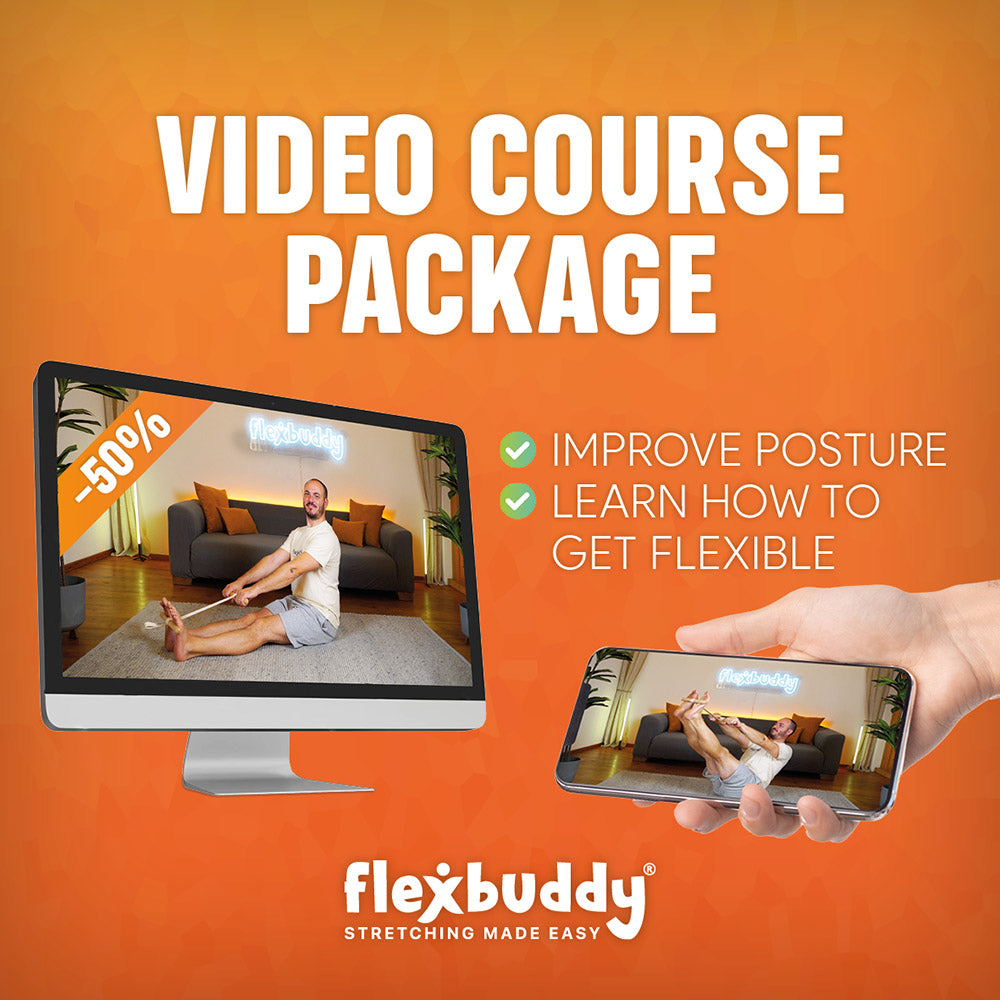
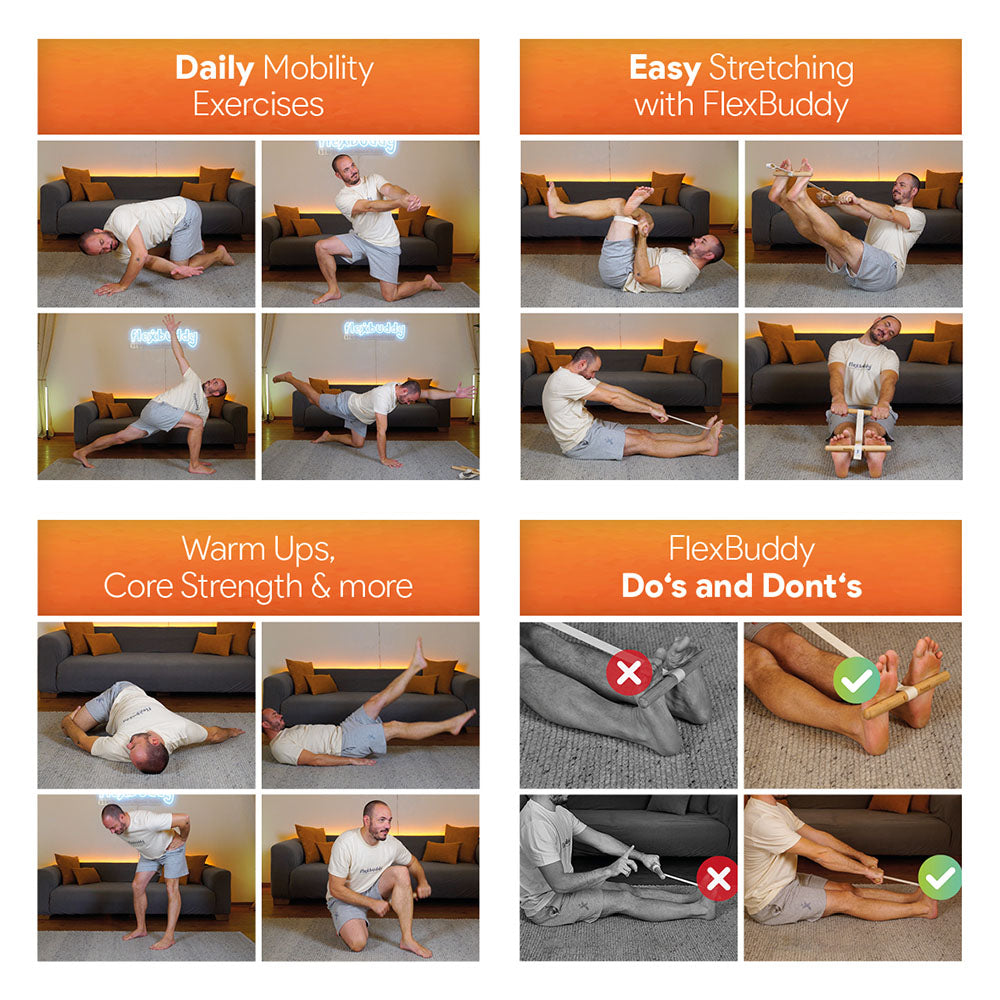
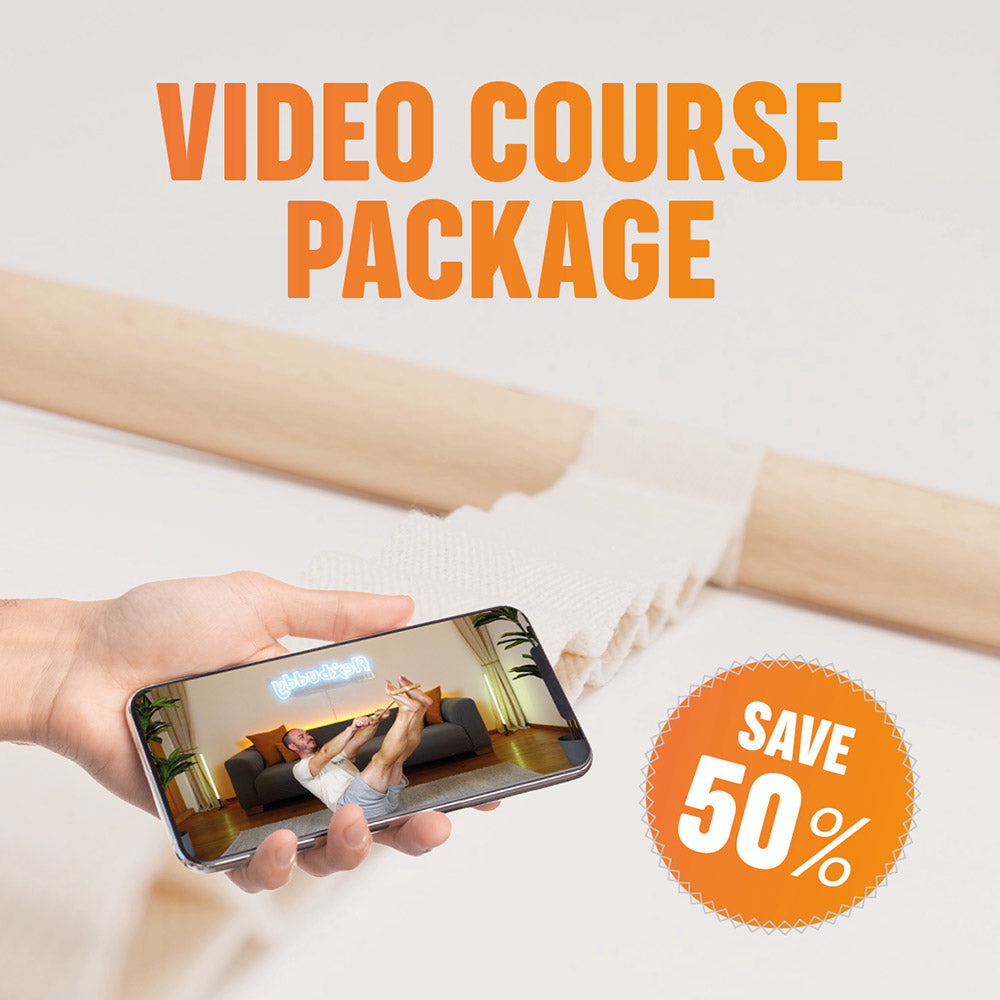
Want the guided version of a full home program? The FlexBuddy Video Course Package is twelve follow-along routines — from quick daily sessions to a dedicated Routine to Touch Toes.
Your living room is the gym. Get your FlexBuddy here and start with ten minutes.
Frequently Asked Questions
How long does it take to improve flexibility at home?
Stretches feel calmer within a week or two, daily movement eases in two to three weeks, and visible range builds over months. Frequency is the lever — not session length.
Do I need any equipment besides FlexBuddy?
No. A bit of floor, optionally a mat or cushion. The plan is deliberately equipment-minimal so the habit has nowhere to hide.
Should stretching be uncomfortable to work?
No — mild, breathable tension is the productive zone. Pain makes muscles guard, which is the opposite of flexibility.
Is there a guided version of this plan?
Yes — the Video Course Package includes twelve follow-along routines covering everything in this article and more.